In the age when gods still whispered in the winds and heroes were shaped by destiny, Sigurd was born to Sigmund, a scion of divine lineage, whose blood carried the spark of Odin himself. From the moment of his birth, the boy bore the weight of prophecy: he was destined to confront monsters that hoarded not only gold but the secrets of the cosmos. His childhood was carved in legend, for he possessed strength beyond mortal men, a courage that trembled neither at storms nor at the whisper of fate, and a mind keen enough to pierce through illusions woven by gods and men alike.
The shadow of Sigurd’s greatest challenge lay in the form of Fafnir, a dragon born of greed and malevolence, once a man, now twisted by a cursed hoard of gold. Fafnir’s eyes glowed like molten fire, and his breath scorched the earth, leaving villages desolate. It was said that none who sought the treasure survived, for the gold carried a dark curse that fed on envy and doom. Yet Sigurd, guided by both ancestral blood and the counsel of the wise, heeded the call of destiny.
Sigurd’s mentor, the cunning smith Regin, who was Fafnir’s brother, tempered the hero’s resolve with knowledge and skill. He forged for Sigurd the sword Gram, a blade of unmatched sharpness, destined to cleave monsters and reveal hidden truths. With this weapon, Sigurd embarked on a solitary quest through mountains and shadowed valleys, until he stood before the lair of Fafnir, where gold glittered in the gloom and the stench of evil lay thick as fog.
The battle was fierce and timeless. The dragon’s scales repelled ordinary weapons, but Gram struck true, severing Fafnir’s spine in a single, shattering blow. The earth quaked, the mountains themselves groaned at the clash of hero and dragon. From the dying beast’s heart, Sigurd drank the blood, and with it, he tasted the wisdom of ages. His eyes were opened to the language of birds and the secrets of men’s hearts, yet the gift bore a shadow: insight mingled with sorrow, knowledge entwined with the curse of greed and betrayal.
Armed now with wisdom that could pierce the veil of fate, Sigurd unearthed the treasure. Yet the gold, as with all cursed riches, sowed treachery and desire among men. Sigurd’s own journey led him to Brynhild, a shieldmaiden of unmatched valor and divine descent, whose love was bound by honor and oath. Their hearts burned with passion and reverence, yet the world’s cruel designs twisted their fates. Through deception and the cruel play of men’s envy, Sigurd was led to wed another, breaking the fragile harmony of love and trust.
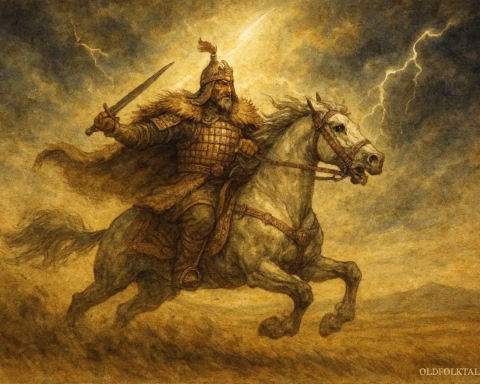
Even as Sigurd rode with unmatched might and valor, the threads of destiny tightened. Betrayal struck from shadows, as enemies conspired and old promises turned to poison. The cursed gold and the knowledge of fate bore down upon him, a weight even the strongest of heroes could not bear. In a final act of tragic courage, Sigurd met his doom, struck down by the envy and schemes of men whose hearts were blinded by greed. Yet even in death, he remained immortal in song, his deeds etched in the minds of heroes, a shining exemplar of courage, wisdom, and the inexorable hand of destiny.
The story of Sigurd resonates across the ages, for it is not merely the tale of a dragon-slayer, but a meditation on the burdens of heroism, the perilous gifts of insight, and the cruel symmetry of fate. Sigurd’s life illuminates the paradox of human endeavor: that in striving for greatness, one may touch the divine, yet suffer the sorrow of mortal weakness. His sword, his deeds, and his love endure as symbols of heroism tempered by wisdom and tempered further by tragedy.
Author’s Note
Sigurd embodies the archetype of the divine hero whose courage and wisdom confront both monstrous foes and the complexities of fate. The Volsunga Saga situates him within a cosmos where mortal effort and divine will intertwine, highlighting the Norse preoccupation with destiny, honor, and the fragile nature of human happiness. Sigurd’s legacy extends beyond mere conquest: he is remembered as a man who glimpsed truth through dragon’s blood, who loved and suffered profoundly, and whose story warns that heroism is inseparable from the sorrow it may entail.
Knowledge Check
-
What divine ancestry does Sigurd inherit, and how does it shape his destiny?
-
Who is Fafnir, and what caused him to become a dragon?
-
How does Sigurd acquire his supernatural knowledge, and what are its consequences?
-
What role does Regin play in Sigurd’s quest?
-
How does betrayal influence the trajectory of Sigurd’s life and relationships?
-
In what ways does the story of Sigurd reflect Norse ideas of fate and heroism?
Cultural Origin: Volsunga Saga (Old Norse/Icelandic, 13th century)
Source: The Volsunga Saga, trans. Jesse L. Byock (Penguin Classics, 1990)