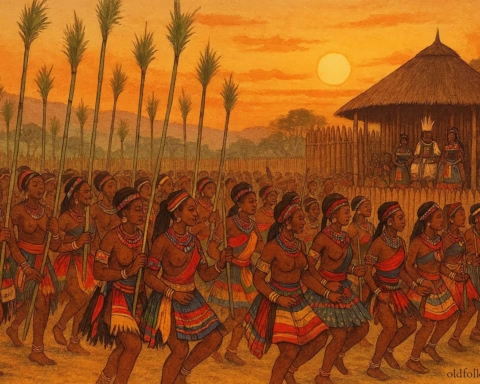
The Sing-Sing ceremonies of the Papua New Guinea Highlands are among the most visually and aurally spectacular traditional gatherings in Oceania. Originating from ancestral worship and clan-based cosmology, these rituals celebrate major life events, seasonal cycles, warfare achievements, and communal reconciliation.
Rooted in the highland peoples’ understanding of the cosmos, Sing-Sing performances embody the spiritual world in physical form. The dances, songs, and regalia often represent mythic narratives, legendary ancestors, or animal spirits, providing participants and spectators with a tangible connection to the supernatural.
Scholars note that while the Sing-Sing has maintained continuity over centuries, its specific forms vary widely among the Highlands’ diverse ethnic groups. Each valley, clan, or linguistic group contributes unique ceremonial motifs, song cycles, and costume traditions, demonstrating a rich tapestry of cultural expression.
Description of the Ritual
Sing-Sing ceremonies are communal events where music, costume, and movement converge to create an immersive cultural experience:
-
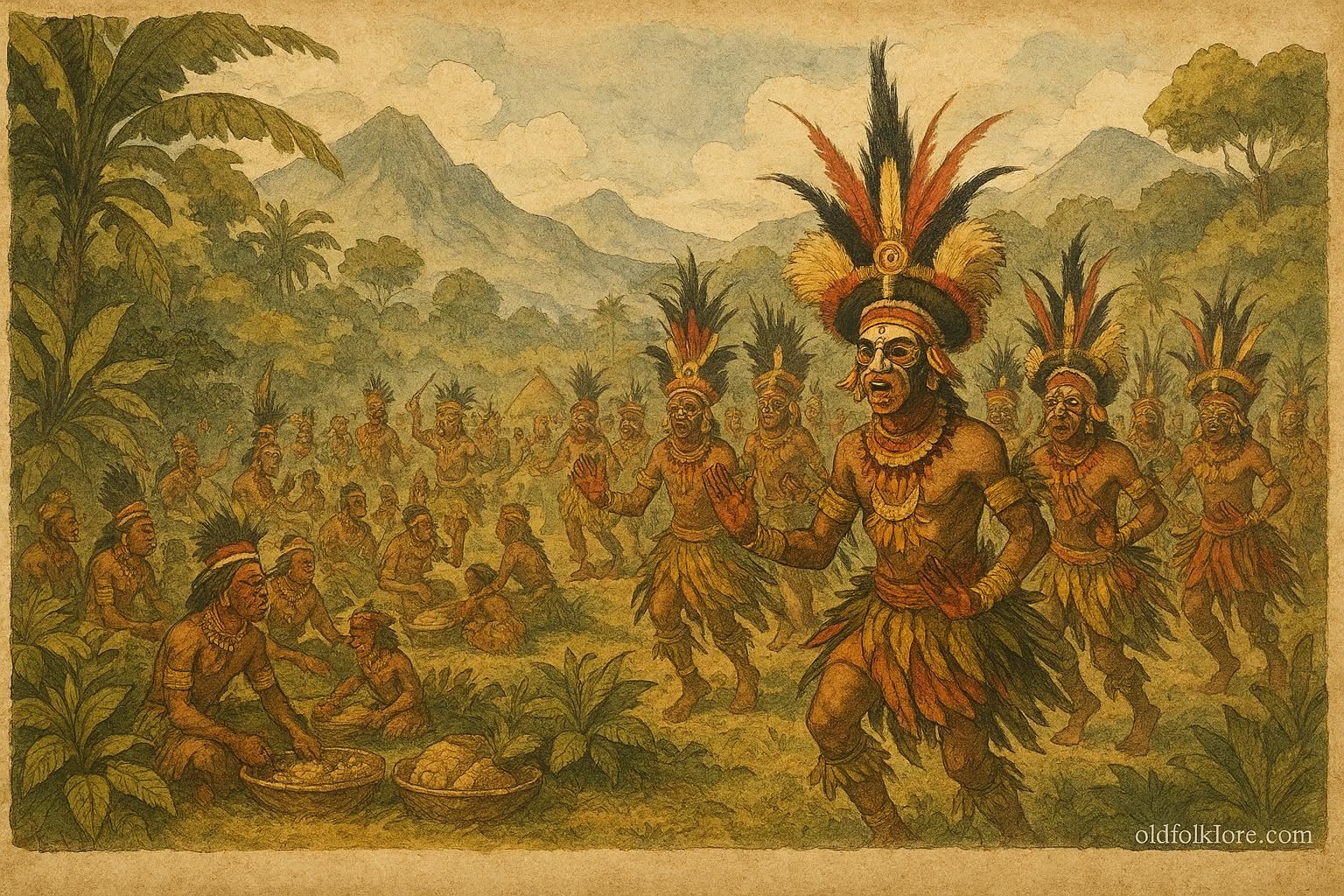
Preparation and Costume: Villagers adorn themselves with painted faces, body art, and elaborate headdresses made from feathers, shells, and local vegetation. Each design often signals the dancer’s clan affiliation, social role, or the mythic story being enacted.
-
Dance and Song: Central to the Sing-Sing is synchronized dancing, often in large circles or lines. Participants move in rhythm to percussive instruments, such as bamboo or slit drums, and sing songs recounting mythic tales, ancestral deeds, or historical events. The dances can mimic animal behaviors, legendary battles, or spiritual transformations, emphasizing a continuity between human and spiritual worlds.
-
Ritual Feasting and Social Interaction: Feasting accompanies the performance, and guests are frequently invited to participate in dances or communal meals, reinforcing reciprocity, hospitality, and communal identity.
-
Ceremonial Variations: Some Sing-Sings mark initiations, teaching young members about ancestral lineage and clan responsibilities. Others celebrate harvests, seeking favor from spirits to ensure bountiful crops, or serve as reconciliation rituals following disputes or inter-clan conflict.
The ceremonies are dynamic and participatory, reflecting the Highlands’ worldview in which social, spiritual, and environmental life is inseparable.
Mythic Connection and Symbolism
Sing-Sing ceremonies are deeply symbolic, functioning as both spiritual communication and cultural storytelling:
-
Ancestral Veneration: Through dance and song, participants invoke ancestral spirits, ensuring that guidance, protection, and blessings continue to flow within the community.
-
Mythic Reenactment: The performances often recreate legendary events or animal archetypes, allowing the living to embody the stories that shaped their cultural universe.
-
Spiritual Embodiment: Painted faces, body adornments, and ritual regalia transform participants into ancestral or spiritual beings, blurring the lines between mortal and divine.
-
Social Cohesion: By involving the entire community, through preparation, dance, and feasting, Sing-Sings reinforce social hierarchies, clan solidarity, and collective memory.
-
Environmental Connection: Many dances honor the land, rivers, and wildlife, reflecting a worldview that sees nature, spirits, and human society as intertwined.
The ceremonial enactment of myth and history anchors the community in ancestral wisdom while also teaching younger generations their cultural responsibilities.
Author’s Note
Sing-Sing ceremonies exemplify how ritual, performance, and mythology converge to shape both spiritual life and social identity in Papua New Guinea’s Highlands. Every painted face, headdress, and chant carries ancestral significance, enabling participants to traverse temporal and spiritual boundaries. Beyond their aesthetic richness, these ceremonies serve as vital repositories of history, myth, and cosmology, illustrating the interdependence of humans, ancestors, and nature. Observing or learning about Sing-Sings offers profound insight into ritual as both art and cosmological practice.
Knowledge Check
1. What is the primary purpose of Sing-Sing ceremonies?
To honor ancestors, preserve clan history, and celebrate key life events or seasonal cycles.
2. How are mythic narratives represented during the ceremony?
Through synchronized dances, chants, costumes, and symbolic gestures mimicking legendary events or animal spirits.
3. What role do painted faces and ritual regalia play?
They indicate clan affiliation, spiritual identity, and help participants embody ancestral or mythic beings.
4. Why is communal participation important in Sing-Sing?
It reinforces social cohesion, reciprocity, and collective memory among clans and guests.
5. How do Sing-Sings connect humans to nature?
Dances and songs often honor land, wildlife, and environmental forces as part of cosmological balance.
6. What variations exist in Sing-Sing ceremonies across regions?
Some focus on initiations, others on harvests, reconciliation, or warfare, with differences in costume, songs, and ritual sequence.