The Sing-Sing tradition originates in the diverse highlands and coastal regions of Papua New Guinea, a land where more than 800 languages and countless mythic lineages coexist. For generations, clans gathered not only to settle disputes and renew alliances but also to affirm their ancestral identities through rhythm, color, and movement. Early Sing-Sings were deeply spiritual, rooted in myths of clan founders, forest spirits, and sky beings who were said to gift dance, music, and ceremonial adornment as pathways of remembrance. Over time, communities expanded the gatherings into grand inter-tribal festivals, but the sacred foundations remained untouched.
Description
A Sing-Sing is more than a celebration, it is a living archive. Villages spend months preparing elaborate regalia, often crafted from feathers, pigments, shells, and woven fibers that carry symbolic meaning. When the festival begins, entire groups enter the ceremonial grounds in synchronized patterns. Their movements, chants, and drum rhythms reenact ancient stories: how their ancestors emerged from caves or mountains, how spirits taught their people to hunt, or how clan heroes forged unity after moments of conflict.
Each performance is unique to its region.
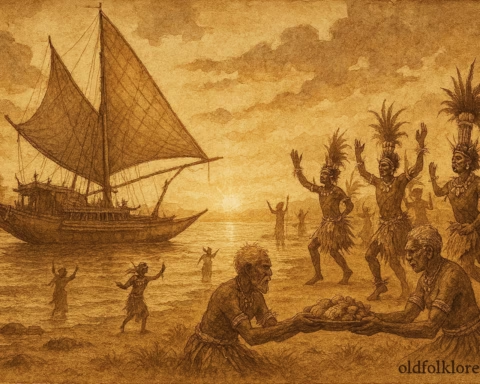
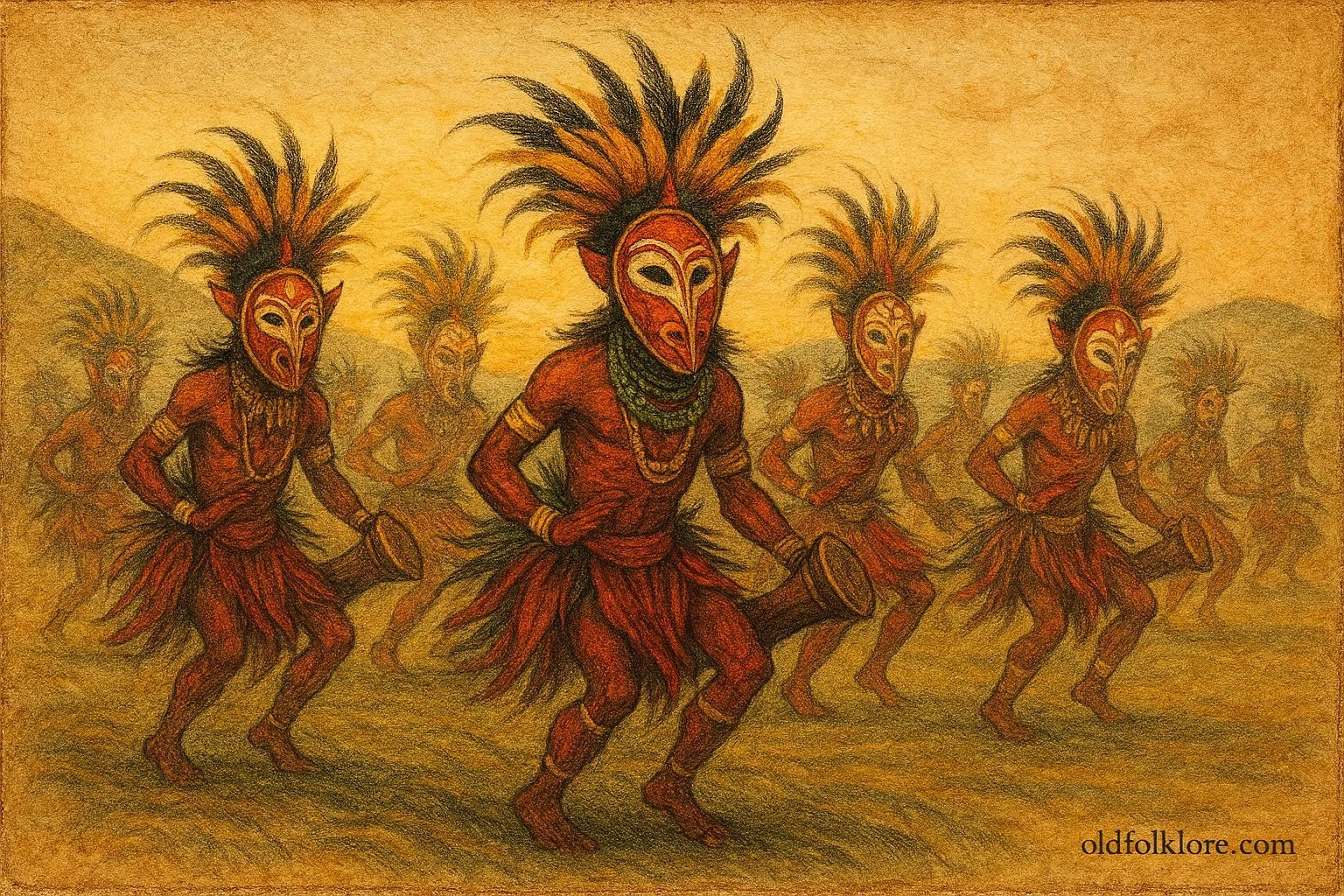
Highlands groups often appear with towering headdresses made from bird-of-paradise plumes, ash-covered bodies, and ochre pigments representing earth spirits. Coastal communities may dance in grass skirts, shell ornaments, and masks that echo the faces of sea spirits. The blend of song, roar of kundu drums, and swirling color transforms the ground into a sacred stage where myth becomes visible.
The Sing-Sing is also a social mechanism. It brings once-rival clans into peaceful interaction, allows younger generations to witness customs that reinforce identity, and creates spaces where old feuds can be symbolically dissolved. Modern festivals, such as the Mt. Hagen Cultural Show, preserve these functions while inviting the world to see the cultural depth of Papua New Guinea.
Mythic Connection
At its heart, the Sing-Sing embodies Papua New Guinea’s understanding of ancestry, nature, and spiritual presence. Many clans believe their regalia contains the essence of ancestral spirits. Feathers symbolize sky beings or bird-spirits who once guided wandering groups to fertile lands. Shells recall ocean deities who granted safe passage during migrations. Earth pigments represent the living ground, a force believed to sustain and judge human behavior.
Dance itself has mythic roots. Some communities tell of spirits who lived deep within forests and taught the first humans the patterns of ceremonial movement. Others say powerful ancestors transformed into birds or animals whose behaviors became encoded in choreography. By performing these dances, participants do not simply honor myth—they temporarily embody it.
Masks play an especially sacred role. Many are carved with spirit-faces, representing protective beings or the founders of clans. When dancers wear these masks, they are viewed not as individuals but as vessels through which ancient presences appear. This blurring of human and ancestral identity reflects a worldview where the living and the spirit realm interact continuously.
The Sing-Sing also enacts the cosmic balance of community life. Each performance reaffirms harmony between clans, between humans and the land, and between the present and the mythic past. The gathering becomes a ritual bridge: a moment when stories are not merely told but lived.
Author’s Note
This article examines the Sing-Sing as a cultural expression shaped by ancestral memory, ritual practice, and spiritual identity. By presenting the festival through its origins and mythic layers, it highlights how Papua New Guinea’s diverse communities preserve harmony and transmit sacred knowledge across generations.
Knowledge Check
1. What is the central purpose of a Sing-Sing?
A Sing-Sing brings clans together to express ancestral stories through dance, music, and ceremonial regalia while strengthening social bonds.
2. Why are feathers and shells spiritually significant?
Feathers often symbolize sky spirits or ancestral guides, while shells represent ties to ocean deities and ancient migrations.
3. How do masks function during Sing-Sings?
Masks transform dancers into representatives of ancestral or spiritual beings, allowing mythic presences to appear in ritual space.
4. Why is the Sing-Sing a “living archive”?
The festival preserves clan histories, myths, symbols, and relationships through performance rather than written records.
5. How do modern festivals relate to ancient traditions?
Events like the Mt. Hagen Cultural Show maintain the ritual structure while providing a contemporary forum for cultural pride and unity.
6. What worldview does the Sing-Sing reflect?
It reflects a belief that humans, ancestors, spirits, and nature remain interconnected through ritual, memory, and storytelling.