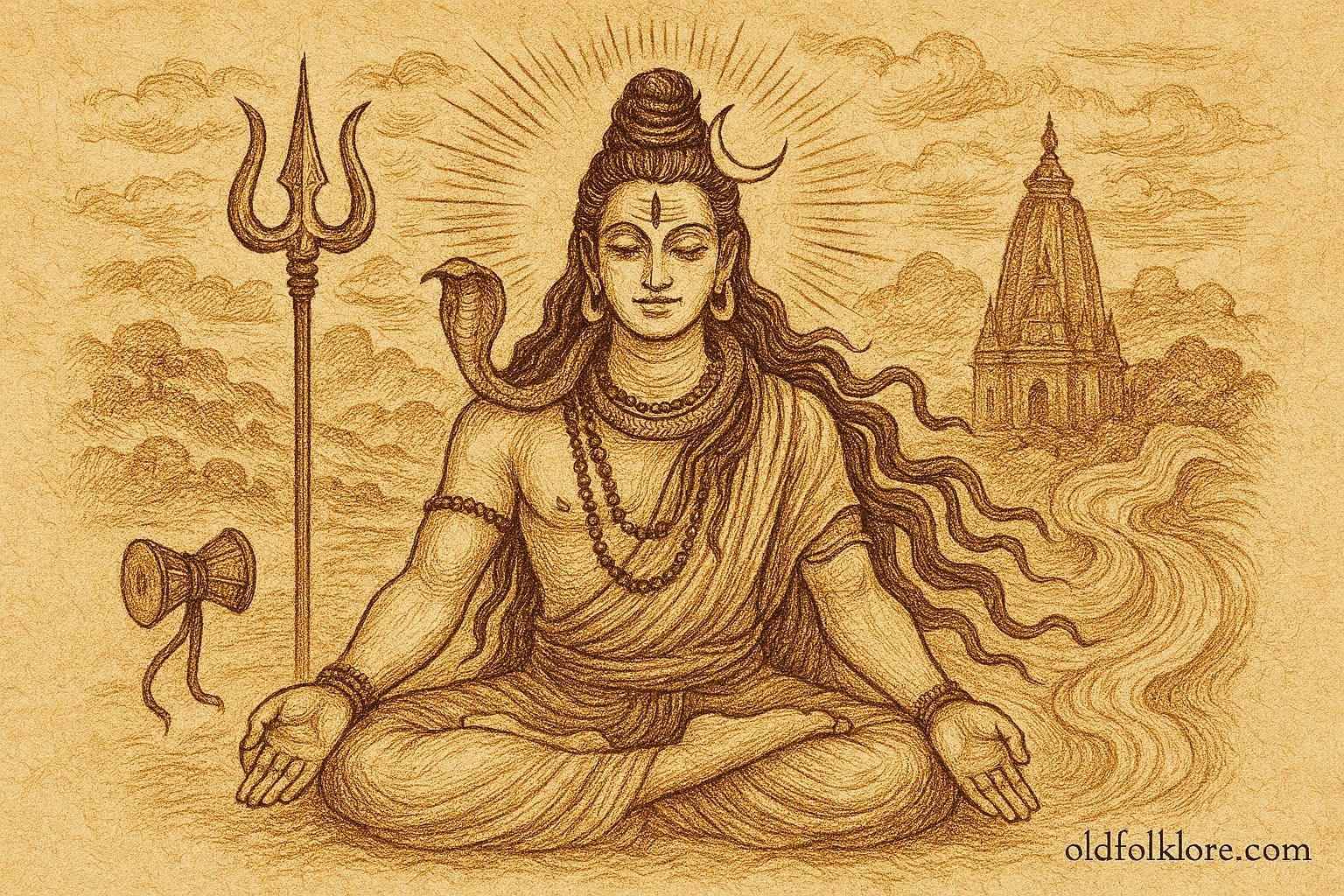
Śiva, also called Rudra in early Vedic texts, is a central deity of Hinduism. He embodies paradoxes: ascetic and householder, destroyer and creator, terrifying yet compassionate. Śiva governs destruction, renewal, yoga, meditation, and dance. He is often depicted with ash-smeared body, a crescent moon on his matted locks, the sacred river Ganges flowing from his hair, and the third eye of insight and fire on his forehead. Śiva’s consort is Pārvatī, and he is father to Ganesha and Skanda (Kartikeya). His mount is Nandi, the sacred bull. Symbolic objects include the trident (trishula), damaru drum, and the lingam, representing cosmic power. Devotees worship him in temples, shrines, and through personal ascetic practice; festivals like Maha Shivaratri celebrate his cosmic dance and blessing of life and renewal.
Mythic Story: Śiva and the Descent of the Ganges
In the age when the heavens and earth were young, the mighty river Ganga flowed in the celestial realms, pure and untamed. Its waters, sacred and powerful, held the potential to cleanse, to grant life, yet also to destroy if unrestrained. The earth, burdened by the sins of men and the debris of cosmic conflict, called for the river’s descent, to bring nourishment and purification. But such a torrent could crush all upon its fall.
King Bhagiratha, a pious descendant of the ancient solar line, sought the river’s blessing. Through relentless austerities and devotion, he summoned Ganga to descend from the heavens to the earth. Yet when the river began her mighty plunge, no mortal or mountain could withstand her torrent. In divine foresight, the gods turned to Śiva, the ascetic who dwells in the Himalayas, cloaked in ash and crowned with matted locks, calm amid storms.
Śiva lifted the celestial waters with a wave of his hand, catching Ganga in his hair. His matted locks twined and coiled, moderating the river’s force, breaking her fall into countless rivulets, each nourishing the land below. Thus, the Ganges flowed gently onto the earth, sustaining kingdoms, forests, and human life. Śiva, ever patient, accepted the searing energy of her descent upon his locks, his third eye radiating tranquil fire to guide and temper her force.
This tale is but one of many illustrating Śiva’s paradoxical nature: fierce yet compassionate, destructive yet protective. In another story, Śiva performs the tandava, the cosmic dance of destruction and renewal, in his cremation grounds. His feet strike the drum of time, sending shockwaves through the worlds; his movements dissolve old patterns, allowing new creation to emerge. The same Śiva who meditates on Mount Kailash with serene detachment also dances with ferocity, reminding the cosmos that life and death, chaos and order, are inseparable.
Śiva’s Vedic aspect as Rudra emphasizes his storm-like, fearsome aspect, invoked for protection against disease, misfortune, and evil. Puranic narratives expand this to a deity who balances the cosmic order, overseeing destruction not as malevolence but as a necessary transformation. His consort Pārvatī teaches devotion, restraint, and love, while their children, Ganesha and Skanda, embody wisdom, courage, and the guardianship of life.
The ascetic Śiva is not a distant god; he resides in the hearts of yogins, in the rhythm of breath, the focus of meditation, and the stillness of contemplation. His story, layered through Rigvedic hymns and later Puranic epics, speaks to humanity’s quest for balance: embracing impermanence, transcending fear, and understanding that destruction is often the precursor to renewal and creation.
Learn the ancient stories behind deities of light, storm, and shadow from cultures across the world
Author’s Note
Śiva’s myths teach that destruction and creation are two sides of the same divine rhythm. His cosmic dance reminds mortals that impermanence is universal; meditation and devotion can temper chaos. Through Śiva, we learn that surrender, awareness, and discipline channel the raw forces of life into harmony. His paradoxes mirror the human experience: we can be both fierce and compassionate, detached and engaged, mortal yet yearning for the eternal.
Knowledge Check
Q1. Title: Who is Śiva in early Vedic texts?
A: Śiva is referred to as Rudra, a fierce storm and healing deity, in the Rigveda.
Q2. Title: What is Śiva’s role in the cosmos?
A: Śiva governs destruction and renewal, yoga, meditation, and the cosmic rhythm of life and death.
Q3. Title: Name two symbols or objects associated with Śiva.
A: The trident (trishula) and the damaru drum; also, his third eye and the lingam.
Q4. Title: Who are Śiva’s immediate family members?
A: Consort Pārvatī; children Ganesha and Skanda (Kartikeya); mount Nandi the bull.
Q5. Title: Describe the story of the Ganges descending to earth.
A: Śiva catches the descending Ganga in his matted locks to prevent her torrent from destroying the earth, allowing her waters to nourish the land.
Q6. Title: What moral or spiritual lesson does Śiva teach?
A: That destruction is necessary for creation, impermanence is universal, and meditation and devotion can harmonize life’s forces.
Source: Rigveda & Śiva Purāṇa, India
Origin: India