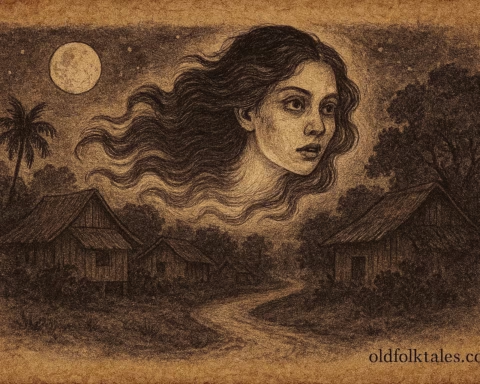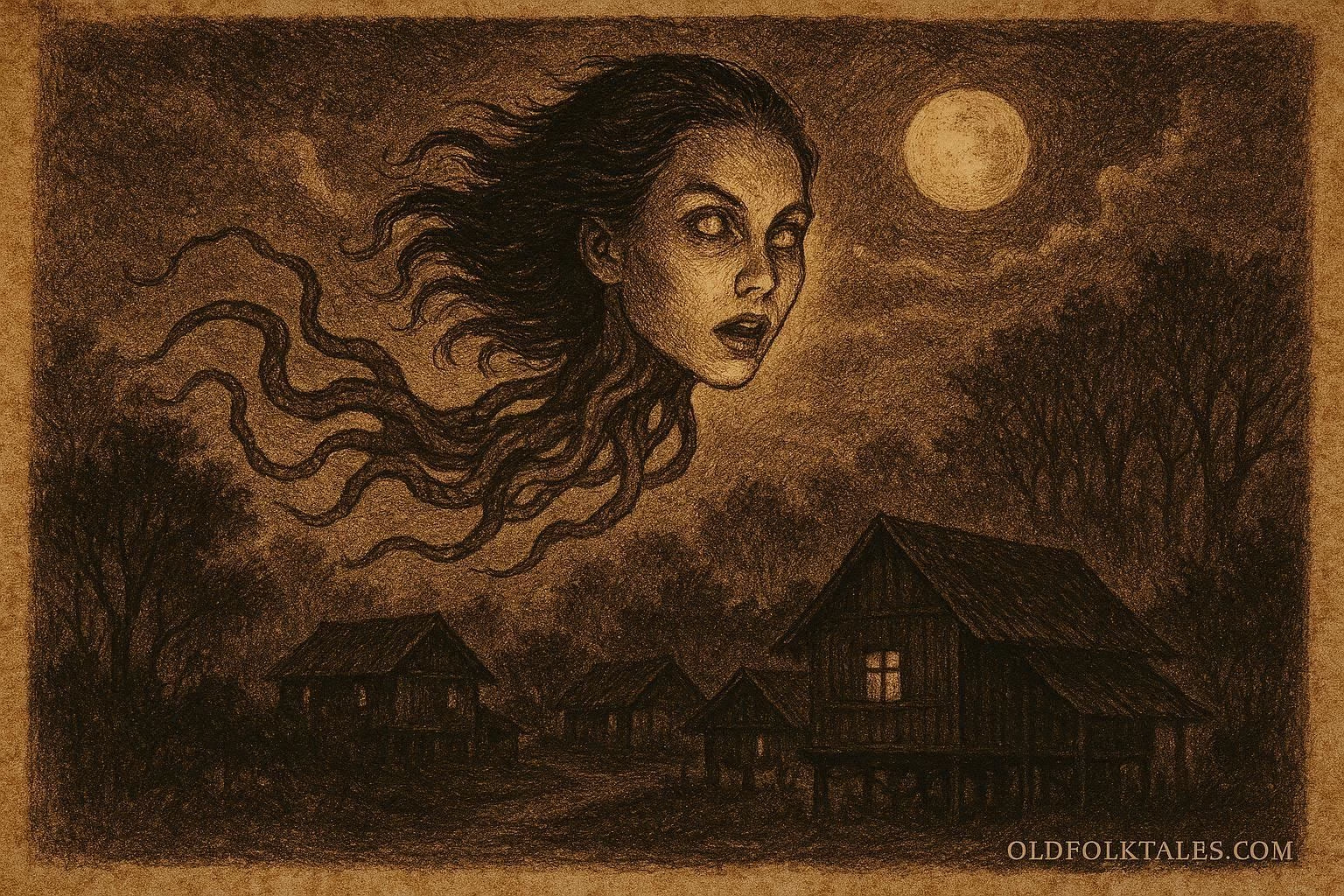
In the humid nights of the Malay Peninsula, when the moon glows pale through the palm leaves and the crickets sing endlessly, villagers whisper about a creature that no one wishes to see. She is the Penanggalan a woman cursed or corrupted by black magic who leaves her body behind and rises into the air, her head detached, her entrails trailing like roots of a poisonous tree.
The story begins in a quiet fishing village long ago, where a midwife named Suri lived. She was known for her beauty and for her healing touch. Her hands brought comfort to mothers in labor and eased the pain of the sick. Yet jealousy and ambition darkened her heart. She sought the secret arts that could make her powerful beyond measure arts forbidden by both faith and tradition.
Suri’s teacher, an old witch of the forest, warned her: “The knowledge you seek has a price. If you do not keep your vow of purity, the spirits of blood will claim you.” But Suri’s pride deafened her ears. She learned charms that healed with one breath and cursed with another. When her teacher died, she continued alone, performing rituals in secret, her beauty unaged while others grew old.
Explore the mysterious creatures of legend, from guardians of the sacred to bringers of chaos
One night, as she prepared a potion to preserve her youth, she failed to complete the purification rites. The potion turned foul, and the air thickened with the scent of decay. Suri felt her head twist with pain, her body burning from within. Then, with a sound like tearing silk, her head tore free from her shoulders, dragging her heart and bowels behind it.
She screamed but it was no human sound.
From that night onward, the villagers began to find livestock drained of blood. Pregnant women felt cold shadows hover over them, and newborns grew ill for no reason. Those who kept watch swore they saw a floating head glimmering in the dark, eyes glowing red, its mouth wet with blood.
The Penanggalan had been born.
She fed on life itself. She slipped through windows when lamps were low, her organs glowing faintly in the moonlight. Her favorite victims were expectant mothers, for their life force was sweetest to her. She would perch silently above them, her tongue extending like a leech, stealing breath and warmth until the room grew cold.
But the villagers were not helpless. A wise old healer named Puan Rani remembered the ancient protections. She gathered salt, garlic, and thorny vines. “The Penanggalan hates what is pure and sharp,” she told the frightened mothers. “Seal your windows with thorn branches, hang garlic at your doors, and burn incense of strong herbs.”
The people obeyed. Soon, the attacks lessened, but one family forgot to guard their roof vent. One stormy night, the Penanggalan slithered inside. The mother screamed, and the villagers rushed in with torches. They threw salt and ash into the air, and the spirit shrieked, her entrails smoking in the holy fire. She fled, leaving trails of blood behind her.
At dawn, they followed the stains to Suri’s hut. Inside, they found her body sitting upright, headless, the neck raw and wet. They poured boiling vinegar into the hollow, sealing her fate. For when the sun rose, her spirit could not return, and her body shriveled into dust.
Yet the legend says not all Penanggalan were destroyed. Some still wander the edges of the jungle, drawn to the scent of childbirth or blood. To this day, elders warn young women to avoid forbidden magic, and mothers still hang garlic by their beds during pregnancy.
The Penanggalan is a tale of horror and caution, a reminder that hunger for power can turn beauty into monstrosity, and that even the unseen must be respected. In every whisper of wind that rustles banana leaves at midnight, villagers still hear her the spirit of the night that feeds on human weakness.
Author’s Note:
The Penanggalan reflects deep cultural beliefs about purity, magic, and the balance between protection and corruption. Her story warns that forbidden knowledge comes with moral cost, while also highlighting the power of traditional wisdom and community faith in confronting fear.
Knowledge Check:
1. Who was Suri before becoming the Penanggalan?
She was a midwife and healer who turned to dark magic.
2. What caused Suri to become the Penanggalan?
She failed to purify herself during a forbidden ritual, unleashing her curse.
3. How did the villagers protect themselves from her attacks?
They used garlic, salt, thorn branches, and sacred incense to repel her.
4. Why did the Penanggalan prey especially on pregnant women?
She fed on their life force, which was considered the purest and strongest.
5. What did the villagers pour into her body to destroy her?
They poured boiling vinegar into her neck to prevent her spirit’s return.
6. What moral lesson does the tale of the Penanggalan teach?
That power gained through corruption leads to destruction, and respect for sacred traditions protects against evil.
Source: Adapted from Malayan Magic by Walter Skeat and C. Blagden (1900)
Cultural Origin: Malay Peoples, Malaysia