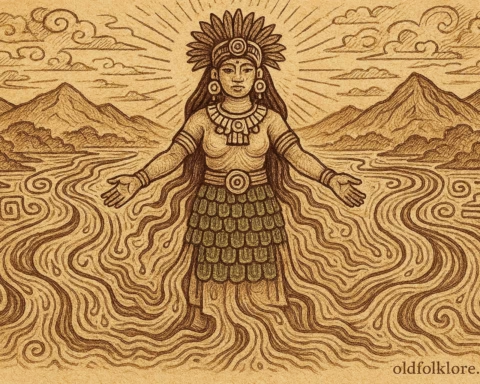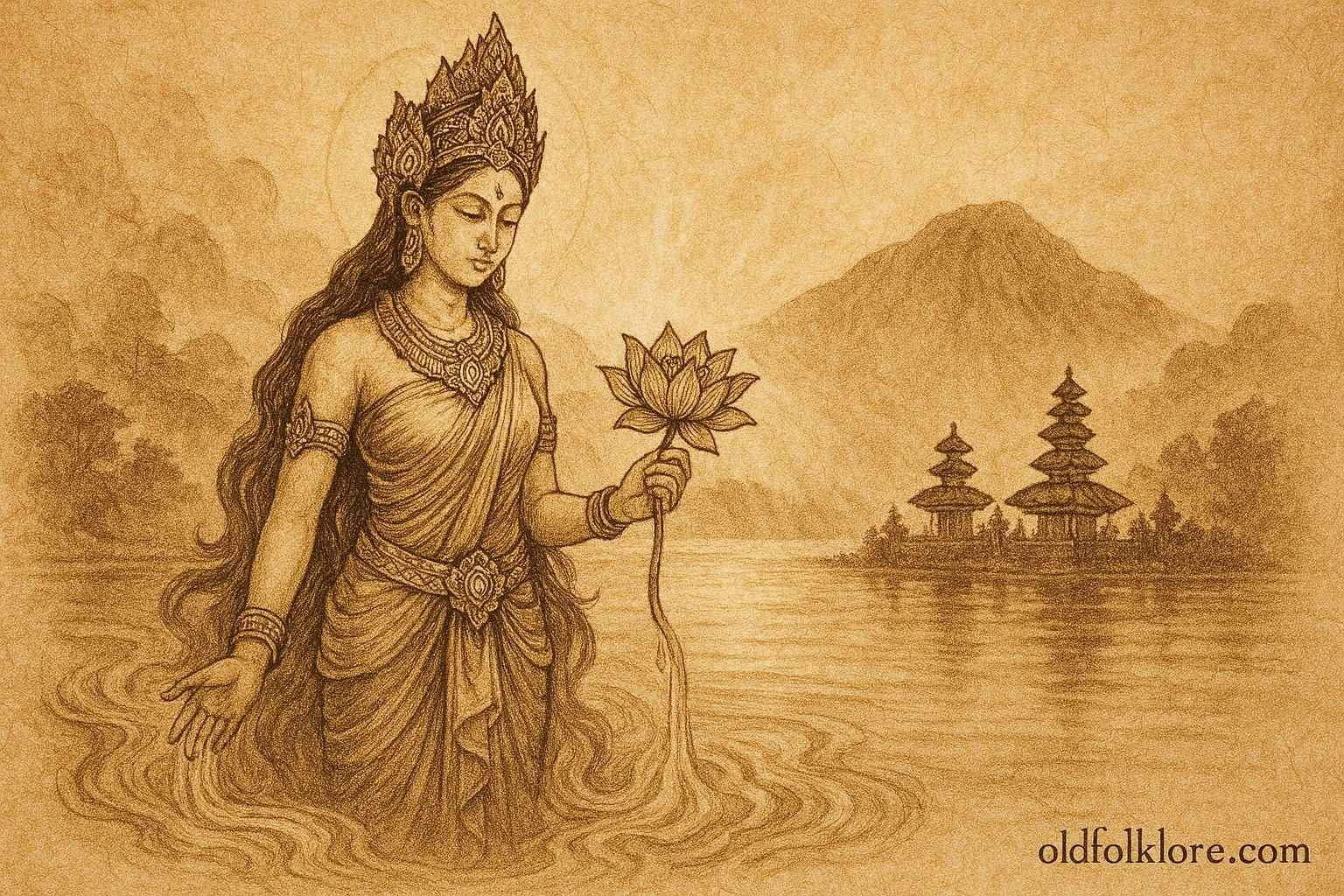
Sri Dewi Danu is the revered Balinese goddess of lakes, rivers, springs, and irrigation, the life-giving waters that sustain Bali’s famed rice terraces. Within Balinese Hinduism, she stands as one of the most vital goddesses, for without her cool, nourishing waters, the island’s agriculture, culture, and prosperity would falter. She presides over Lake Batur, considered her sacred seat, and the intricate subak system, the cooperative irrigation network that shapes Bali’s landscape and society.
Her symbols include the lotus, representing purity and divine flow; the cool mountain mist that rises from volcanic lakes; and the tiered water temples (pura) where worshippers bring offerings of flowers, fruit, and sacred water. Farmers pray to her at Pura Ulun Danu Batur and Pura Ulun Danu Beratan, seeking her blessing for fertile soil, timely rains, and an abundant harvest.
Across Bali, Sri Dewi Danu is sometimes associated with aspects of Parvati, yet she remains deeply rooted in local cosmology, specifically the belief that water is the divine boundary between the earthly realm and the sacred mountains where ancestral spirits reside. Her divinity symbolizes harmony between humans and nature, the interdependence of land and water, and the spiritual responsibility of caring for the environment that sustains life.
Mythic Story
Long before rice terraces carved their graceful green curves into Bali’s hillsides, before the water temples rose among lotus pools and before the people learned to guide the flow of rivers, there was only stillness. The mountains slept, the soil waited, and the world below lay thirsty for life. In this quiet age, the waters beneath the earth stirred with longing. From their depths emerged Sri Dewi Danu, radiant as dawnlight on a calm lake.
Her first breath sent ripples across the island. Her footsteps filled valleys with springs. From her hands flowed the rivers that descended the volcanic slopes like threads of silver. As she walked the young world, the barren lands blossomed. Fish filled the streams. Birds gathered along the riverbanks. The island awakened.
Yet the people, living in small scattered villages, struggled. They planted rice in dry soil, not knowing how to call the waters to their fields. Their harvests were uncertain, their lives fragile against the shifting seasons. Seeing this, Sri Dewi Danu felt compassion. For water is life, and life must be shared wisely.
She descended from Lake Batur, her sacred cradle within the caldera of Mount Batur. The lake’s mists parted for her as she crossed its surface, guiding the villagers to meet her along the shore. They approached with reverence, sensing the divine presence that stirred the air, cool and gentle like morning dew.
“Your land is rich,” she said, her voice flowing like a river at dawn, “but it must be guided, shaped, and honored, just as water must be guided to nourish it. I will teach you the harmony of earth and flow.”
Under her guidance, the villagers built the first water temples. These temples were not only places of prayer, they were spiritual gateways that linked mountain springs, river paths, and rice terraces in a sacred chain. At each temple, offerings were made: petals scattered upon the water, woven palm-leaf trays filled with rice, incense drifting upward like the breath of the earth.
The people learned to read the land as Sri Dewi Danu did. They built channels that followed the mountain’s curves, allowing water to move gently rather than forcefully. They formed councils of farmers who worked together, sharing water as siblings share inheritance. This cooperation became the subak system, a living embodiment of the goddess’s teachings.
But harmony is never without challenge.
One season, a great drought fell upon Bali. The mountain winds grew hot, and rivers thinned like fading threads. The people feared the return of the barren age. They ran to the temples, voices trembling, and begged Sri Dewi Danu for mercy.
Moved by their devotion, she rose from the depths of Lake Batur, her presence shimmering like moonlight on trembling water. She lifted her hands, and from the sky descended a gentle rain, cool and nourishing. Yet the rain fell only where the land was tended with care. Places where greed had led to hoarding or improper cutting of channels remained dry.
“Water must be shared,” the goddess declared. “When you honor balance, the waters will honor you.”
The people understood. They gathered again as a unified community, repairing channels together, ensuring that every field, large or small, received its rightful flow. When harmony was restored, the rains returned with abundance.
From that day onward, Sri Dewi Danu’s presence was woven into every drop of water that moved across Bali. Farmers whispered her name at dawn as they walked through the paddies. Priests tended her temples at the lakeshore. Travelers ascending the mountains offered flowers to her springs.
And Lake Batur, shimmering beneath the volcano’s shadow, remained her eternal throne, a sacred reminder that the island thrives not through force, but through the gentle, flowing wisdom of its goddess.
Discover the gods, goddesses, and divine spirits who ruled the heavens and shaped human fate
Author’s Note
Sri Dewi Danu teaches that prosperity is not born from domination of nature, but from partnership with it. Her myth reflects the Balinese belief that spiritual balance and environmental balance are inseparable. In her story, water becomes a moral force, rewarding cooperation, humility, and care. She reminds us that all life depends on shared stewardship of the world’s most essential resource.
Knowledge Check
Q1: What is Sri Dewi Danu the goddess of?
A: Lakes, rivers, irrigation, and sacred waters in Balinese tradition.
Q2: What major lake is considered her sacred seat?
A: Lake Batur.
Q3: What agricultural system is she associated with?
A: The subak irrigation system.
Q4: What lesson does her drought myth emphasize?
A: The importance of cooperation and sharing water fairly.
Q5: What symbol commonly represents her purity and divine flow?
A: The lotus.
Q6: Where do worshippers make offerings to her?
A: Water temples such as Pura Ulun Danu Batur and Pura Ulun Danu Beratan.
Source: Balinese Mythology, Indonesia.
Source Origin: Bali, Indonesia