Across Europe, the night of St. John’s Eve, also known as Midsummer Eve, has long been one of the most magically charged nights of the year. In villages from Sweden to Lithuania, and from Germany to the North Sea coast, communities gathered on hilltops, meadows, and riverbanks to ignite great bonfires. These flames did far more than mark the height of summer. They symbolised protection, purification, and the renewal of both land and spirit. Though later connected to the Christian feast of St. John the Baptist, the rituals were deeply embedded in ancient pre-Christian fire festivals, preserved for centuries in European folklore.
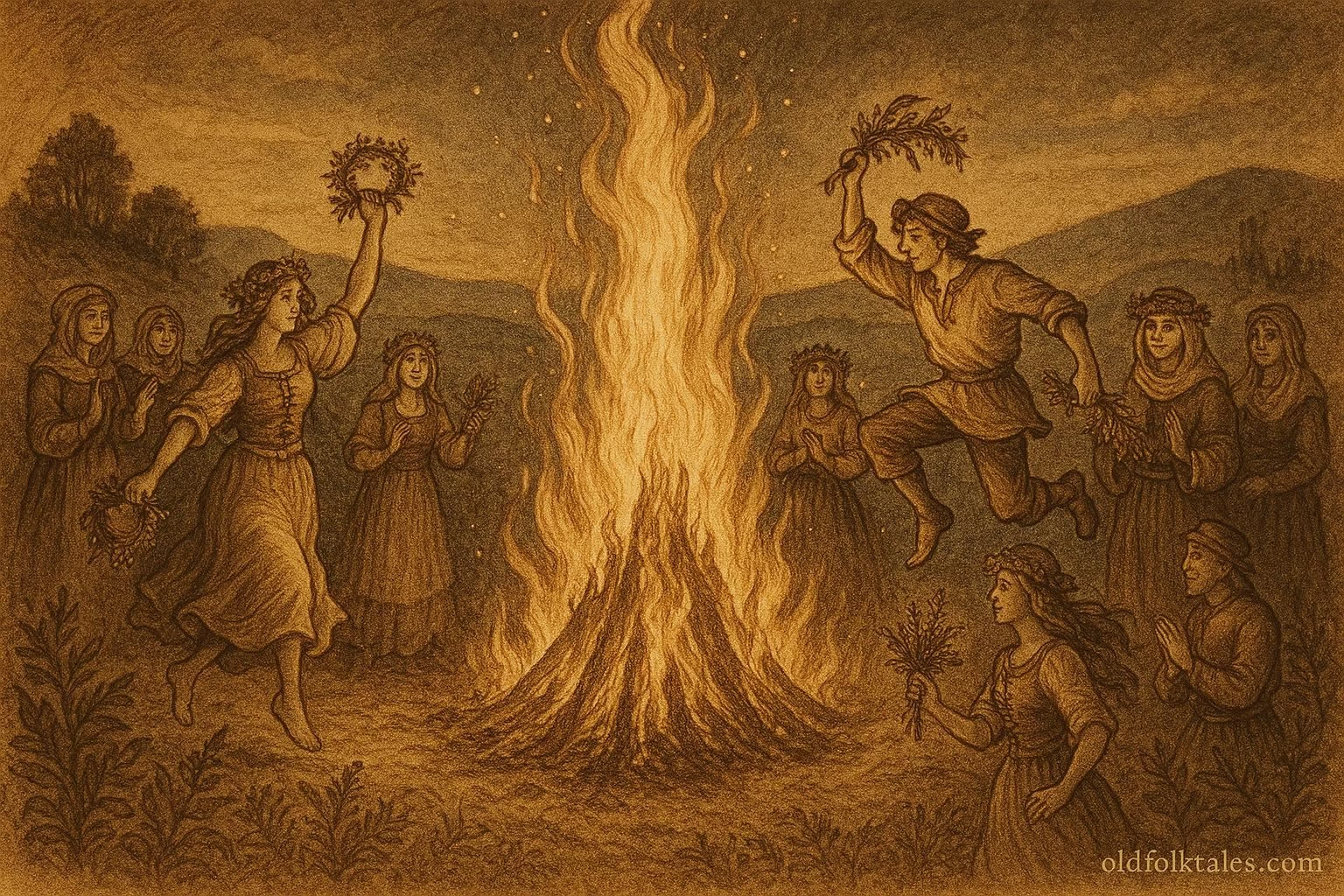
The central act of the celebration was the lighting of a towering bonfire. Young people collected wood for days, piling branches into large heaps that could be seen from neighbouring villages. As dusk fell, the fire was set ablaze, sending sparks into the warm midsummer sky. According to long-standing tradition recorded by ethnographers and by James Frazer in The Golden Bough, these flames were believed to repel harmful beings: witches, misfortune, sickness, and wandering spirits. The fire acted as a spiritual barrier, protecting farms, crops, and families as the year turned toward its darker half.
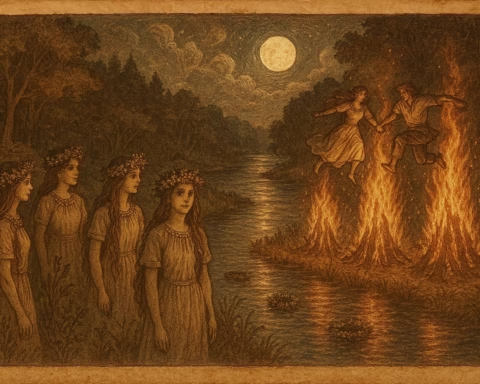
In many communities, the fire was not only watched but physically interacted with. Participants danced around it, sang folk songs, and leapt over the flames or glowing embers. These leaps were seen as acts of courage, vitality, and purification. In parts of Germany and the Baltic region, a high jump over the fire predicted good fortune or a successful harvest. Lovers performed paired leaps, believing that if they landed together, their union would be blessed with happiness or fertility. The fire thus became a symbolic bridge between human intention and divine favour.
Herbs played a crucial role in the ritual. Midsummer plants, especially mugwort, vervain, and St. John’s wort, were believed to be at peak potency on this night. People cast small bundles of herbs into the fire as protective offerings, or waved them through the smoke to cleanse their bodies and homes. The ashes of the fire were often collected the next morning. Folklore records that farmers spread these ashes over their fields to strengthen crops, or kept pieces of charred wood as protective charms against lightning, fire, or illness.
Regional variations added further depth to the tradition. In Sweden, some folk legends called the midsummer flames “Balder’s Balefires,” associating the ritual with Balder, the radiant Norse god whose death marked cosmic imbalance. Lighting fires in his honour symbolised keeping darkness and chaos at bay. In the Baltic states, people wove wreaths of flowers and oak leaves, casting them into rivers to divine future relationships or fortunes. Lithuania’s kupolinės festivities blended fire with water rituals, reflecting the belief that midsummer was a night when the boundaries between worlds thinned.
This combination of fire, water, fertility, and prophecy was at the heart of European midsummer symbolism. The fire represented the sun at its zenith, strong, life-giving, yet vulnerable as it began its descent toward winter. Water rituals, such as gathering midsummer dew, complemented the flames. Dew collected at dawn was believed to heal illnesses, beautify the skin, or bless crops. Springs and wells visited on this night were thought to gain temporary healing power. Together, fire and water reflected the eternal balance of natural forces.
Although Christianity reinterpreted many of these customs through the feast of St. John the Baptist, the ritual structure remained distinctly older. St. John’s association with fire, through metaphors of spiritual cleansing, created a convenient bridge, allowing ancient summer rites to continue under new religious meaning. Many communities ultimately celebrated both traditions at once: honouring the saint while still preserving old beliefs about fire’s protective function.
These midsummer bonfires also strengthened community bonds. Villages organised collective preparations, and the night became a rare moment when age, class, and labour divisions relaxed. Young people met, families shared food, and elders told stories of past festivals. The fire, seen from miles away, served as both a beacon and a communal heartbeat. It represented continuity, linking generations across centuries of seasonal change, political upheaval, and shifting belief systems.
Today, these traditions survive in many forms across Europe. While modern celebrations often focus on music festivals or cultural tourism, the symbolic meaning remains. The bonfire still represents protection, renewal, and the joyful peak of summer. In some areas, villagers continue to leap over small fires, gather symbolic herbs, or keep ashes for luck. The ritual endures because it speaks to a universal human desire: to confront the unknown, call upon ancestral wisdom, and honour the cycles of nature.
Author’s Note
This article traces one of Europe’s oldest seasonal rites, highlighting how midsummer fires expressed cultural beliefs about protection, fertility, and cosmic balance. It summarises their mythic associations, regional variations, and enduring symbolic power across centuries.
Knowledge Check
1. What did midsummer bonfires symbolise?
They symbolised protection, purification, and the sun’s peak power.
2. Why did people leap over the flames?
To seek purification, courage, good luck, or fertility depending on local belief.
3. What herbs were associated with St. John’s Eve?
Mugwort, vervain, and St. John’s wort, believed to gain magical potency.
4. What role did ashes play the next day?
They were scattered on fields or kept as charms for protection.
5. How did Christianity adapt the festival?
By linking the fires to St. John the Baptist while preserving older customs.
6. Why are “Balder’s Balefires” significant?
They connect Swedish traditions to Norse myths of light, balance, and protection.