Long ago, in the ancient savannas of West Africa, where the Niger River gleamed beneath the sun and baobab trees whispered secrets to the wind, a prophecy was spoken. The griots tell that the king of Mali, Maghan Kon Fatta, was visited by a wandering hunter-seer. The hunter’s eyes held the fire of the unseen, and his voice trembled with destiny.
“O King,” he said, “you shall take for wife a woman of great ugliness, a woman who limps and bears scars. Through her shall come the Lion of Mali, the child of destiny, the one who shall unite the twelve kingdoms and make the world remember your name.”
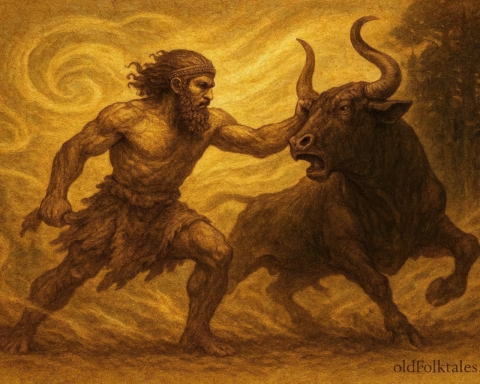
The court laughed at such words, but Maghan Kon Fatta obeyed, for a wise ruler heeded the spirits. He married Sogolon Kedjou, the buffalo woman, so named because her spirit was fierce and untamed, born of sorcery and mountain mystery. She was mocked for her plainness, but within her womb stirred a destiny greater than gold.
When Sogolon bore a son, the child was frail and could not walk. His name was Sundiata, meaning “the lion-born.” Yet the women of the court sneered. The king’s other wife, Sassouma, whose son Dankaran Touman could run and fight, spread scorn upon Sogolon. “What lion crawls on his belly?” she taunted.
Years passed, and Sogolon’s heart broke beneath the weight of laughter. Her son, though strong in spirit, dragged himself upon the ground. But the griots say the lion does not rush to hunt, he waits until his mane has grown. One day, when Sassouma mocked his mother once more, Sogolon wept, and Sundiata rose upon his arms. “Mother,” he said, “today I shall walk for you.”
He called the blacksmith to forge him a mighty iron rod. Grasping it, he struggled to his feet. The earth seemed to tremble with the power of his will. Sweat streamed down his face; his tendons strained; and with one great cry, the Lion of Mali stood upright. The rod bent beneath his strength, and the people gasped, the prophecy had awakened.
From that day, Sundiata grew into a man of vast wisdom and might. Yet envy darkened the court. Sassouma and Dankaran conspired against him, forcing Sogolon and her son into exile. They wandered from kingdom to kingdom, strangers among foreign fires. In Mema, Sundiata served under a wise king who taught him the art of leadership and the measure of mercy. He learned that true power was not born of rage but of patience, that the lion’s roar is silent before it is heard across the plains.
But destiny does not sleep forever. In Mali, the tyrant sorcerer Soumaoro Kanté rose to power. His armies swept across the lands, enslaving kings and silencing griots. His skin was said to be impenetrable, his castle guarded by spirits, and his cruelty beyond imagining. The people whispered the prophecy again, only the Lion of Mali could free them.
Messengers crossed deserts and rivers to find Sundiata in exile. When they reached him, he listened long to their pleas, then bowed his head to the wind. “It is time,” he said. “The lion returns to his den.”
He gathered warriors from the twelve kingdoms, men of valor, hunters, archers, and horsemen. The griots sang as they rode: “Sundiata! The son of the buffalo woman! The lion who will break the iron skin of Soumaoro!”
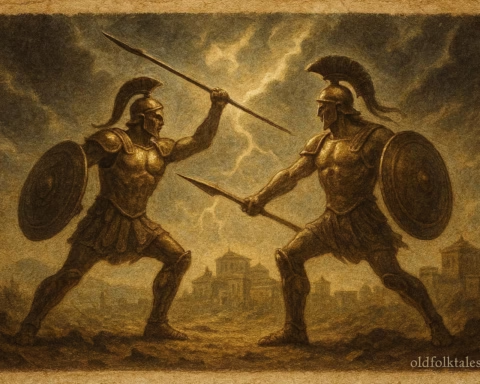
The battle of Kirina dawned beneath blood-red skies. Soumaoro came clad in charms and darkness, his magic humming in the air. Arrows shattered upon him, and swords broke. But Sundiata carried a sacred arrow tipped with the spur of a white cock, revealed to him by the spirits. When he loosed it, the charm of invincibility broke. Soumaoro fled into the mountains, his power undone by the destiny he had defied.
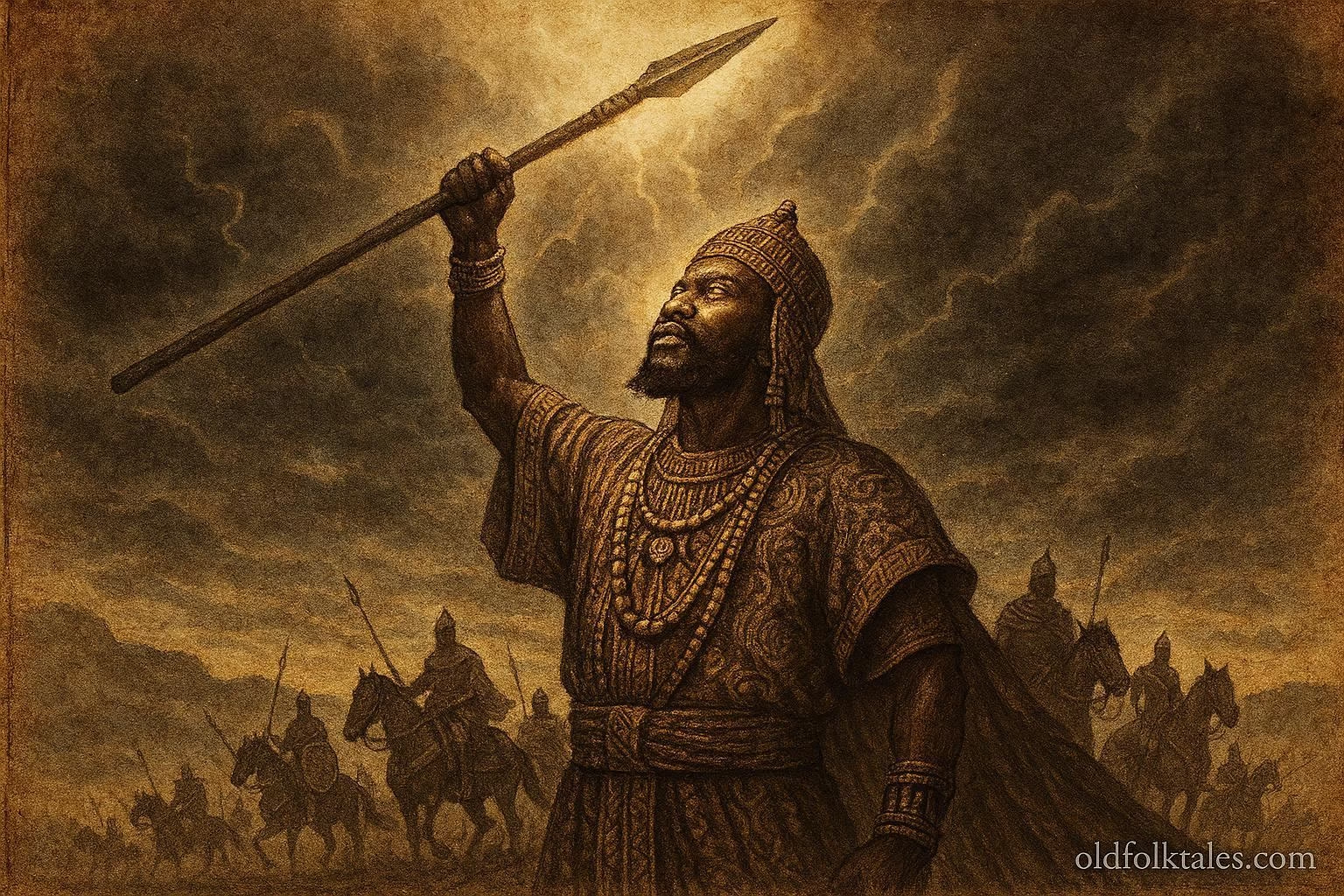
As silence fell, Sundiata raised his spear to the heavens. “Let the earth know,” he cried, “that Mali stands free!” The warriors knelt, and the griots declared him Mansa, King of Kings. Under his rule, Mali blossomed like the savanna after rain. Roads were built, gold flowed through markets, and justice sat upon every throne.
But even in triumph, Sundiata’s heart bore humility. He remembered his years of crawling, his mother’s tears, and the words of the prophecy. He decreed that every child, crippled or strong, noble or poor, was a thread in Mali’s great cloth. He honored the griots, for they were the keepers of the soul. And when his days were ended, he vanished into legend, the lion whose roar still echoes in the drums of Africa.
Click to read all Epic Heroes – journeys of courage, sacrifice, and destiny from the legends of gods and mortals
Author’s Note
The Epic of Sundiata stands as one of Africa’s greatest oral traditions, blending history, myth, and moral truth. Sundiata Keita’s story is not merely that of a warrior-king but of perseverance, destiny, and justice. His rise from disability and exile to empire reflects the eternal truth that greatness is not born of privilege but of purpose. In West African memory, he remains the Lion King, the founder who united the Mali Empire and gave it a golden age whose echoes reach across centuries.
Knowledge Check
-
What prophecy foretold Sundiata’s birth, and how did it shape his destiny?
-
How did Sundiata overcome his early disability, and what symbolic meaning does this hold?
-
What moral lessons did Sundiata learn during his exile in Mema?
-
How did Sundiata defeat the sorcerer Soumaoro Kanté in battle?
-
What values did Sundiata promote as king of Mali, and how did they shape his empire?
-
Why is Sundiata Keita remembered as both a historical and mythic hero in African tradition?
Source: Djibril Tamsir Niane, Sundiata: An Epic of Old Mali (UNESCO, 1960).
Cultural Origin: Mandinka people of the Mali Empire, West Africa. This oral epic reflects the history, values, and cosmology of the Mandinka, blending myth, prophecy, and the moral framework of leadership and justice.