Susanoo (須佐之男命, Susanoo-no-Mikoto) is the formidable Shintō kami of storms, the sea, tempests, and untamed divine power. Brother of the radiant sun goddess Amaterasu and the somber moon god Tsukuyomi, he is born from the purifying rite of Izanagi after the father of the gods returned from the land of the dead. Susanoo’s presence embodies both chaos and salvation, his storms may devastate, yet his courage restores harmony.
He is depicted as fierce, unpredictable, yet deeply capable of loyalty and justice. His sacred symbols include the roaring wind, the turbulent ocean, and the legendary sword Kusanagi-no-Tsurugi, one of Japan’s Three Imperial Regalia. Susanoo’s worship is centered especially in Izumo, where ancient shrines, such as the historic Izumo Taisha, honor his authority over land and sea. Rituals for safe voyages, agricultural prosperity, and protection from calamity often invoke his name.
Mythic Story
In the earliest age, when the islands of Japan were newborn and the heavens were young, Izanagi performed the sacred ablution that birthed three divine children. From his left eye came Amaterasu, brilliant as dawn; from his right eye came Tsukuyomi, serene as moonlight. But from his nose emerged a deity unlike the others, wild, fierce, like a storm tearing across the sea. This was Susanoo, destined to rule the oceans and tempests.
Yet Susanoo did not accept his divine role. The Kojiki recounts how he wept with such violence that the seas flooded and the mountains trembled. His grief was not childish fear but an aching longing for his mother, Izanami, who dwelled in Yomi, the land of shadows. When Izanagi commanded him to govern the seas, Susanoo refused, his sobs shaking the heavenly realm.
At last, Izanagi banished him from the High Plain of Heaven. Before descending, Susanoo wished to see his sister, Amaterasu, one final time. But the storm he carried within him frightened even the divine. Thunder rolled as he approached her shining palace, clouds boiling, winds howling, the very sky darkened beneath his stride.
Amaterasu, fearing he came to seize her domain, armed herself. The siblings confronted one another, their radiance and fury clashing like sun meeting storm. To prove his sincerity, Susanoo proposed a divine trial of purity: both would create sacred offspring from the other’s possessions. From Amaterasu’s jewels, Susanoo birthed three goddesses; from his sword, Amaterasu birthed five gods. Their contest ended, but Susanoo, ecstatic with victory, descended into reckless destruction.
He tore through Amaterasu’s rice fields, hurled a flayed horse into her weaving hall, and shattered the peace of Heaven. Terrified and betrayed, Amaterasu hid within the Heavenly Rock Cave, plunging the world into darkness. The gods begged, pleaded, and at last coaxed her out with sacred mirrors and joyful ritual, but Susanoo’s fate was sealed. He was exiled from Heaven.
Cast down from the skies, he tumbled through storms of his own making until he reached Izumo, a land of forests, mountains, and river mist. There his destiny shifted from destruction to redemption.
As he wandered along the riverbank of Hi, he came upon an elderly couple who wept with unbearable sorrow. Between them lay their last remaining daughter, Kushinada-hime, trembling like a young reed in the wind. The couple revealed their torment: each year, a monstrous eight-headed serpent, Yamata no Orochi, rose from the mountains to devour one of their daughters. Seven had been taken; tonight, Orochi would come for the last.
Susanoo’s heart, turbulent as the sea, stilled with compassion. Exiled, stripped of honor, he saw in their suffering a path to reclaim his dignity. He promised to defeat the serpent if they offered him Kushinada-hime’s hand in marriage. Desperate and grateful, they agreed.
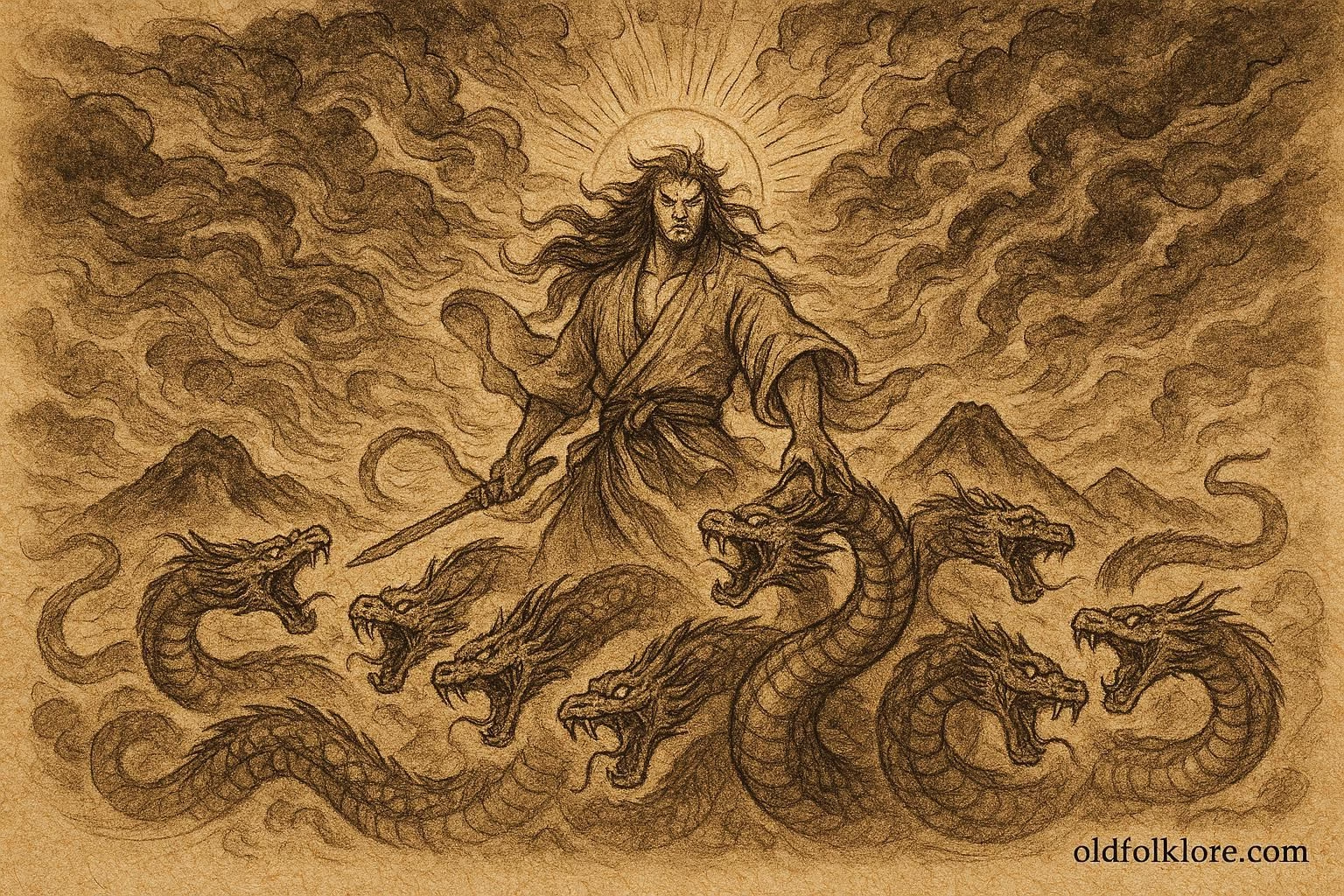
He transformed the maiden into a fine-toothed comb and placed her safely in his hair. Then, following ancient wisdom, he instructed the couple to brew eight great vats of sacred sake. Night deepened. The mountains moaned. And from the mists slithered Orochi, its eight massive heads, each with eyes like molten fire, its body stretching across eight valleys and eight hills.
The beast drank greedily from the eight vats. As it staggered, drunk and dull, Susanoo leapt forth. His blade flashed like lightning against scaly flesh. He fought with the fury of a storm breaking against jagged rocks, strike after strike, until Orochi collapsed in a shuddering roar. But as Susanoo cut into one of the great tails, his sword struck something hard, an object hidden within the monster’s body.
From deep within the serpent, Susanoo drew forth a magnificent blade: Ame-no-Murakumo-no-Tsurugi, later known as Kusanagi-no-Tsurugi, the “Grass-Cutting Sword.” In reverence, he sent the sword to Amaterasu as a peace offering, a gesture of repentance and renewed allegiance.
With Orochi slain and his honor restored, Susanoo settled in Izumo with Kushinada-hime. There he became protector of the land, ensuring fertile fields, safe harvests, and calm seas when the storms subsided. The tempestuous child of the gods had become a guardian, still fierce, still unpredictable, yet capable of devotion and righteousness.
Thus the Kojiki preserves him: a deity of thunderous chaos, profound courage, and transformative redemption.
Author’s Note
Susanoo’s myth teaches that divinity does not require perfection. His story reveals the transformative power of remorse, courage, and redemption. Even the wildest storm can become a force of protection. His tale reminds us that chaos and renewal are intertwined in the fabric of life, and that even flawed hearts can rise into heroic purpose.
Knowledge Check
Q1: What domain is Susanoo associated with?
A: Storms, seas, and tempestuous divine power.
Q2: Who are Susanoo’s siblings?
A: Amaterasu (sun) and Tsukuyomi (moon).
Q3: Why was Susanoo exiled from Heaven?
A: His destructive actions caused Amaterasu to hide in the Heavenly Rock Cave.
Q4: Where did Susanoo encounter the Orochi serpent?
A: In Izumo, along the River Hi.
Q5: What sacred object did Susanoo find inside Orochi?
A: The sword Kusanagi-no-Tsurugi.
Q6: What transformation did Susanoo perform to protect Kushinada-hime during the battle?
A: He turned her into a comb and placed her in his hair.
Source: Kojiki & Nihon Shoki, Japan.
Source Origin: Japan