
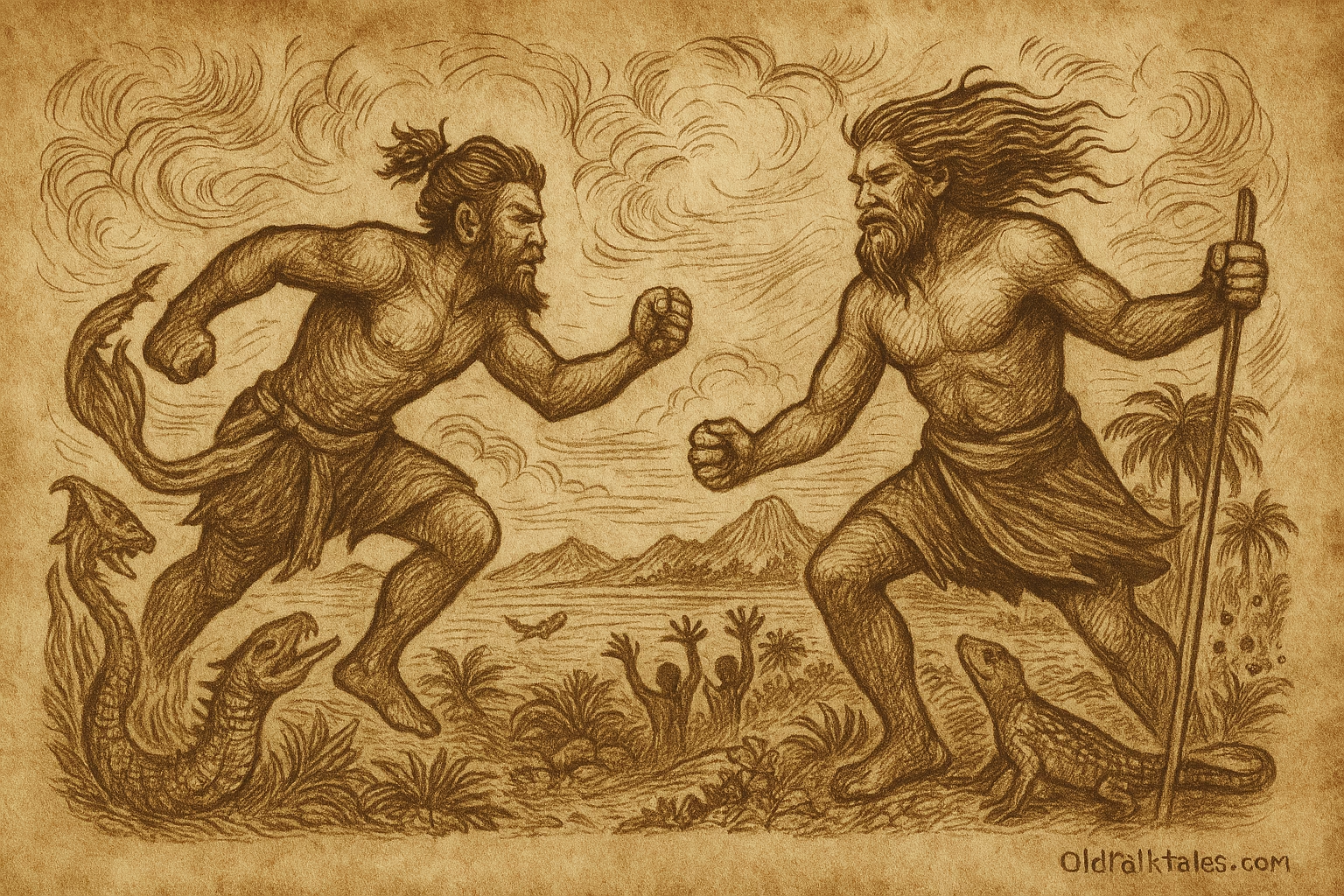
In the beginning, when the world was still being formed and the shape of things had not yet been decided, there existed two powerful brothers whose actions would determine the nature of all existence. Their names were Tagaro and Suqe, and though they shared the same divine origin, they could not have been more different in temperament and purpose.
The islands that would become Vanuatu rose from the Pacific Ocean like emeralds scattered across a vast blue cloth. Volcanic peaks crowned with jungle-touched clouds that drifted lazily across the tropical sky. Coral reefs encircled the islands in protective rings, their waters teeming with life and color. Rivers cascaded down mountainsides, cutting through dense forests where ancient trees grew in tangled profusion. It was a place of raw potential, waiting for the brothers to give it final form.
Tagaro was the elder brother, and from his essence flowed creativity, cleverness, and kindness. When he moved through the unfinished world, beauty bloomed in his wake. His heart overflowed with generosity, and he delighted in bringing forth things that would make existence joyful and meaningful. Tagaro looked at the empty world and saw infinite possibilities for wonder and harmony.
Suqe, the younger brother, carried within him a very different nature. Jealousy burned in his chest like a constant fire, and he could not bear to see his brother create without wanting to destroy or corrupt what had been made. Where Tagaro found joy in creation, Suqe found satisfaction only in chaos and disruption. His unpredictable moods swung wildly between sullen silence and explosive rage, and destruction followed wherever his shadow fell.
The world became their canvas, and upon it they painted a story of eternal conflict between creation and corruption, beauty and suffering, harmony and chaos.
Tagaro began his work with enthusiasm and love. He shaped birds of every kind some with brilliant plumage that flashed like living jewels in the sunlight, others with songs so sweet they could bring tears to the eyes of anyone who heard them. He created parrots whose feathers held every color of the sunset, doves whose gentle cooing brought peace to troubled hearts, and kingfishers that darted through the air with impossible grace.
But Suqe watched his brother’s creations with bitter envy twisting his features. He could not stand to see such beauty exist without his mark upon it. When Tagaro’s back was turned, Suqe crept among the birds and transformed many of them. He gave sharp talons to some, turning them into hawks and eagles that would hunt and kill their gentler cousins. He twisted others into carrion eaters, creating vultures and crows that would feast on death and decay. Where Tagaro had made only beauty, Suqe introduced predation and fear.
Undeterred, Tagaro continued creating. He planted trees throughout the islands breadfruit trees heavy with nourishing fruit, coconut palms that would provide food and drink and shelter, mango trees whose fruit was so sweet it seemed to contain captured sunlight. He made banana plants and taro, yams and sweet potatoes, all the foods that would sustain human life. Each tree and plant he touched became generous and life-giving, designed to provide abundance for those who would one day inhabit these islands.
But again, Suqe followed behind his brother like a dark shadow. He found the fruits and plants Tagaro had made and corrupted many of them. He introduced poison into certain fruits, making them deadly to eat despite their appealing appearance. He created thorns and stinging plants, put toxins in roots that looked like food, and made some trees bear fruit so bitter it could not be swallowed. Where Tagaro had intended only nourishment, Suqe brought danger and death.
Tagaro created gentle animals peaceful creatures that would coexist harmoniously with humans and with each other. He made pigs to root in the forest floor, dogs to be companions, cattle to provide meat and labor. He shaped lizards that would bask peacefully on sun-warmed rocks, and fish that would fill the lagoons with silver life.
Suqe’s jealousy burned hotter with each of his brother’s creations. He took many of Tagaro’s gentle animals and transformed them into predators and pests. He created sharks with rows of razor teeth to terrorize the waters, poisonous snakes to hide in the grass and strike without warning, and centipedes whose bite brought agony. He made mosquitoes to spread disease, rats to steal grain, and wild boars with aggressive temperaments. For every peaceful creature Tagaro made, Suqe seemed determined to create something dangerous or destructive.
Most cruelly, Suqe introduced sickness into the world. He breathed diseases into the air, created fevers and infections, brought pain and suffering to bodies that Tagaro had intended to be strong and healthy. He made wounds that festered, coughs that would not heal, and ailments that could weaken even the strongest person. Death itself became Suqe’s companion, walking beside him as he undid his brother’s work.
But Tagaro, though saddened by his brother’s destructive impulses, was not defeated. He understood that he could not prevent Suqe’s interference his brother’s nature was as fundamental as his own but he could give humans the tools they needed to survive in a world that contained both beauty and danger, both abundance and scarcity.
In response to every misfortune Suqe created, Tagaro countered with wisdom and knowledge.
When Suqe brought sickness, Tagaro taught humans about healing herbs. He showed them which plants could cure fevers, which roots could ease pain, which leaves could be crushed and applied to wounds to prevent infection. He revealed the medicinal properties hidden in bark and flowers, in fungi and moss, creating an entire pharmacopeia that grew naturally throughout the islands.
When Suqe created dangerous animals, Tagaro taught humans how to recognize and avoid them, how to move safely through forest and reef, which creatures to fear and which to trust. He gave them knowledge of animal behavior and the wisdom to read warning signs in nature.
When Suqe corrupted food sources, Tagaro taught humans which plants were safe to eat and which were poison, how to prepare certain foods to remove toxins, how to test unfamiliar fruits before consuming them. He showed them methods of cultivation and storage, ways to ensure good harvests and prepare for lean times.
Most importantly, Tagaro created rituals, ceremonies, and taboos sacred knowledge that would help humans maintain balance and harmony in a world filled with chaos. He taught them dances that would strengthen community bonds and honor the spirits. He established customs that would protect people from danger and ensure proper relationships between humans and the natural world. He created systems of knowledge about the right times to plant and harvest, about respecting sacred places, about living in harmony with forces greater than themselves.
The brothers’ struggle became woven into the very fabric of existence. When Tagaro brought calm seas, Suqe stirred up storms that could smash canoes and flood villages. When Tagaro blessed the gardens with abundant growth, Suqe sent droughts or plagues of insects to destroy the crops. When Tagaro inspired humans with creativity and cooperation, Suqe whispered jealousy and conflict into their hearts, turning friend against friend and village against village.
Yet for every destructive act Suqe committed, Tagaro responded with new wisdom and new tools for survival. He taught humans how to read the signs of coming storms in the behavior of birds and the color of clouds. He showed them how to store food against times of scarcity and how to build houses that could withstand the fiercest winds. He gave them songs and stories that would bind communities together even when Suqe tried to drive them apart.
The endless cycle continued creation and corruption, blessing and curse, harmony and conflict. Neither brother could defeat the other, for they were both fundamental aspects of existence itself. Tagaro could not eliminate Suqe’s destructive influence any more than light could permanently banish darkness, or day could erase the night. And Suqe, despite all his efforts, could never completely undo his brother’s creative work or extinguish the hope and resilience Tagaro had planted in human hearts.
The people of Vanuatu came to understand that this eternal struggle between the brothers explained the mixed nature of their world. They lived in a place of extraordinary beauty pristine beaches, lush forests, abundant reefs but also in a land subject to cyclones, earthquakes, and volcanic eruptions. They enjoyed harvests of incredible bounty but also faced periods of hunger and want. They experienced the joy of community and family but also knew conflict and suffering.
Through Tagaro’s gifts of ritual, knowledge, and wisdom, humans learned to navigate this complex world. They developed sophisticated systems of agriculture, fishing, and navigation. They created elaborate ceremonies that reinforced social bonds and maintained spiritual connections. They built cultures rich in art, music, and storytelling all ways of preserving and transmitting the wisdom Tagaro had given them to counter Suqe’s chaos.
Even today, when storms batter the islands, the people remember that both brothers still shape their world. When crops flourish or fail, when fish fill the nets or avoid them, when communities thrive or struggle, they see the ongoing influence of Tagaro and Suqe. The brothers’ struggle did not end in ancient times but continues eternally, their opposing forces creating the dynamic tension that characterizes all existence.
The people learned to be grateful for Tagaro’s blessings while remaining vigilant against Suqe’s disruptions. They understood that life required both acceptance of inevitable hardships and active effort to create beauty and goodness. They knew that wisdom lay in using Tagaro’s gifts ritual, knowledge, healing arts, and community bonds to minimize suffering while maximizing joy and abundance.
In this way, the brothers who shaped the world also shaped the character of the people who inhabited it, teaching them resilience, wisdom, and the understanding that existence is always a balance between opposing forces and that how we respond to both blessing and curse defines who we ultimately become.
Click to read all Myths & Legends – timeless stories of creation, fate, and the divine across every culture and continent
The Moral Lesson
The legend of Tagaro and Suqe teaches us profound truths about the dual nature of existence and how we must respond to a world that contains both good and evil, beauty and suffering. The story shows us that destructive forces whether external dangers or internal conflicts are an inherent part of reality that cannot be entirely eliminated. However, we are not helpless before these forces. Just as Tagaro countered every one of Suqe’s corruptions with wisdom, healing, and protective knowledge, we too can respond to life’s inevitable challenges with creativity, resilience, and community support.
Knowledge Check
Q1: Who were Tagaro and Suqe, and how did their natures differ? A: Tagaro and Suqe were powerful divine brothers who shaped the world of Vanuatu. Tagaro was creative, clever, and kind; his essence brought beauty, harmony, and generosity. Suqe was jealous, destructive, and unpredictable; driven by envy, he found satisfaction only in chaos and corruption. Though they shared the same divine origin, they represented opposing fundamental forces of creation and destruction.
Q2: What kinds of things did Tagaro create in the world? A: Tagaro created beautiful and beneficial things throughout the islands: birds with brilliant plumage and sweet songs, fruit trees that provided abundant nourishment (breadfruit, coconut palms, mangoes), staple crops (taro, yams, bananas), and gentle animals designed to coexist peacefully with humans. Everything he created was intended to bring joy, sustenance, and harmony to existence.
Q3: How did Suqe corrupt his brother’s creations? A: Suqe followed behind Tagaro and twisted his beautiful creations. He transformed peaceful birds into predators with sharp talons, introduced poison into fruits despite their appealing appearance, created thorns and stinging plants, turned gentle animals into dangerous predators and pests (sharks, poisonous snakes, disease-carrying mosquitoes), and most cruelly, introduced sickness, pain, and death into the world.
Q4: How did Tagaro respond to Suqe’s destructive interference? A: Rather than trying to prevent Suqe’s corruption (which was impossible since his brother’s nature was fundamental), Tagaro countered with wisdom and knowledge. He taught humans about healing herbs, how to recognize and avoid dangers, which foods were safe to eat and how to prepare them, and how to read natural warning signs. He created rituals, ceremonies, and taboos that would help humans maintain balance and survive in a world containing both beauty and danger.
Q5: What does the ongoing struggle between the brothers represent? A: The eternal struggle between Tagaro and Suqe represents the dual nature of existence itself: the coexistence of good and evil, beauty and suffering, abundance and scarcity, harmony and conflict. Their continuing opposition explains why the world contains both blessings and curses: calm seas and destructive storms, bountiful harvests and crop failures, community cooperation and social conflict. Neither brother can defeat the other because they represent fundamental, inseparable aspects of reality.
Q6: What is the cultural significance of this legend for the people of Vanuatu? A: This legend explains the mixed nature of life in Vanuatu and provides a framework for understanding why both wonderful and terrible things happen. It validates the sophisticated knowledge systems (agriculture, medicine, navigation, rituals, and ceremonies) that communities developed to survive and thrive. The story teaches that wisdom lies in using Tagaro’s gifts (knowledge, ritual, healing arts, community bonds) to counter Suqe’s chaos, and that human resilience comes from responding to inevitable hardships with creativity, cooperation, and the preservation of ancestral wisdom.
Source: Adapted from A.B. Deacon’s Ethnology of Vanuatu (Banks Islands Myths)
Cultural Origin: Northern Vanuatu (Banks Islands region), Republic of Vanuatu, Melanesia, South Pacific






