The Takai yam ceremonies emerge from the rich cultural and mythological traditions of the Trobriand Islands of Papua New Guinea. Known for their deep horticultural identity, the Trobriand people view yam cultivation as the foundation of life, social prestige, and spiritual balance. This ritual system, observed and documented since the early twentieth century, is tied to ancient beliefs in ancestral spirits, fertility guardians, and mythic figures who first taught humanity how to plant, nurture, and honor yams. As described in early anthropological works, especially those by Bronisław Malinowski, the Takai ceremonies reflect how Trobriand life merges agriculture with cosmology, transforming the yam into a sacred link between humans, the land, and the invisible world of spirits.
Description
The Takai ceremonies revolve around the growing, displaying, and exchanging of yams, an activity that shapes the rhythm of Trobriand life. Yam growing is not merely agricultural labor; it is a ritual obligation carried out with precision, taboos, and spiritual intention. Men cultivate yams for their sisters and married daughters, expressing responsibility, lineage honor, and social standing. Each yam garden is tended with care, secrecy, and ritual caution, since the size and condition of the yams directly reflect the cultivator’s diligence and moral quality.
As the annual yam cycle progresses, the anticipation for Takai rises. Weeks before the ceremony, households prepare yam houses, elevated structures where ceremonial yams will be displayed. These houses are cleaned, decorated, and symbolically purified to receive the fruits of the harvest. The arrival of new yams signals renewal, abundance, and the spiritual blessing of the ancestors.
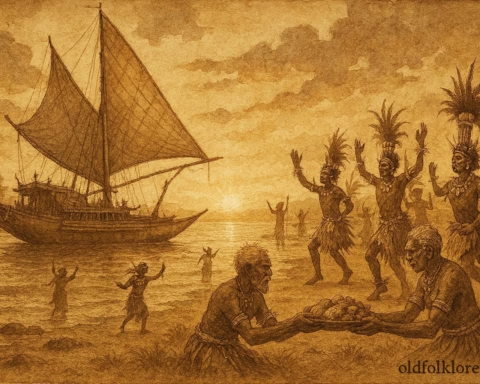
During the Takai festival itself, villagers gather for public feasting, dance performances, and the formal presentation of yams. Men carry their largest yams, often astonishingly long, carefully shaped, and polished, into the village square. These yams are displayed with pride, arranged artistically, and judged by chiefs who act as cultural arbiters of prestige. The sight of these ceremonial yam displays communicates harmony, strength, and the collective vitality of the community.
Traditional dances accompany the displays. Men and women, adorned with body decorations, shell ornaments, and bright plant fibers, move in rhythmic patterns that honor fertility spirits and ancestral protectors. Their chants recall ancient myths, praising the beings who taught the first cultivators how to plant yams and maintain cosmic balance.
Gift exchanges form a central part of the ritual. Yams are offered not only to kin but also to political allies, affines, and community leaders. These exchanges strengthen bonds, reaffirm obligations, and distribute spiritual blessings throughout the village. Each yam given carries symbolic weight, representing respect, loyalty, and continuity. After the formal presentations, communal feasting begins, celebrating abundance and the restored harmony between people, land, and spirits.
Mythic Connection
In Trobriand cosmology, yams are more than food; they are embodiments of life force, ancestral presence, and fertility. Mythic accounts speak of primordial beings who emerged from the earth and brought yams as gifts of order and sustenance. These beings taught early humans the sacred methods of cultivation and the moral rules that must accompany them. To neglect yams is to disrupt the balance between the living and the dead, the visible and the invisible.
The Takai ceremonies reenact these mythic origins. Each beautifully grown yam symbolizes the renewal of ancestral blessings and the fulfillment of ancient obligations. The ritual dances echo stories of spirit ancestors who once performed the first harvest celebrations. The public display of yams mirrors mythic competitions in which chiefs demonstrated their power through bountiful harvests granted by the spirits. Because yams are linked to fertility deities, the Takai ritual ensures that the land remains alive, rains come in their season, and clan lineages continue.
Through Takai, the Trobriand people reaffirm their relationship with the supernatural world and acknowledge that abundance depends on moral behavior, social cooperation, and respect for ancestral law. It is a ceremony where myth becomes visible, where the community reenacts cosmic order through the simple yet sacred act of harvesting and sharing yams.
Author’s Note
This article explores the Takai yam ceremonies as a cultural and spiritual system that unites agriculture, ancestry, and cosmology in the Trobriand Islands. The ritual demonstrates how a staple crop becomes a sacred symbol of fertility, moral order, and social prestige. Through its displays, dances, and exchanges, the Takai ceremony expresses the enduring connection between the living community and its ancestral guardians.
Knowledge Check
1. What makes yams sacred in Trobriand culture?
They embody life force, ancestral presence, and fertility.
2. Why are ceremonial yam houses important?
They serve as purified, decorated spaces for displaying sacred yams.
3. What role do chiefs play during Takai?
Chiefs judge yam displays and reinforce social hierarchy.
4. How do yams express social prestige?
Their size and quality reflect the cultivator’s diligence and moral standing.
5. Why are dances included in the ritual?
They honor fertility spirits and reenact ancestral myths.
6. How do yam exchanges strengthen community bonds?
They symbolize loyalty, obligation, and the circulation of spiritual blessings.