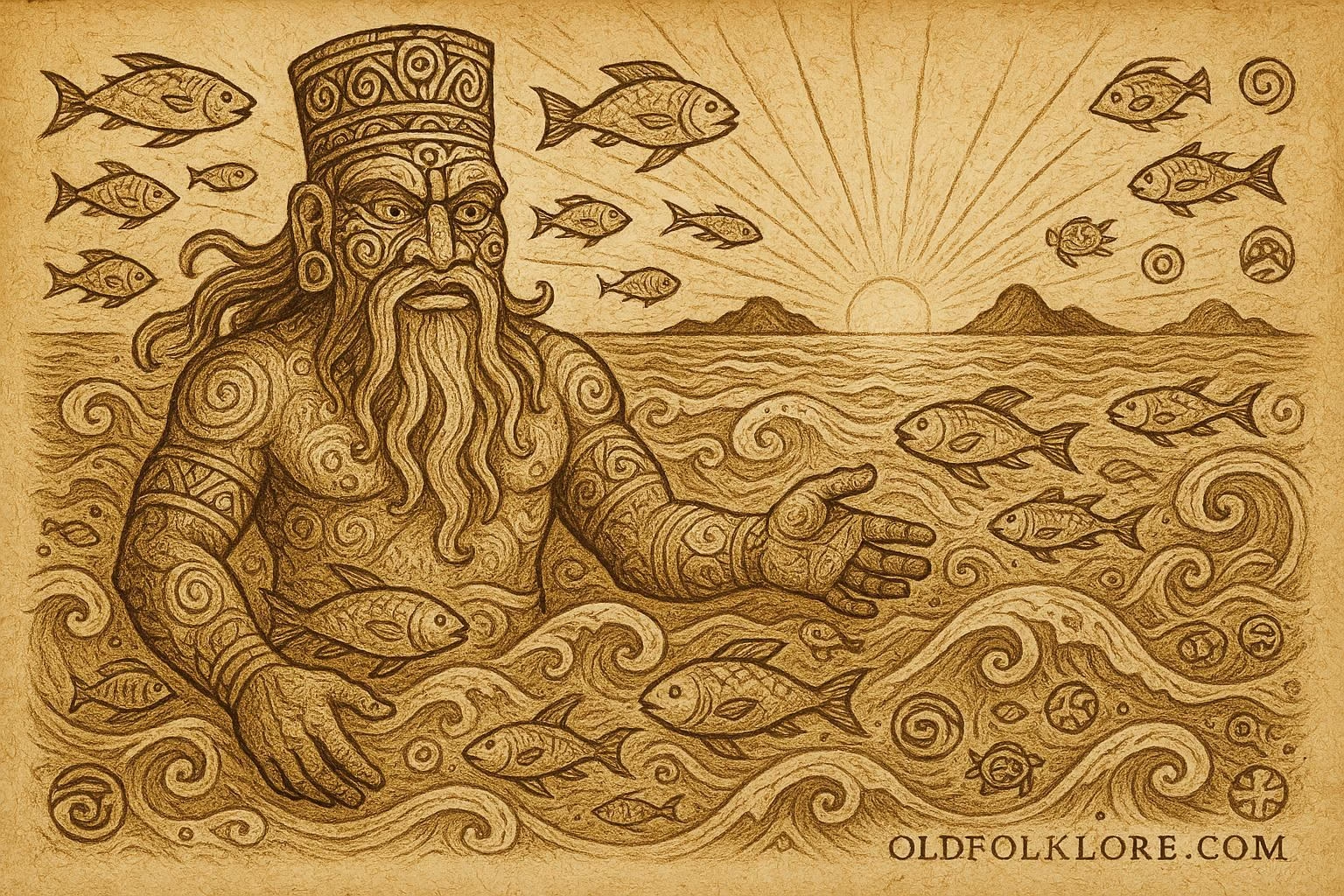
Tangaroa, also called Tagaloa or Tangaloa in various Polynesian languages, is the supreme deity of the ocean, its creatures, and its boundless mysteries. In Māori cosmogony, he is one of the children of Ranginui (Sky) and Papatūānuku (Earth), born into the cosmic struggle of the first gods. His domain stretches across the waters, governing fish, sea mammals, tides, and storms. In certain traditions, Tangaroa is rival to Tāne, god of forests, highlighting the tension between land and sea. He is revered as a provider, protector, and ancestral figure, often invoked in fishing rites, navigation prayers, and rituals asking for bountiful harvests from the ocean. Sacred symbols include shells, coral, and depictions of fish or serpentine forms, while offerings of food, especially fish, honor his favor.
Mythic Story: Tangaroa, Father of the Sea
Long before men sailed the canoes across the vast Pacific, the world was young, and the sky and earth clung together in darkness. From Ranginui, the Sky Father, and Papatūānuku, the Earth Mother, many children were born. Among them was Tangaroa, the god whose heart pulsed with the rhythm of the tides, whose eyes mirrored the endless blue, and whose breath shaped the waves.
From the earliest days, Tangaroa wandered the watery expanses, populating the seas with fish, shellfish, and all manner of marine life. His laughter became the song of the waves, and his anger stirred tempests that tossed islands as if they were mere toys. Yet, despite his power, he was bound to his siblings in a cosmic struggle. Tāne, the god of forests, sought to pull apart their parents, Ranginui and Papatūānuku, to bring light into the world. Tangaroa objected, wishing the world to remain close to the womb of the earth, where waters met the soil and life moved in harmony.
The gods argued, and a division was made. Ranginui’s sky rose, and Papatūānuku sank, leaving a space between them filled with air and sunlight. Tangaroa descended into the ocean depths, claiming the seas as his own. He stretched his hands over every wave, and from them, life arose: the shimmering schools of fish, the gliding turtles, and the mighty whales that breached the surface in joy. Every current carried a part of his spirit, connecting the scattered islands across the horizon.
Yet harmony was fragile. Tangaroa’s descendants, the first fish people, often quarreled among themselves, and his temper flared. From the heavens, Tāne looked down, proud of his forests, but wary of the ocean encroaching on the land. In some tales, Tangaroa sent storms to remind humanity of his dominion, sweeping over canoes that disrespected his power. In others, he revealed hidden fishing grounds, guiding skilled navigators with the glint of fish scales beneath the surface, teaching humankind the art of reading the sea.
One story tells of Tangaroa’s grief when a mortal chief neglected the offerings to the sea. Waves grew high, fish fled, and the waters became murky. The people, fearing famine and wrath, prayed to Tangaroa. Deep in the sea, the god heard their cries. Rising, he parted the waves, allowing the chief to cast his nets and restore balance. From that day, the chief and his people never neglected the ocean again, and the ritual of offering the first catch to Tangaroa became sacred, honoring the god who gave life and sustenance.
Across Polynesia, Tangaroa’s presence was felt in every tide and current. Fishermen would whisper his name before casting nets; canoes carried carvings of his form at the bow, seeking his protection on long voyages. Even in the islands far from New Zealand, the echo of Tangaroa’s power was recognized, a unifying spirit connecting distant shores through the eternal, rolling ocean.
Thus, Tangaroa is not merely the father of fish and sea creatures, but of life, sustenance, and the enduring link between the people and the waters that sustain them. He embodies the power, mystery, and generosity of the ocean, a deity whose moods shape the fortunes of men and the rhythm of the world.
Discover the gods, goddesses, and divine spirits who ruled the heavens and shaped human fate
Author’s Note
Tangaroa teaches that life is sustained by respect, gratitude, and harmony with nature. The ocean, vast and unpredictable, mirrors human experience: nurturing yet demanding, generous yet formidable. Through Tangaroa, the Polynesians express reverence for the forces that sustain life and demonstrate the interdependence between humans, gods, and the natural world. His myths remind us that power and wisdom are inseparable from responsibility and care.
Knowledge Check
Q1. Title: Who is Tangaroa?
A: Tangaroa is the principal Polynesian god of the ocean, marine life, and tides, known as Tagaloa or Tangaloa in other island traditions.
Q2. Title: What is Tangaroa’s domain?
A: Tangaroa governs the seas, fish, whales, tides, and storms; he is both creator and protector of marine life.
Q3. Title: Who are Tangaroa’s parents?
A: Ranginui (Sky Father) and Papatūānuku (Earth Mother) are his parents, making him one of the first gods in Māori cosmology.
Q4. Title: How did Tangaroa interact with humans?
A: He guided fishermen, punished disrespect, provided bountiful catches, and was honored through offerings of food and ritual prayers.
Q5. Title: What is Tangaroa’s relationship with Tāne?
A: Tangaroa and Tāne, god of forests, sometimes competed, reflecting the cosmic tension between sea and land in Polynesian mythology.
Q6. Title: What lessons does Tangaroa’s myth convey?
A: Tangaroa’s stories emphasize respect for nature, balance between humans and the environment, and the power of divine forces sustaining life.
Source: Sir George Grey, Polynesian Mythology / Legends of the Māori; Edward Tregear, Maori-Polynesian Comparative Dictionary; Te Ara Encyclopedia of New Zealand, Polynesian oral traditions.
Origin: Polynesia (Māori: Aotearoa / New Zealand, Samoa, Tonga, Hawai‘i)