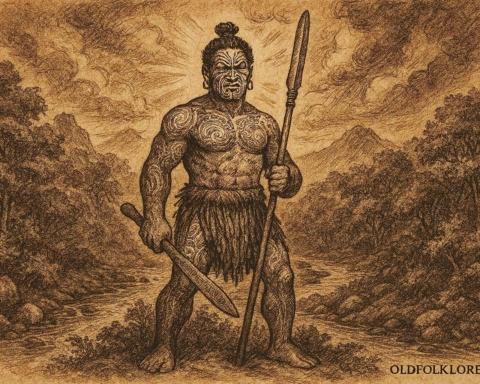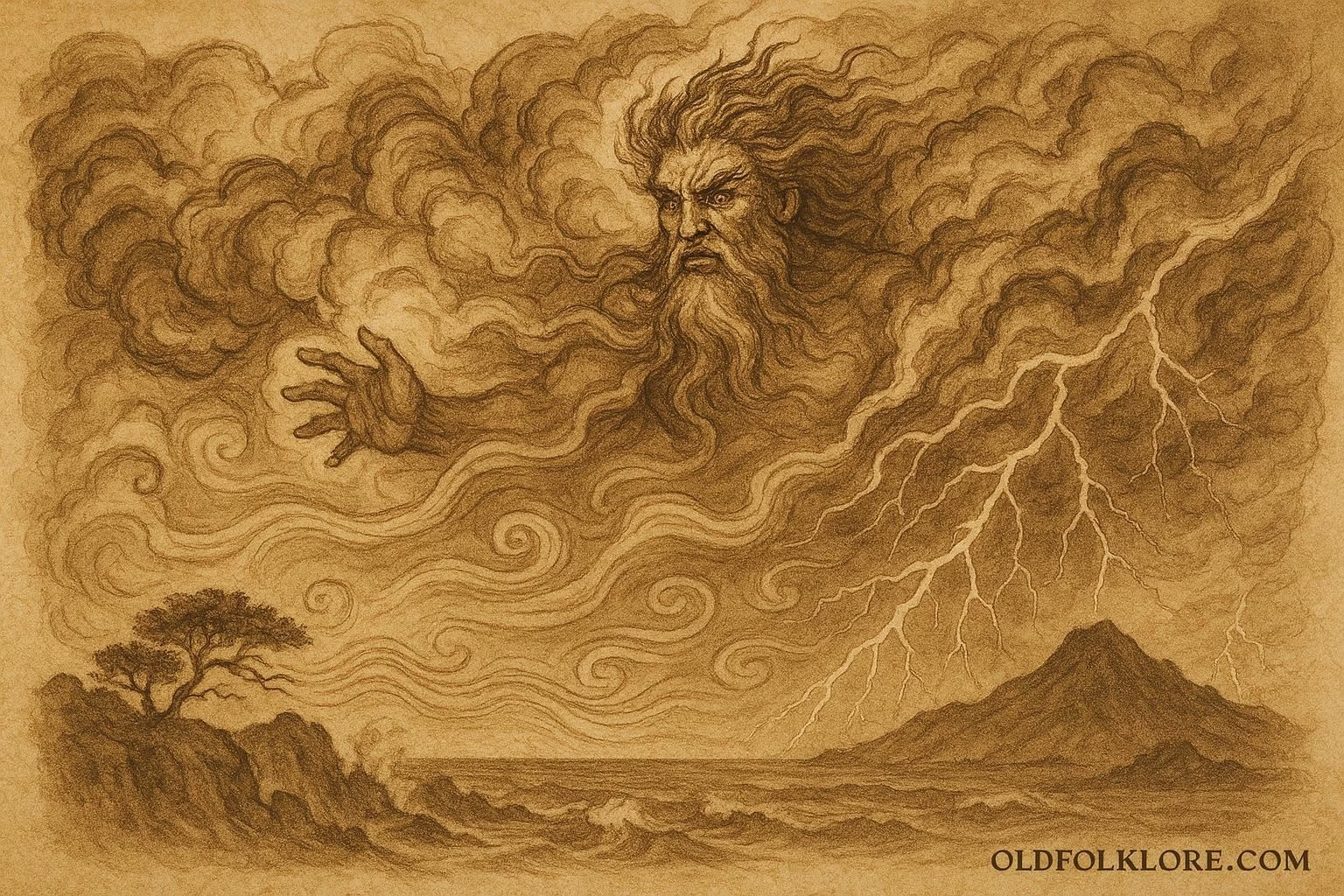
Tāwhirimātea, child of Ranginui (Sky Father) and Papatūānuku (Earth Mother), is the Māori deity of wind, storms, and weather. Fierce, unyielding, and deeply loyal to his father, he embodies both divine fury and cosmic justice.
As a god of elemental force, Tāwhirimātea commands hurricanes, gales, lightning, and driving rains, shaping the land and seas. His influence touches both the natural world and human endeavors, reminding mortals of the capricious power of the elements. Sacred forests, high mountain passes, and coastlines bear the mark of his tempests, and Māori oral traditions preserve his memory through chants, stories, and genealogical accounts.
Mythic Story
Long ago, the world was dark, locked in eternal embrace by Ranginui and Papatūānuku. Light could not penetrate the closeness of Sky and Earth, and life yearned for space to flourish. Seeing this, their children gathered in secret and resolved to separate their parents, lifting Ranginui into the heavens and stretching Papatūānuku across the earth below.
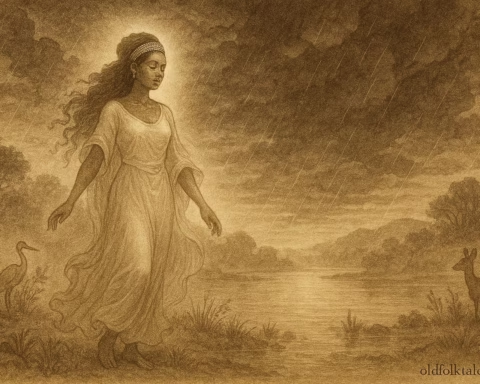
All the children agreed, all except Tāwhirimātea. Filled with grief and steadfast loyalty to his father, he could not abide the separation. He rose as a tempest incarnate, his voice echoing like rolling thunder, eyes blazing with fury. From his hands and breath, hurricanes and gales sprang forth, bending forests and sending seas into turmoil. Rain fell in torrents, rivers swelled, and lightning split the sky, a testament to his anguish.
He unleashed his wrath upon his brothers. Tangaroa, lord of the seas, saw his children, fish and marine creatures, driven from the rivers to the ocean depths. Tūmatauenga, god of war, faced devastating winds that uprooted forests and scattered his warriors. Rongo and Haumia, stewards of peace and wild foods, suffered as crops and forests trembled under the force of Tāwhirimātea’s storms.
Some stories describe him tearing out his eyes and casting them into the sky, forming stars, eternal witnesses to his grief and steadfastness. In other traditions, his pursuit of Tangaroa’s children drives them from the land, establishing boundaries between sea and land creatures that remain today.
Tāwhirimātea’s fury was not merely vengeance; it was an assertion of cosmic morality. He reminded all beings, gods and humans alike, that actions have consequences, that even the most divine must honor bonds of kinship and respect the natural order. Though his storms could wreak destruction, they also taught lessons in resilience, adaptation, and reverence for nature’s power.
Across generations, Tāwhirimātea became an eternal force. Winds remain unpredictable, sudden, and formidable, and the cycles of weather continue to echo his ancient grief. His narrative is woven into Māori understanding of the world: the skies, seas, and land are not mere scenery but living testimony to divine acts of loyalty, anger, and justice.
By weathering his storms, humans learn endurance. By observing the balance of his wrath, they learn respect. Tāwhirimātea’s presence ensures that cosmic order, though contested, tested, and turbulent, endures, linking the heavens, earth, and seas in an intricate web of cause and effect.
Author’s Note
Tāwhirimātea’s myth illustrates that devotion and moral conviction can be both beautiful and devastating. His story teaches that loyalty, grief, and anger are forces that shape the world as much as creation itself. Māori cosmology preserves these lessons, showing that the natural world is not separate from moral and social principles, each wind, storm, and tempest is a manifestation of divine intention and remembrance.
Knowledge Check
Q1: Who are Tāwhirimātea’s parents?
A: Ranginui (Sky Father) and Papatūānuku (Earth Mother).
Q2: Why did Tāwhirimātea oppose the separation of his parents?
A: Out of grief and loyalty to his father, Ranginui.
Q3: What forces does Tāwhirimātea command?
A: Winds, storms, hurricanes, lightning, and rain.
Q4: How did Tāwhirimātea punish his siblings?
A: By unleashing storms that scattered seas, uprooted forests, and drove Tangaroa’s children into the ocean.
Q5: What symbolic act involving his eyes is sometimes told in the myths?
A: He tore out his eyes and cast them into the sky, creating stars.
Q6: What moral or lesson does Tāwhirimātea’s story convey?
A: Loyalty, grief, and anger shape the cosmos, teaching respect for nature, kinship, and consequences.
Source: Polynesian Mythology and Māori Oral Traditions, Aotearoa New Zealand
Source Origin: Māori, Aotearoa New Zealand