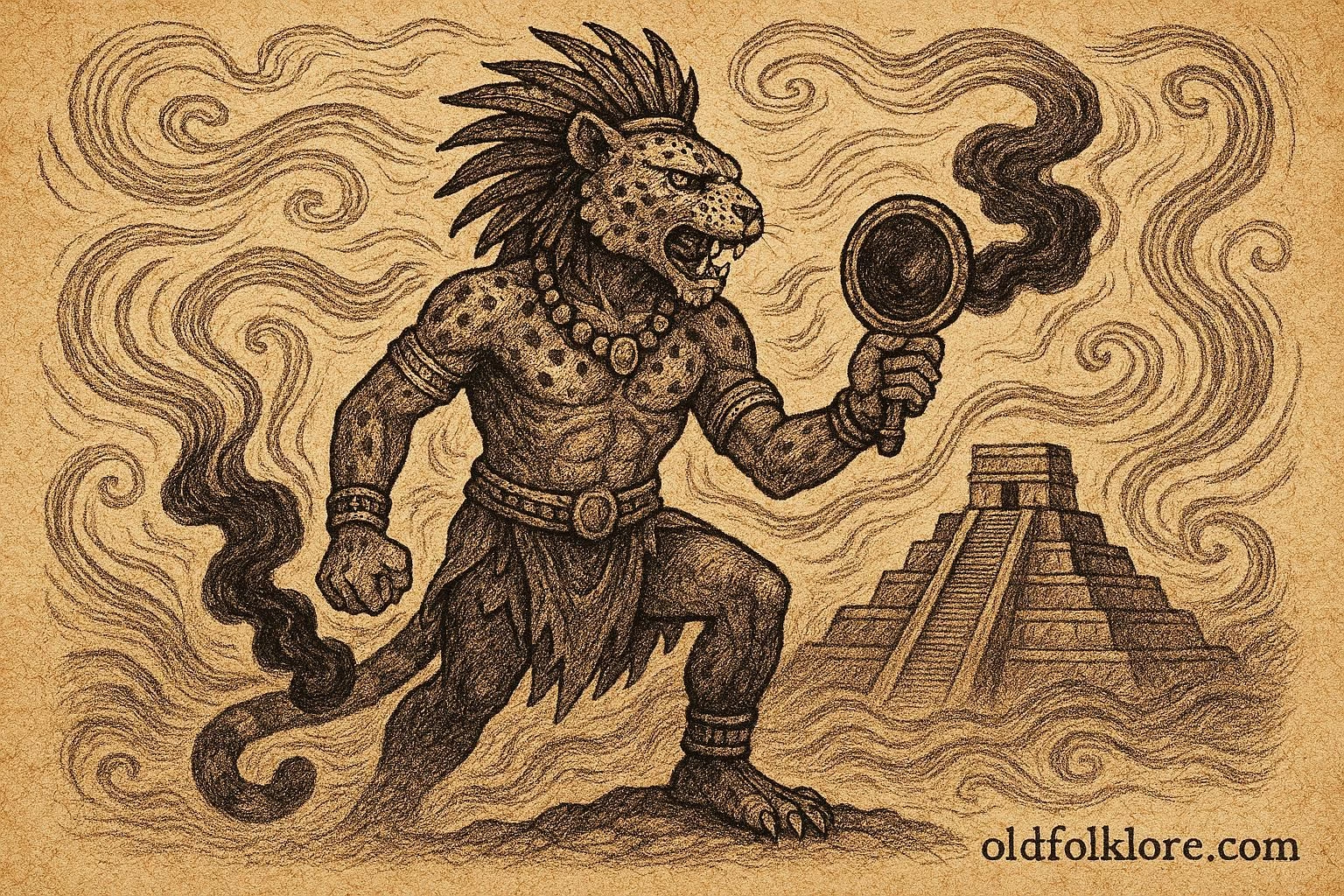
Tezcatlipoca: Tezcatlipōca in Classical Nahuatl, meaning “Smoking Mirror”, stands as one of the most formidable and complex deities of the Aztec pantheon. He is a god of night, sorcery, rulership, conflict, fate, and cosmic change, embodying both chaos and divine order. His obsidian mirror, often shown emitting smoke, symbolizes his ability to see all things, including the hidden truth within the human heart.
Associated with jaguars, obsidian, and night winds, Tezcatlipoca appears in many codices as a youthful but fearsome god painted black and yellow, with a severed foot replaced by a serpent or mirror, a mark of his cosmic struggle with Quetzalcóatl. He is both a creator and destroyer, a patron of kings and warriors, and the divine force who challenges individuals to confront their destiny.
Temples dedicated to him rose prominently in Tenochtitlan, where rituals honored his power over fate, rulership, and the ever-shifting balance of the world.
Mythic Story
In the sacred stories of the Aztec world, Tezcatlipoca emerges not as a simple force of darkness, but as a presence that shapes the cosmos through confrontation, revelation, and the testing of hearts. Among the many myths recorded in the Florentine Codex, one tale stands out for the clarity with which it reveals his nature, the legend of how Tezcatlipoca shattered the illusions of a king and reshaped the course of a city.
Long ago, in the ancient capital of Tollan, there ruled a wise and respected king named Topiltzin Quetzalcóatl. His city flourished under order, craft, and righteous ritual. The people loved him, and his reign became a symbol of ideal governance. Yet order alone could not command the cosmos. For where there is harmony, the shadow inevitably follows, and where mortals cling too tightly to purity, they risk forgetting the deeper truths of balance.
Across the woven fabric of night came Tezcatlipoca, carrying his obsidian mirror, swirling with smoke, reflecting not what people wished to see, but what truly dwelled within them.
He entered Tollan disguised as a humble wanderer. None recognized the divinity behind the black paint, the jaguar markings, or the hidden brilliance of the Smoking Mirror. Yet wherever he walked, people felt unsettled, as though their certainties trembled at the edge of change.
Tezcatlipoca observed the king’s rigid devotion to moral purity. It was admirable, yet fragile. A ruler who cannot face the chaos of being human, he understood, cannot withstand the chaos of the world. And so, the god decided to test him, not out of cruelty, but out of the cosmic necessity that all growth requires adversity.
One night, during the festival fires, Tezcatlipoca approached the king with a gift: an obsidian mirror wrapped in cloth.
“This,” the wanderer said, “is a window into what lies behind all things.”
When Quetzalcóatl looked into it, he saw not glory, not wisdom, but the weight of his own humanity, his doubts, imperfections, and vulnerabilities. The shock pierced him. In the version preserved by Sahagún, Tezcatlipoca then revealed intoxicating drinks and illusions that clouded the king’s judgement. Whether through deception or the unveiling of suppressed desires, the once-rigid king faltered.
In that moment of weakness, Tollan’s ruler confronted the truth Tezcatlipoca had come to reveal: even the most righteous cannot escape the complexity of the human heart.
The stories say that shame overcame him. Some versions claim he fled east toward the sea; others that he transformed into the morning star. But all agree that Tezcatlipoca’s intervention shattered the illusion of perfect kingship and ushered in a new cycle of change.
As the king vanished, Tezcatlipoca cast off his disguise. In a plume of obsidian smoke he returned to divine form, youthful, powerful, and terrible. His jaguar roar echoed over Tollan. Where his foot should have been, the gleam of the Smoking Mirror shone like a fragment of night sky.
He did not destroy Tollan out of malice; rather, he allowed the city to continue into the world that change demanded. The people would remember both the glory of their king and the lesson of the god who tested him: that destiny is shaped not only by strength, but by one’s willingness to face truth.
For Tezcatlipoca is not merely a god of trickery. He is the force that reveals what lies beneath the surface. He is the shifting wind that unmasks delusion. He is the divine jaguar who walks unseen through the nights of the human soul, reminding all, even kings, that power without self-knowledge cannot endure.
Thus the Aztecs honored him not only out of fear, but out of respect, understanding that the Smoking Mirror reflects the deepest essence of the world.
Learn the ancient stories behind deities of light, storm, and shadow from cultures across the world
Author’s Note
The myth of Tezcatlipoca and the fall of Tollan teaches that strength and virtue must be matched with humility and self-awareness. Tezcatlipoca’s tests remind us that facing uncomfortable truths is essential to growth, and that destiny belongs not to the flawless, but to those who can confront the shadows within themselves.
Knowledge Check
Q1: What does Tezcatlipoca’s name mean?
A: “Smoking Mirror,” referring to his obsidian mirror that reveals hidden truth.
Q2: What is Tezcatlipoca the god of?
A: Night, sorcery, fate, conflict, and cosmic change.
Q3: What sacred animal is associated with him?
A: The jaguar.
Q4: Which king does he test in the Tollan myth?
A: Topiltzin Quetzalcóatl.
Q5: What object does Tezcatlipoca give the king?
A: An obsidian mirror that reflects his inner truth.
Q6: What lesson does the myth emphasize?
A: Self-knowledge and humility are essential for wise leadership.
Source: Aztec Mythology (Florentine Codex), Central Mexico.
Source Origin: Aztec (Mexica), Central Mexico