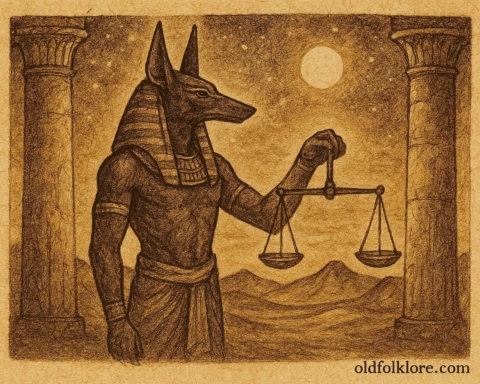
In the realm of the dead, where the Nile of the underworld flows beneath shadowed skies, the souls of mortals journey to the Hall of Two Truths. It is there that the final judgment is made, and the fate of each spirit is decided for eternity. Within this sacred chamber stands Osiris, Lord of the Afterlife, flanked by Anubis the jackal-headed guide and Thoth the scribe of divine records. Yet among them waits another presence, silent and fearsome Ammit, the Devourer of the Dead.
Ammit is no ordinary spirit. She is the embodiment of consequence, the final reckoning of truth and falsehood. Her body is formed from the fiercest creatures known to the Nile the head of a crocodile, the torso of a lion, and the hindquarters of a hippopotamus. Each part represents strength, terror, and the inevitability of divine justice. She does not judge nor accuse. She simply waits for the verdict, ready to consume the hearts of those who fail the test of Ma’at, the eternal law of balance and truth.
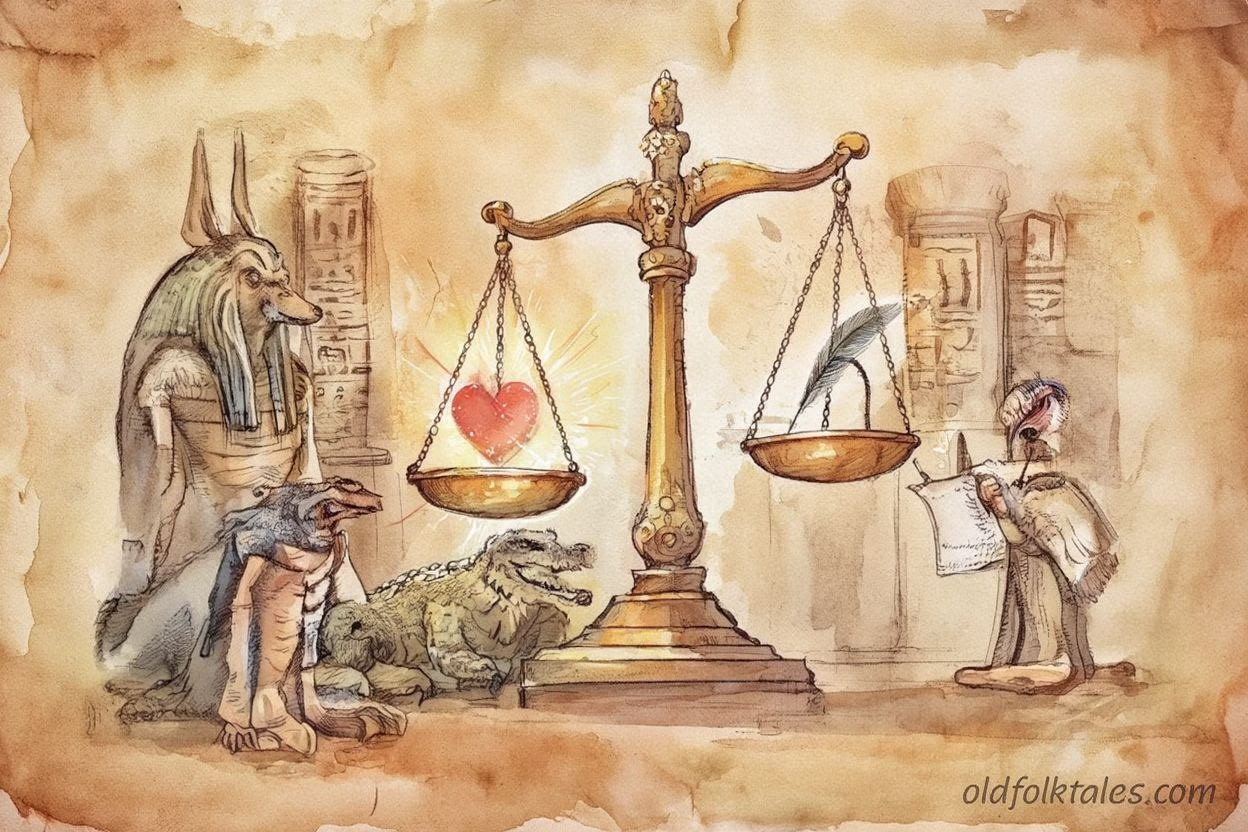
When a soul leaves its mortal shell, it embarks on a long journey through the Duat, the Egyptian underworld. Guided by Anubis, it passes gates guarded by spirits and recites spells from the Book of the Dead to prove its purity. At last, the soul arrives before Osiris, who sits upon a high throne surrounded by forty-two divine assessors. Before them stands a great scale, upon which the heart of the deceased is placed. On the other side rests the feather of Ma’at symbol of truth, harmony, and cosmic order.
The heart, believed to hold every deed and thought of a person’s life, cannot lie. It speaks through its weight. If it is light and pure, the scale balances or rises gently, and the soul is granted eternal peace in the Field of Reeds, a paradise where the righteous live in harmony with the gods. But if the heart is heavy with deceit, greed, or cruelty, it sinks lower than the feather, revealing the corruption within.
When this happens, the chamber grows still. Anubis steps aside, and all eyes turn to the monstrous guardian at the foot of the scales. Ammit stirs, her crocodile jaws parting, her leonine chest heaving, and her hippopotamus body shifting with impatient hunger. Thoth, the divine scribe, marks the verdict in his scroll: Unworthy of the afterlife. Then, with a roar that echoes through the hall, Ammit devours the heart whole.
The devoured soul is lost forever not to torment, but to oblivion. It neither rises to paradise nor returns to the mortal world. Its name is erased, its essence dissolved, its memory consumed by silence. This is the greatest fear of all Egyptians: not death, but the loss of the ka, the spirit that gives identity and continuity.
Ammit’s presence in the Hall of Two Truths is both terrifying and sacred. She is not evil but just. Her hunger is not cruelty but balance. Without her, the law of Ma’at could not stand, for truth requires consequence. To the Egyptians, the fear of Ammit was a reminder to live in harmony with divine order to speak truth, act with fairness, and honor both gods and mortals.
Priests and scribes would often paint her image beside the scales in tombs and papyri, warning souls to live righteously while still alive. The feather of Ma’at became a guiding symbol in life as well as death appearing on temple walls, jewelry, and sacred writings. Mothers told their children, “Keep your heart light, for Ammit watches.” Thus, the myth was not merely a tale of terror but a moral foundation woven into daily life.
In one ancient story recorded by temple priests, a man named Nebra lived a life of selfishness and deceit. He took what belonged to others and swore false oaths, believing that no god could see him. When he died, his family buried him with offerings and prayers, hoping to secure his peace. But in the Hall of Two Truths, Nebra’s heart betrayed him. As it sank on the scales, Ammit rose and consumed it without hesitation. The scribes of the gods wrote his name among the lost, and his memory faded from the world. His tale became a warning recited in temple schools for generations.
Through such stories, Egyptians came to see Ammit not only as a devourer but also as a purifier a force that maintained the moral rhythm of the universe. She devoured corruption so that the righteous could dwell in eternal light. Her terrifying form stood as both fear and hope, reminding mortals that truth alone endures beyond the grave.
Even today, the image of Ammit fascinates those who study the ancient Nile civilization. She stands at the boundary between good and evil, justice and punishment, existence and nothingness. To face her was to confront the full weight of one’s life, stripped of illusion.
In every age, her story speaks a timeless truth: what we carry in our hearts determines our eternity.
Author’s Note
The myth of Ammit reflects the Egyptian devotion to Ma’at the balance between truth, justice, and order that sustains both the cosmos and the soul. Ammit’s role as the devourer reveals that divine justice is not vengeance but restoration. The Egyptians believed that to live truthfully was to align with the eternal harmony of creation. The Devourer of the Dead is therefore not a monster of chaos, but the guardian of truth’s unbreakable law.
Knowledge Check
1. What does Ammit represent in Egyptian mythology?
Ammit represents divine justice and the consequence of moral corruption.
2. How is the heart judged in the Hall of Two Truths?
It is weighed against the feather of Ma’at to measure truth and purity.
3. What happens if the heart is heavier than the feather?
Ammit devours it, condemning the soul to oblivion.
4. Why is Ammit not considered evil?
She enforces balance and divine order, preventing impurity from entering the afterlife.
5. What lesson does the myth of Ammit teach?
That living truthfully and with moral balance ensures peace in the afterlife.
6. Who records the judgment of each soul?
Thoth, the god of wisdom and writing, records the verdict of the scales.
Source:
Adapted from the myth “The Weighing of the Heart” in The Egyptian Book of the Dead: The Papyrus of Ani, translated by E. A. Wallis Budge (1913), London: British Museum.
Cultural Origin:
Ancient Egypt