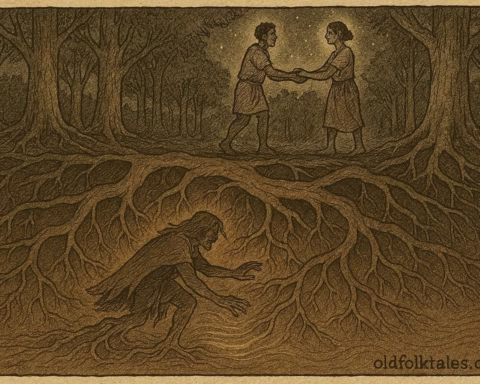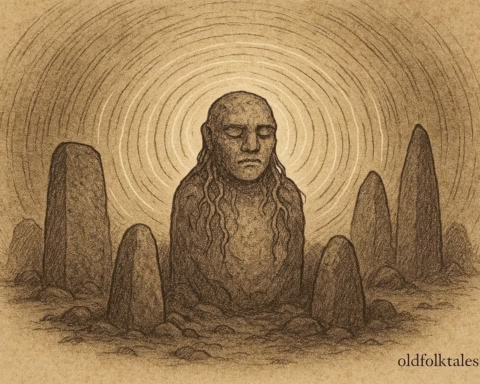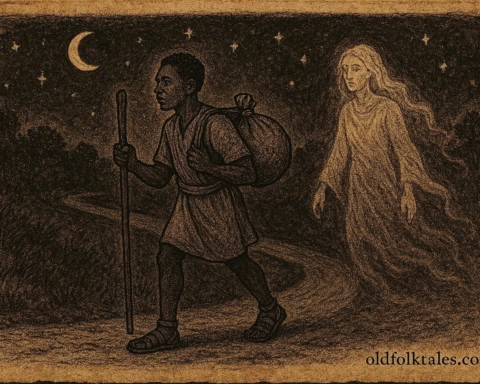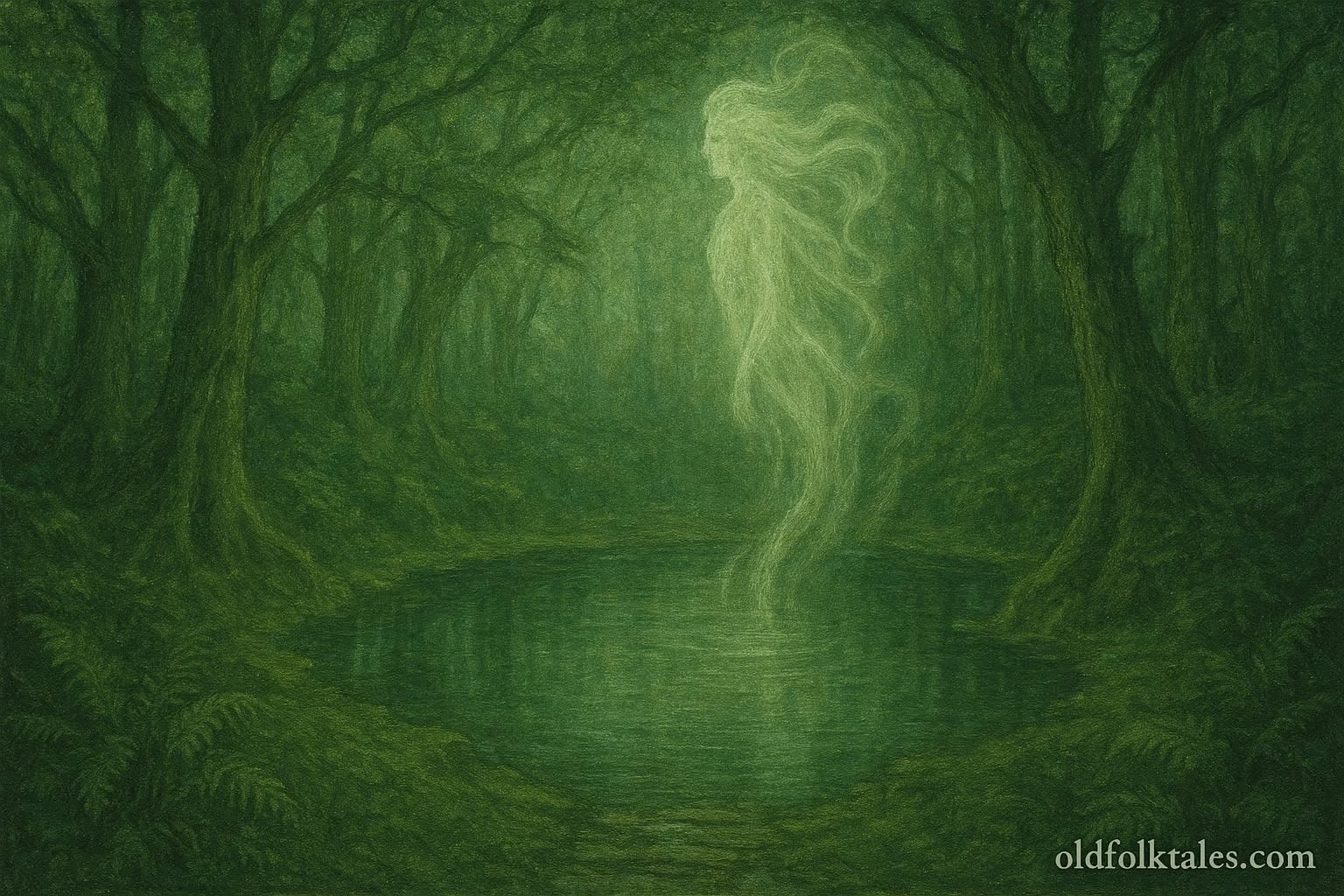
The people of a small village in Vanuatu often spoke of a pool hidden deep in the forest. Its water remained perfectly still, even when storms rolled across the hills. The elders said that an ancestral spirit lived beneath its surface and that the pool was older than any carving, dance, or story the villagers knew. People approached it with reverence, for the pool was believed to test the hearts of those who came near.
Children were taught from a young age that no one should speak loudly by the water. No one should throw stones or disturb its quiet surface. The spirit of the place watched everything. It granted favor to those who came with humility and punished those who did not. For generations the villagers obeyed these teachings, understanding that sacred places do not belong to humans alone.
Among the villagers lived a hunter named Ranu. He was skilled and confident, and he often returned from long journeys with more game than any other hunter. Although the community respected his abilities, the elders often warned him that pride can make the strongest person stumble. Ranu heard these warnings but believed that his skill placed him above such caution.
Learn the ancient stories behind deities of light, storm, and shadow from cultures across the world
One afternoon Ranu walked into the forest searching for a wild pig that had been troubling the gardens. After hours of tracking, he noticed the trees growing taller and the air becoming cooler. Soon he found himself standing before the sacred pool that he had heard about since childhood. Sunlight filtered through the leaves above and reflected across the water, creating a soft glow that seemed to come from the pool itself.
Ranu felt no fear. Instead he felt curiosity mixed with pride. He looked around and said aloud that he was not a child to be frightened by tales of spirits. He knelt beside the pool and dipped his fingers into the water. The surface rippled slightly before settling into perfect stillness again. Ranu scoffed and said that if a spirit lived there it was probably sleeping.
At that moment a cold wind swept across the forest, even though the trees above barely moved. Ranu stood quickly. The air felt heavy, as if the forest itself were holding its breath. Then he heard a voice. It was neither loud nor soft. It seemed to form directly behind him yet also from the water at his feet. The voice spoke his name in a slow and measured tone.
Ranu turned, but no one stood there. When he looked back at the pool he saw a faint shape rising just beneath the surface. It was not a person, yet it had the outline of a human form. Its presence felt ancient and powerful. The water did not break. Instead the shape remained as clear as if the pool were a polished mirror.
The voice spoke again. It told Ranu that the pool watched all who approached. It said that arrogance blinds people to danger and that sacred places react to the intentions in one’s heart. Ranu trembled, but his pride pushed him to ask why a spirit would care about such things.
The water darkened as if a shadow passed beneath it. The voice said that the pool protected the balance between the living and the ancestors. When a person came with respect, the pool welcomed them. When a person came with arrogance, the pool judged them. Ranu felt the ground shift slightly under his feet and realized the spirit was not simply warning him. It was testing him.
He knelt and admitted that he had acted foolishly. He told the spirit that he did not come to cause harm. The ancestral presence remained silent. Ranu felt pressure build in the air around him. A moment later the voice returned, telling him that true humility must be shown through action, not only words.
Ranu remembered the elders’ teachings. He gathered leaves, placed them on the ground, and offered them as a sign of respect. He lowered his head and waited. Slowly the heavy air lifted and the shape beneath the water faded. The pool brightened again and the forest regained its natural sound.
Before leaving, the voice spoke once more. It told Ranu to carry this lesson back to his village. Sacred places must be honored and those who forget this lesson invite misfortune. Ranu nodded, feeling the truth of the warning settle deeply within him.
When he returned to the village he told the elders everything. They listened in silence, and then they thanked the ancestral spirit for showing mercy. Ranu changed from that day. He walked through the forest with new awareness and taught younger hunters to respect every pool, tree, and stone that carried the presence of the ancestors.
Years passed, and the sacred pool remained untouched. People continued to visit it with offerings and quiet hearts. They knew that the ancestral keeper still watched. The spirit did not seek to harm anyone. It simply guarded the balance between humans and the ancient world. And those who came humbly found peace in its presence.
Explore the shadows of world mythology, where demons test the soul and spirits watch over mankind
Author’s Note
This story reflects the long standing Melanesian understanding that sacred waters are protected by ancestral guardians who test the intentions of those who approach. It reminds us that humility remains the key to harmony with the unseen world.
Knowledge Check
-
Why was the sacred pool considered important in the village?
It was believed to be the home of an ancestral spirit that tested the hearts of those who approached. -
What attitude did Ranu have when he first arrived at the pool?
He was proud and dismissive of the warnings he had heard. -
What sign first told Ranu that something supernatural was present?
A sudden cold wind passed through even though the forest was still. -
How did the ancestral spirit speak to Ranu?
Through a voice that seemed to rise from both behind him and the water itself. -
What action showed Ranu’s humility?
He offered leaves and lowered his head in respect. -
What message did the spirit give Ranu to take back to the village?
Sacred places must be honored and disrespect invites misfortune.