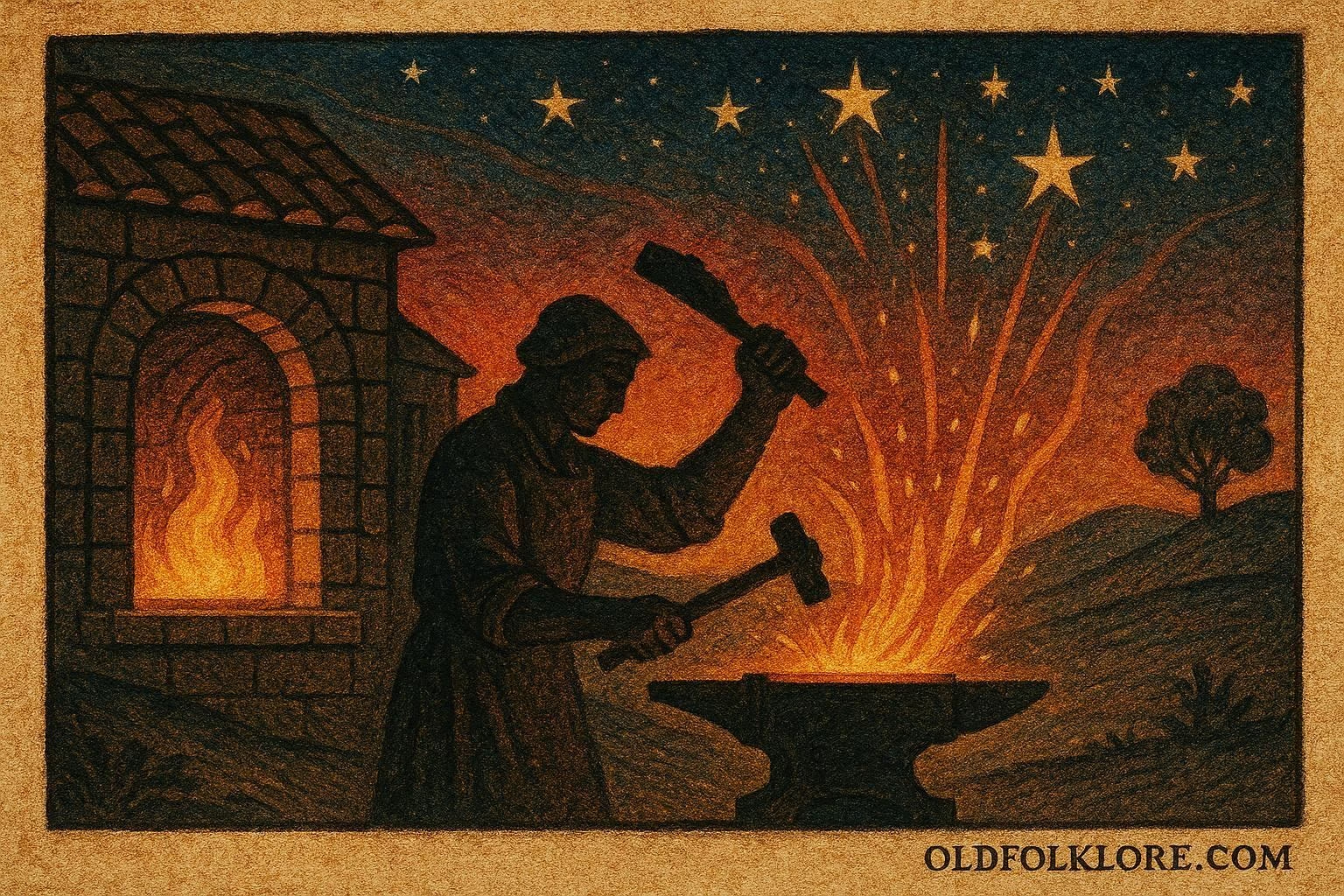
Throughout the medieval world, from the bustling forges of European guild towns to the workshops of itinerant craftsmen, wisdom was forged in fire, sweat, and repetition. The guild culture, particularly the Meister Geselle (Master Journeyman) system, treated learning not as a moment but as a lifelong pilgrimage. Skills were passed down through observation, imitation, and years of disciplined practice. Craft was not seen merely as labor; it was a noble path through which one shaped not only metal, wood, or stone, but one’s own character, guided by the proverbs and practical sayings shared from master to apprentice.
In this culture, mastery was inseparable from humility. Apprentices were taught that the tools teach the hand as much as the master does, that mistakes are essential instructors, and that excellence is a patient companion. The anvil, the hammer, the whetstone, each became symbols of inner refinement. The forge was a quiet school of resilience: every blow carried a lesson, and every spark reminded craftsmen that even the smallest effort contributed to the final piece. These proverbs capture the worldview of a tradition where craft served as a metaphor for the human journeytoward competence, integrity, and wisdom.
Today, these sayings echo across cultures as reminders that true mastery is neither instant nor accidental. It is earned through perseverance, respect for mentors, careful attention to detail, and an unwavering commitment to improvement. In every trade, every art, and every discipline, the anvil still teaches the hammer.
100 Proverbs on Craftsmanship, Skill, and Mastery
1. “The anvil teaches the hammer.” : Skill grows by repeated practice and correction.
2. “A master’s hand was once a trembling apprentice.” : Every expert began as a beginner.
3. “The slow file sharpens the blade best.” : Steady, patient effort yields the finest results.
4. “You cannot forge cold iron.” : Progress requires the right conditions and readiness.
5. “The hammer forgets, but the anvil remembers.” : The work keeps the marks of discipline and learning.
6. “One blow does not shape the sword.” : Great achievements take many steps.
7. “The apprentice with no questions makes a poor master.” : Curiosity is essential to growth.
8. “A dull tool blames the hand that holds it.” : Mediocrity often excuses itself; improvement requires honesty.
9. “Iron sharpens iron when both are willing.” : Growth happens when people challenge and refine each other.
10. “The forge’s heat reveals the metal’s truth.” : Pressure exposes strength and weakness.
11. “The chisel teaches the wood to yield.” : Skill persuades better than force.
12. “What the master shows once, the apprentice must practice a hundred times.” : Demonstration is only the beginning.
13. “A crooked nail bends more than the hammer strikes it.” : Flawed foundations cause repeated errors.
14. “Every tool has its temper.” : Everything and everyone performs best when used appropriately.
15. “The smith who rushes ruins the blade.” : Haste leads to poor workmanship.
16. “A well-kept tool is half the work.” : Preparation greatly affects outcome.
17. “Sparks fly where skill grows.” : Practice may be difficult, but it shows progress.
18. “A craftsman’s pride lives in the unseen joints.” : True excellence shows in hidden details.
19. “The journeyman travels, but his craft travels with him.” : Skills remain wherever life leads.
20. “The whetstone never boasts, yet sharpens all.” : Quiet helpers offer great value.
21. “A good master shapes men as well as metal.” : Mentorship forms character.
22. “The first cut teaches the hand caution.” : Early mistakes become lasting lessons.
23. “Tools speak; the wise craftsman listens.” : Paying attention prevents error.
24. “The beam you ignore becomes the flaw you regret.” : Neglected details return as problems.
25. “Measure with your mind before you measure with your hand.” : Think before acting.
26. “The workshop is a school with no holidays.” : Learning never ends.
27. “Heat shapes iron; discipline shapes men.” : Training builds character.
28. “No blade stays sharp without constant care.” : Skills decay without practice.
29. “A master’s silence teaches more than his speech.” : Observation is a powerful teacher.
30. “The wood whispers where it wants to be cut.” : Materials have natural tendencies; wisdom respects them.
31. “The strongest chain is only as strong as its weakest link.” : Weakness anywhere endangers the whole.
32. “A perfect circle begins with a steady hand.” : Precision starts with self-control.
33. “Stone yields only to patient blows.” : Persistence overcomes resistance.
34. “The guild hall honors those who honor their craft.” : Reputation arises from integrity.
35. “A crooked apprentice blames straight rules.” : Those unwilling to improve reject discipline.
36. “The quench teaches the blade to endure.” : Hardening comes through trials.
37. “A tool unused is a tool unlearned.” : Skill grows through action, not theory.
38. “The true master can teach with one gesture.” : Experience conveys much with little.
39. “Craft is the meeting of mind and muscle.” : Skill requires both thought and physical discipline.
40. “A hurried hand forgets its purpose.” : Rushing loses focus and quality.
41. “Iron sings when struck by the sure hand.” : Confidence enhances performance.
42. “The best glue is patience.” : Time strengthens many things.
43. “A fine edge cuts clean; a wise mind thinks clean.” : Clarity brings effectiveness.
44. “The apprentice who sweeps well will carve well.” : Diligence in small tasks predicts bigger skill.
45. “The master’s eye is the workshop’s lantern.” : Guidance illuminates the path.
46. “A bent rule makes bent work.” : Faulty standards cause faulty outcomes.
47. “Sweat is the ink of the craftsman’s signature.” : Effort defines quality.
48. “The blade remembers every hand that shaped it.” : Work carries the mark of its makers.
49. “A tool shared teaches twice.” : Teaching benefits both teacher and learner.
50. “The wise craftsman learns from the failed piece.” : Mistakes are instructors.
51. “Wood shavings are the footprints of skill.” : Evidence of progress accompanies work.
52. “A sturdy table rests on humble joints.” : Stability comes from unseen work.
53. “The hammer is loud, but the file is wise.” : Brute force is less effective than careful refinement.
54. “The apprentice learns the trade; the master learns the learner.” : Teaching refines leadership.
55. “Good work needs no argument.” : Quality speaks for itself.
56. “The broken tool warns the next hand.” : Errors instruct those who follow.
57. “Every craftsman is an heir to another’s wisdom.” : Skill is inherited from generations.
58. “A steady rhythm makes clean work.” : Consistent pacing yields precision.
59. “The forge rewards the patient.” : Persistence leads to results.
60. “Where there is no master, the tool becomes the teacher.” : Practice fills the gap of instruction.
61. “A tool unused gathers rust in the soul.” : Untapped talent leads to stagnation.
62. “Straight wood needs little bending.” : Good raw material makes good work.
63. “A careful craftsman cuts once.” : Caution prevents waste.
64. “You cannot carve rotten wood.” : Some foundations cannot be salvaged.
65. “The hand that steadies is as important as the hand that strikes.” : Support roles matter.
66. “Skill is the child of repetition.” : Practice creates mastery.
67. “Fire tests iron; time tests skill.” : True mastery endures.
68. “The apprentice who listens becomes the journeyman who teaches.” : Good learners become good mentors.
69. “A blade that never cuts stays unproved.” : Ability must be tested to mature.
70. “Craft thrives where pride is humble.” : Ego hinders learning; humility supports growth.
71. “The wheel turns smoother with oil, the craft smoother with patience.” : Patience improves all work.
72. “The saw’s teeth teach the wood respect.” : Tools impose necessary discipline.
73. “No hand is truly empty if it holds a skill.” : Craft is enduring wealth.
74. “The grain guides the carver’s hand.” : Understanding natural patterns leads to success.
75. “The master knows when not to strike.” : Restraint is as important as action.
76. “Good craft is born in the quiet hours.” : Excellence often develops in solitude.
77. “Every workshop has its ghosts of unfinished work.” : All creators struggle with incomplete tasks.
78. “A careful plan is the craftsman’s compass.” : Planning prevents misdirection.
79. “The wedge splits the stubborn log.” : Small, well-placed effort overcomes large obstacles.
80. “A true craftsman knows his faults better than his admirers.” : Self-awareness improves skill.
81. “The earliest lessons sink deepest.” : Early training shapes lifelong habits.
82. “Good timber grows slowly.” : Quality takes time.
83. “The master tests the apprentice to reveal his resolve.” : Hard tasks measure dedication.
84. “The blade that shines may not cut.” : Appearance does not equal performance.
85. “Skill is the bridge between imagination and reality.” : Craft transforms ideas into form.
86. “The patient hammer cracks the hardest stone.” : Persistence breaks barriers.
87. “A true master leaves room for improvement.” : Wisdom recognizes its own limits.
88. “Even a perfect tool needs a guiding hand.” : Resources alone do not produce excellence.
89. “Craft dies where shortcuts live.” : Cutting corners destroys quality.
90. “A tool’s worth is known by the work it does.” : Value is shown through action, not claims.
91. “Skill grows in the shadow of discipline.” : Structure fosters mastery.
92. “The iron remembers every heat.” : Experience is cumulative.
93. “The hand that learns slowly learns surely.” : Careful learning is lasting learning.
94. “A rough block hides a beautiful statue.” : Potential requires shaping.
95. “The best work leaves no mark of the struggle.” : Mastery appears effortless.
96. “The apprentice with dirty hands learns more than the one with clean ones.” : Engagement beats avoidance.
97. “Skill is a lamp that lights other lamps.” : Mastery spreads through teaching.
98. “The craftsman’s oath is honesty to the work.” : Integrity is central to excellence.
99. “The last stroke finishes the blade, but the first stroke begins the mastery.” : Small beginnings lead to great outcomes.
100. “A life well crafted is the greatest masterpiece.” : The principles of craft apply to living itself.
Author’s Note
Craftsmanship has always been more than the shaping of materials, it is the shaping of the self. The forge, the bench, and the workshop remind us that mastery is earned quietly, patiently, and humbly. As you reflect on these proverbs, may they encourage you to honor your own journey of learning, to respect the teachers who guided you, and to find meaning in the process rather than the speed of progress. In a world that increasingly rushes, may these old voices remind you of the beauty of careful, committed work.
Knowledge Check
- Q: What does the proverb “The anvil teaches the hammer” primarily emphasize?
A: Mastery comes through repeated practice and patient correction. - Q: Why did medieval guilds value long apprenticeships?
A: They believed true skill required years of disciplined learning and mentorship. - Q: According to the proverbs, what is the relationship between mistakes and mastery?
A: Mistakes are essential teachers that refine both skill and character. - Q: What role does patience play in craftsmanship?
A: Patience ensures quality, precision, and steady improvement. - Q: How does humility contribute to learning a craft?
A: It keeps one teachable, receptive to guidance, and open to improvement. - Q: Why are unseen details considered important in true craftsmanship?
A: Hidden excellence demonstrates integrity and pride in one’s work.