
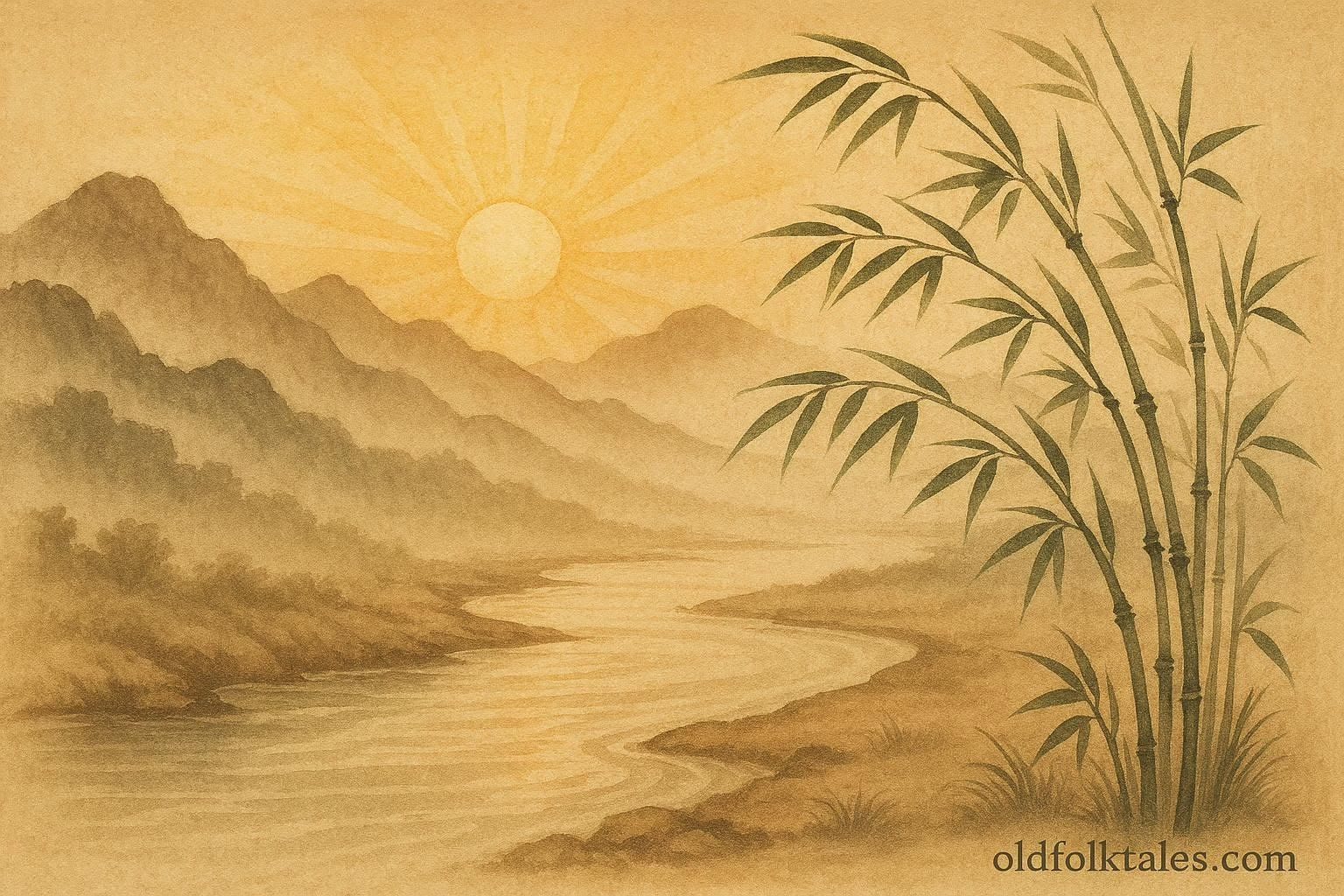
Across Asia, wisdom is often drawn from the quiet lessons of nature, mountains that endure, rivers that flow, and bamboo that bends yet never breaks. In the Eastern worldview, patience is not passivity; it is a form of strength. Resilience comes not from resistance but from harmony with the rhythm of life. These proverbs invite the soul to be calm like a pond in the storm and flexible like the bamboo in the wind.
Proverbs and Meanings
- “The bamboo that bends is stronger than the oak that resists.” (Japanese)
True strength lies in adaptability, not stubbornness. - “Be like bamboo, firm in roots but flexible in the wind.” (Chinese)
Resilience requires both grounding and flexibility. - “A frog in a well does not know the ocean.” (Japanese)
Limited perspective blinds one from the vastness of life’s possibilities. - “Even a sheet of paper has two sides.” (Japanese)
Every situation has more than one viewpoint; patience allows understanding. - “The tree with strong roots laughs at storms.” (Vietnamese)
Inner stability protects us from external troubles. - “The water that flows slowly lasts long.” (Chinese)
Slow progress ensures endurance and sustainability. - “When the winds of change blow, some build walls, others build windmills.” (Chinese)
Wise people use adversity as an opportunity. - “No matter how long the winter, spring is sure to follow.” (Japanese)
Hard times never last forever; hope renews. - “Patience is a bitter plant, but its fruit is sweet.” (Korean)
The struggle of endurance brings lasting reward. - “The deepest river flows with the least noise.” (Chinese)
True wisdom and strength are quiet, not boastful. - “A diamond cannot be polished without friction, nor a man perfected without trials.” (Chinese)
Challenges refine character. - “One moment of patience may ward off great disaster.” (Chinese)
Calm restraint prevents regret. - “Even the snail reaches the top of Mount Fuji.” (Japanese)
Persistence, not speed, leads to accomplishment. - “Endure what cannot be cured.” (Japanese)
Acceptance brings peace where control ends. - “Rain does not fall on one roof alone.” (Cameroon proverb adopted in Asia)
Suffering and trials are shared parts of human life. - “The reed that bends survives the storm.” (Vietnamese)
Flexibility protects against destruction. - “Better to light one candle than to curse the darkness.” (Chinese)
Small acts of hope are stronger than despair. - “Clouds come floating into my life no longer to carry rain but to add color to my sunset sky.” (Tagore, Indian proverb shared in East Asia)
Pain can transform into beauty when seen with patience. - “He who conquers himself is the mightiest warrior.” (Japanese Zen)
Inner discipline is the foundation of true resilience. - “The mountain remains unmoved at its base, though the clouds drift around its summit.” (Japanese)
Stay centered while the world changes around you. - “Wisdom is like a baobab tree; no one individual can embrace it.” (Adopted in Vietnamese teachings)
Wisdom grows collectively through patience and humility. - “A journey of a thousand miles begins with a single step.” (Chinese)
Every great endeavor starts with humble beginnings. - “Do not fear going slowly; fear only standing still.” (Chinese)
Progress matters more than speed. - “The moon does not fight. It conquers by shining.” (Zen saying)
Calm presence can outlast aggression. - “When you drink water, remember the source.” (Chinese)
Gratitude keeps the spirit grounded and resilient. - “If you bow at all, bow low.” (Japanese)
True humility comes from deep sincerity, not performance. - “To endure is to triumph.” (Vietnamese)
Patience itself is a form of victory. - “Fall seven times, stand up eight.” (Japanese)
Persistence defines success. - “The pine tree is evergreen through all seasons.” (Korean)
True strength remains constant regardless of circumstance. - “Even monkeys fall from trees.” (Japanese)
Everyone makes mistakes; resilience lies in recovery. - “He who treads softly goes far.” (Chinese)
Gentle persistence achieves lasting results. - “The snow does not break the bamboo.” (Chinese)
Flexibility triumphs over brute force. - “The silent man is the best listener.” (Japanese)
Silence deepens understanding and patience. - “Wisdom is found in still waters.” (Chinese)
Calmness reveals clarity. - “When you have reached the top, be silent.” (Korean)
Humility sustains success. - “One beam, no matter how big, cannot support a house.” (Chinese)
Resilience thrives in unity and cooperation. - “If there is no wind, row.” (Japanese)
Take initiative when fate seems still. - “Smooth seas do not make skillful sailors.” (Chinese)
Challenges build strength. - “A gem is not polished without rubbing.” (Chinese)
Hardships refine one’s character. - “Those who lose their temper lose their footing.” (Chinese)
Emotional balance preserves stability. - “The bird does not sing because it has an answer, it sings because it has a song.” (Chinese Zen)
Joy is found in simply being, not achieving. - “A man who removes a mountain begins by carrying away small stones.” (Chinese)
Great endurance comes from small, steady actions. - “He who knows contentment will always be happy.” (Chinese)
Peace is found in simplicity. - “The wise man adapts himself to circumstances as water shapes itself to the vessel.” (Chinese)
Flexibility is the essence of survival. - “Do not seek to follow in the footsteps of the wise; seek what they sought.” (Japanese)
True wisdom grows through personal experience. - “The lotus blooms in muddy water.” (Vietnamese)
Beauty and purity can emerge from hardship. - “A single day of patience can bring ten years of peace.” (Chinese)
Endurance often prevents prolonged strife. - “A closed mouth catches no flies.” (Japanese)
Silence guards from trouble. - “When the heart is at peace, the body will be healthy.” (Chinese)
Inner calm fosters outer well-being. - “He who is patient is master of everything.” (Korean)
Patience commands control over chaos. - “Mountains do not turn, but paths do.” (Vietnamese)
Circumstances change; persistence finds a way. - “Even the longest rain will stop.” (Japanese)
No suffering endures forever. - “The wise man is like water, he nourishes all without striving.” (Taoist proverb)
True strength flows quietly. - “No road is too long for one who walks slowly and does not hurry.” (Chinese)
Steady progress conquers all distance. - “Patience is the art of concealing your impatience.” (Japanese)
Mastery lies in inner control. - “Better a diamond with a flaw than a pebble without one.” (Chinese)
Imperfection is more valuable than weak perfection. - “The wind does not break the mountain.” (Korean)
Stability withstands adversity. - “Adversity is the foundation of virtue.” (Chinese)
Challenges reveal moral strength. - “Flow like water; crash like waves.” (Bruce Lee, rooted in Taoist philosophy)
Be adaptable and decisive when needed. - “Do not be afraid of growing slowly; be afraid only of standing still.” (Chinese)
Progress is more important than pace. - “Kindness in words creates confidence; kindness in thinking creates profoundness; kindness in giving creates love.” (Chinese)
Patience manifests through gentle action. - “A calm heart brings clarity to a stormy world.” (Japanese)
Inner stillness brings understanding. - “Even the bamboo starts as a small shoot.” (Vietnamese)
Great growth begins humbly. - “When the roots are deep, there is no reason to fear the wind.” (Chinese)
Inner grounding sustains resilience. - “He who walks with patience walks with heaven.” (Chinese proverb)
Patience aligns with divine timing.
Author’s Note
Patience is not the absence of motion, but the rhythm of wisdom moving in harmony with time. The bamboo mind teaches us that bending is not weakness, and silence is not surrender; they are forms of grace. In the stillness of endurance, one discovers peace deeper than triumph.
Knowledge Check
- What natural symbol best represents patience in East Asian culture?
The bamboo, flexible yet unbreakable. - According to Chinese wisdom, what should one fear more than slow progress?
Standing still. - What does the proverb “Fall seven times, stand up eight” teach?
Resilience through persistence after failure. - Why is water often used in Eastern proverbs about wisdom?
Because it adapts and nourishes without force. - What does the proverb “When the roots are deep, there is no reason to fear the wind” mean?
Inner strength provides stability against adversity. - What is the central lesson of “The bamboo that bends is stronger than the oak that resists”?
Flexibility is a form of strength.
Origin: China, Japan, Korea, and Vietnam






