In the ancient, mist-shrouded lands of Ireland, where green hills roll like waves frozen in time and stone walls wind through valleys older than memory, there exists a presence that dwells between the world of the living and the realm beyond. She is known as the Banshee in the old tongue, bean sídhe, meaning “woman of the fairy mound.” Her cry is the sound of sorrow itself, a keening so piercing and mournful that it cuts through the thickest fog, the darkest night, and the stone walls of the sturdiest cottage, reaching into the hearts of those who hear it with a message no one wishes to receive.
The Banshee is no ordinary ghost, no vengeful spirit risen from an unmarked grave. She is something far older, something woven into the very fabric of Ireland’s soul a herald bound by ties that stretch back through countless generations to the time when the Tuatha Dé Danann walked the earth and the boundary between the mortal world and the Otherworld was thin as gossamer. She serves the ancient families of Ireland, the noble houses whose bloodlines run deep as the roots of the hawthorn trees, and her appearance dreaded though it may be is both curse and honor, for not every family can claim her watchful presence.
Click to read all Myths & Legends – timeless stories of creation, fate, and the divine across every culture and continent
The Banshee takes many forms, shifting like smoke, appearing as circumstances and fate demand. Sometimes she manifests as a beautiful young maiden, ethereal and pale as new milk, with hair the color of moonlight spilling down her back in silver waves. In this guise, she sits beside lonely streams at twilight, combing her long tresses with a comb of silver or bone, singing softly to herself in a voice that breaks the heart to hear. Those who stumble upon her shepherds returning late from the hills, travelers seeking shelter before nightfall know immediately they have encountered something not of this world. Her beauty is wrong somehow, too perfect, too cold, and her eyes hold depths of sorrow that no living woman could contain.
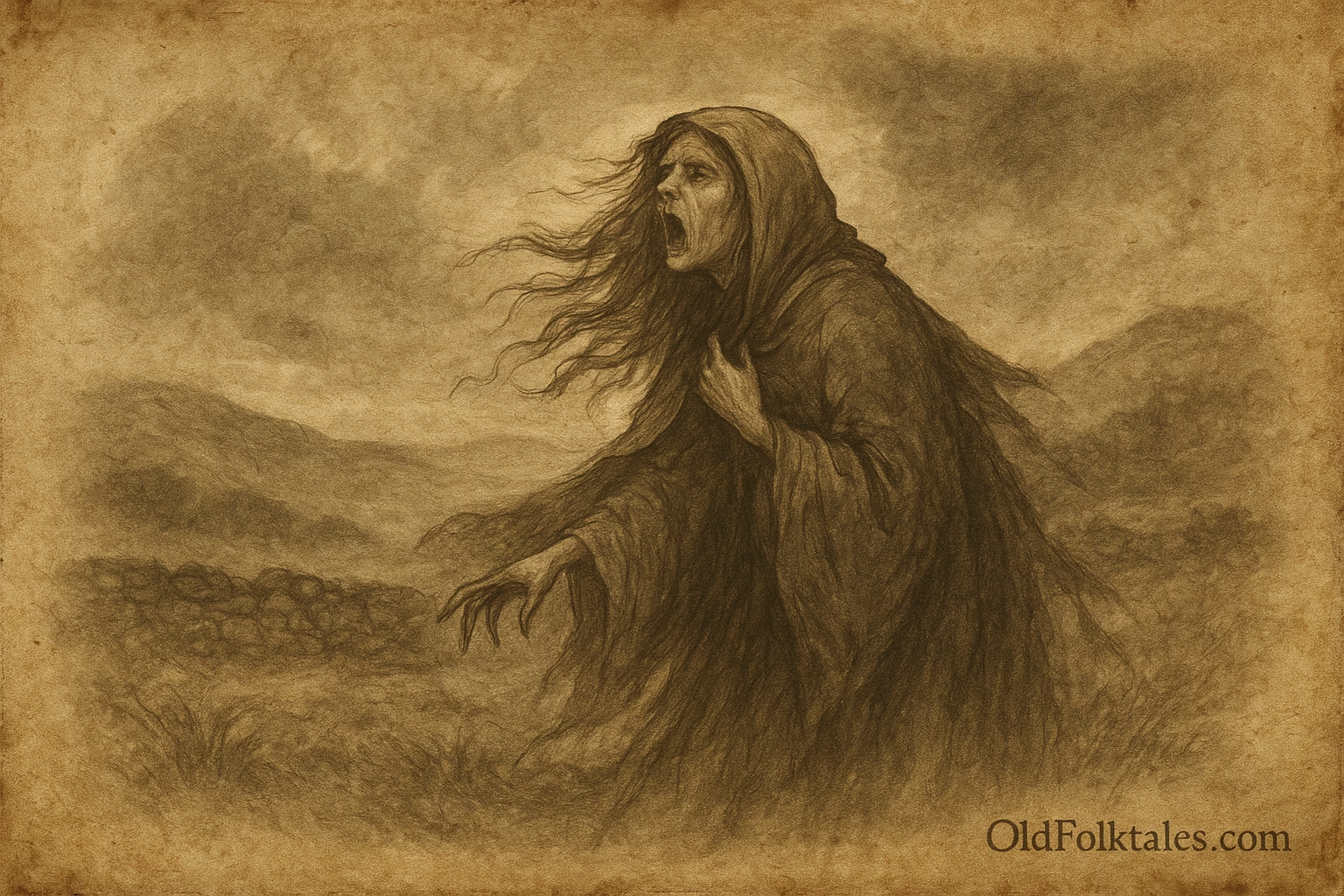
At other times, the Banshee appears as an old crone, hunched and wrapped in a tattered grey cloak that seems woven from mist itself. Her face is weathered and ancient, creased with the lines of centuries of mourning. Her hair hangs in wild, tangled locks around her shoulders, white as bone, and her eyes when they can be seen beneath her hood burn with an otherworldly light. In this form, she is frightening to behold, a figure from nightmare, yet still she carries out her duty with the same sorrowful dedication.
But it is neither her appearance that strikes terror into the hearts of those who encounter her it is her cry. The Banshee’s wail is unlike any sound made by mortal throat. It begins low, a keening that seems to rise from the earth itself, from the very stones and soil of Ireland. Then it builds, climbing higher and higher until it becomes a shriek of such profound grief that listeners feel it in their bones, in their blood, in the deepest chambers of their hearts. It is the sound of every mother who has lost a child, every widow who has buried a husband, every soul that has watched someone beloved slip away into death’s cold embrace. Those who hear it know, with absolute certainty, that death has come calling.
The cry of the Banshee serves as a warning, a prophecy that cannot be avoided. When she appears outside a house, keening beneath the window or walking the lane that leads to the family home, it means that someone within or someone far away who carries that family’s blood will soon pass from this world into the next. There is no escape, no bargaining, no prayer that can turn aside her message. Death has already set its course, and the Banshee has been sent to announce its coming.
Yet for all the fear she inspires, the Banshee is not an evil spirit. She does not bring death she merely heralds it. She does not rejoice in her task but mourns genuinely, deeply, for the soul about to depart. Some say she loved the families she serves in ages past, that she was perhaps an ancestor herself, or a woman wronged who nevertheless remained loyal to her clan even in death. Others believe she is one of the fairy folks, bound by ancient oaths and obligations to watch over certain bloodlines, honoring promises made when the world was young.
The old families of Ireland the O’Neills, the O’Briens, the O’Connors, the Kavanaghs, and others whose names echo through history all have stories of the Banshee. Grandmothers tell their grandchildren how, on the night Great-Uncle Seamus died at sea, the Banshee was heard wailing along the cliffs. Fathers speak in hushed tones of the night their own father passed, when a grey figure was seen standing in the dooryard, her voice rising and falling like a tide of tears.
The Banshee’s legend is rooted deep in Celtic beliefs about the Otherworld that mystical realm that exists alongside our own, separated by the thinnest of veils. The ancient Celts understood that death was not an ending but a passage, a journey from one world to another, and the Banshee stands at the threshold of that passage, a guide and mourner who honors the transition. She embodies the Celtic reverence for death as part of life’s sacred cycle, not something to be hidden or denied, but acknowledged with appropriate sorrow and dignity.
Even today, in modern Ireland where stone cottages stand beside motorways and ancient monuments are fenced off as tourist attractions, there are those who claim the Banshee still walks. Late at night, when the wind carries strange sounds across the bogs and through the hedgerows, when unexplained wailing echoes from the hills, some will cross themselves and whisper that she has been heard. And when death comes to those old families shortly after, they remember and believe.
For the Banshee is eternal, as eternal as sorrow itself, as eternal as the love that makes loss unbearable. She will continue her vigil through all the ages to come, faithful to her purpose, bound to her families, crying out her warning when the time arrives for another soul to journey beyond the veil. Her voice is the voice of Ireland itself beautiful, haunting, and forever touched by the bittersweet knowledge that all things, even the most beloved, must eventually pass away.
The Moral Lesson
The legend of the Banshee teaches us to acknowledge death as a natural part of existence rather than something to be feared or denied. Her presence reminds us that some bonds whether of family, loyalty, or love transcend even death itself, and that mourning is a sacred act deserving of respect and time. The Banshee’s faithful service to the families she watches over demonstrates that duty and honor can persist beyond the grave, and her genuine sorrow for those about to die shows us that death deserves to be met with dignity and appropriate grief, not avoided or dismissed. Ultimately, the Banshee represents the Celtic understanding that life and death are intertwined, and that accepting this truth with grace and reverence is essential to living meaningfully.
Knowledge Check
Q1: What does the word “Banshee” mean and what is her role in Irish folklore?
A: “Banshee” comes from the Irish bean sídhe, meaning “woman of the fairy mound.” Her role is to serve as a supernatural herald of death, appearing and wailing to warn certain Irish families that one of their members will soon die. She is a messenger, not a bringer of death.
Q2: What are the different forms the Banshee can take when she appears?
A: The Banshee can appear as a beautiful young maiden with silver moonlight hair, often seen combing her locks by a stream, or as an ancient crone wrapped in grey, hunched and weathered. Both forms are pale and otherworldly, inspiring a mix of sorrow and fear in those who see her.
Q3: Why is the Banshee’s cry so significant and what does it mean?
A: The Banshee’s cry is a piercing, mournful wail that announces the approaching death of someone in the family she serves. The keening is distinctive and unmistakable described as profound grief given voice and those who hear it know with certainty that death is imminent.
Q4: Is the Banshee considered evil in Irish folklore?
A: No, the Banshee is not considered evil. Though feared, she is seen as a faithful herald bound by ancient ties to serve specific families. She genuinely mourns for those about to die and performs her duty out of loyalty and perhaps love, not malice. She warns rather than harms.
Q5: Which Irish families traditionally have a Banshee attached to them?
A: The Banshee is associated with ancient noble Irish families, particularly those with Gaelic surnames beginning with “O” or “Mac,” such as the O’Neills, O’Briens, O’Connors, and Kavanaghs. Having a Banshee is considered both an honor and a burden, marking the family’s ancient lineage.
Q6: How does the Banshee relate to Celtic beliefs about death and the Otherworld?
A: The Banshee embodies Celtic beliefs that death is a passage between worlds rather than an ending, and that the Otherworld exists alongside our own, separated by a thin veil. She stands at this threshold, honoring the sacred transition and representing the Celtic view that death deserves reverence, mourning, and acknowledgment as part of life’s natural cycle.
Source: Adapted from Celtic oral traditions as collected in Ancient Legends, Mystic Charms, and Superstitions of Ireland by Lady Wilde
Cultural Origin: Celtic Ireland, Irish Folklore and Mythology