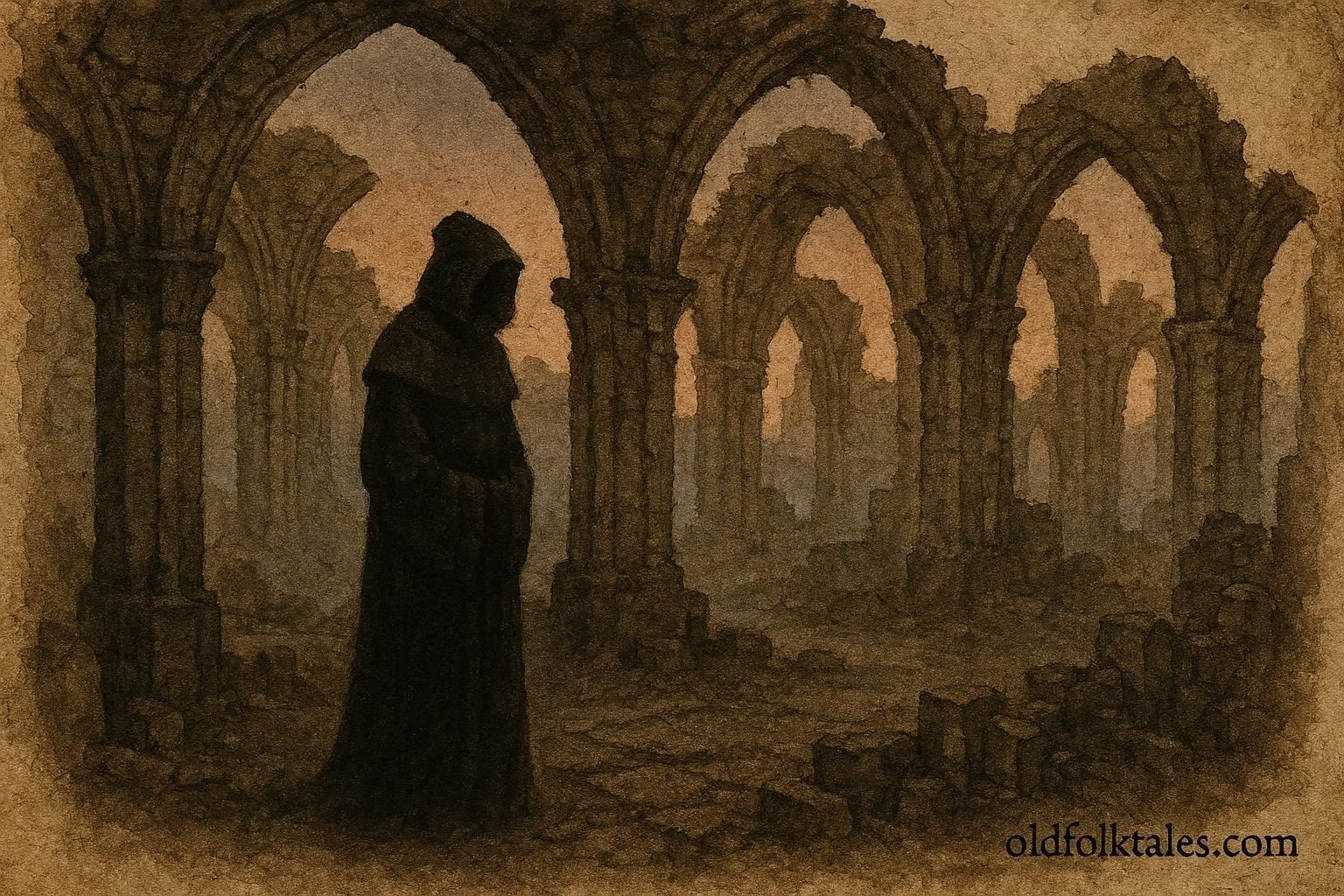
Deep within a remote valley stood the remains of an ancient cloister, long abandoned yet never forgotten. Weathered stone walls leaned toward one another as if tired of holding up centuries of memory. Moss covered the courtyard where monks once walked in prayer. The wind moved through broken arches with the low tone of a chant. To the villagers who lived nearby, the cloister was a place set apart. No one entered its grounds after sunset, and few even approached during daylight except those with great need. For it was said that a Black Monk wandered there, guarding the last fragments of sacred silence.
The story of the Black Monk had circulated for generations. Elders spoke of a pious friar who had watched over the cloister during a time of great sickness. When plague struck the valley, many of his brethren fled, but he stayed behind to care for the afflicted. As the monastery emptied and the last candles burned low, the monk continued praying alone. Legend claimed he died kneeling before the altar, promising with his final breath to protect the sanctity of the place that had shaped his life. And so his spirit, bound to duty, walked still.
One late autumn afternoon, a young man named Tomas passed near the ruins while bringing grain to a neighboring village. The path he usually followed was blocked by a fallen tree, forcing him to cross closer to the cloister than he ever had before. He paused at the edge of the courtyard, staring through the broken gate. Shadows pooled near the entrance like ink, though the sun had not yet set. An inexplicable chill crawled up his arms.
Learn the moral wisdom of ancient civilizations through proverbs that shaped cultural values
Tomas knew the stories. His grandmother had told them with such conviction that he had never doubted a word. Yet he also felt a stirring of curiosity. How could a place once filled with prayer now lie silent and abandoned? Was the Black Monk truly still there, bound to an oath no living person remembered?
Drawn by a mixture of wonder and recklessness, Tomas stepped across the threshold. The sound of his boots crunching on gravel echoed sharply. Inside the cloister, the air was colder, heavier, as though the centuries themselves watched him. The remains of the chapel stood at the far end. Its roof had partially collapsed, letting beams of light stream down onto cracked tiles. Dust hung in the air like floating incense.
Tomas took a few steps toward the old altar. A shiver ran through him as he noticed footprints in the dust, shaped like the sandals monks once wore. They led from the chapel door toward the courtyard, vanishing beside a broken column. He knelt to inspect them, wondering if another villager had come earlier. But the prints looked too deep, too deliberate, as if made by someone solid and purposeful.
A soft sound broke the silence. At first Tomas thought it was the wind shifting through the stonework, but then he realized it was a whisper. Low, rhythmic, almost like the murmur of a chant. His heart pounded as the whisper grew louder. Shadows shifted along the far wall, gathering like a rising tide. From within them emerged a tall figure draped in a dark robe. The hood covered its face entirely. Its hands were hidden in long sleeves that brushed the ground.
The Black Monk had appeared.
Tomas froze. The figure moved slowly, its steps soundless. It raised one hand, and though the gesture was simple, Tomas felt its meaning. This was not a greeting but a warning. The whispering chant became clearer, echoing from the stone arches. Tomas did not understand the words, yet he felt the weight of each one. They spoke of vows unbroken, sanctity undefiled, and the sacred duty of silence.
The monk pointed toward the gate through which Tomas had entered. The meaning was unmistakable. Leave now. Do not disturb what remains of holiness.
Tomas wanted to flee, yet his legs refused to move. With trembling voice he whispered, “I meant no disrespect. I did not come to take anything. I only wished to see what remained.”
The monk paused, the shadows around him drawing inward like a held breath. Then he slowly lowered his raised hand and lifted the other, revealing palm and fingers stained with the darkness of centuries. Tomas felt a sudden pressure in the air, as though the spirit weighed not his words but his intentions.
He bowed his head. “I honor this place. Forgive my intrusion.”
The pressure lifted. The monk stepped backward. His form faded into the far wall until only a faint shimmer remained. The chant softened into silence. Tomas felt warmth return to the courtyard. He understood that he had been spared, allowed to leave because he had shown humility rather than greed.
He backed away from the chapel and crossed the threshold of the broken gate. Only when he reached the path did he dare to look back. The cloister stood still and empty, yet Tomas sensed invisible eyes watching with solemn patience. He hurried home and told his grandmother everything. Her expression held no surprise.
“Spirits bound by devotion do not leave their posts easily,” she said. “You entered sacred ground. Now you know why we honor what the past has left us.”
From that day onward, Tomas never strayed near the cloister again. And though the valley changed with time, the Black Monk continued his lonely watch, guarding silence and memory within the ruins.
Explore the shadows of world mythology, where demons test the soul and spirits watch over mankind
Author’s Note
European monastic ghost lore often describes spirits bound by vows, haunting ruins where their devotion continues beyond death. These tales emphasize respect for sacred places and the weight of spiritual duty.
Knowledge Check
-
Why did Tomas approach the abandoned cloister?
He was forced closer by a blocked path and became curious. -
What evidence inside the ruins hinted at supernatural presence?
Deep footprints shaped like monks’ sandals. -
How did the Black Monk appear?
As a tall hooded figure emerging from gathering shadows. -
What gesture did the monk make toward Tomas?
He raised his hand to warn Tomas to leave. -
Why did the spirit allow Tomas to go unharmed?
Because Tomas showed humility and respect for the sacred place. -
What did Tomas’s grandmother say about the spirit?
That spirits bound by devotion rarely abandon their duty.