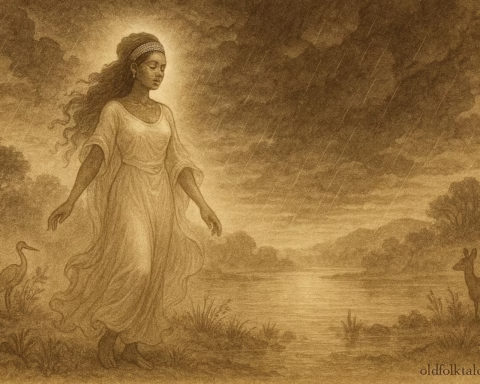
Long before the modern towers rose from the sands of Bahrain, before the oil wells were drilled and the causeways were built, the island was known by another name, Dilmun. In the ancient texts of Mesopotamia, carved into clay tablets by Sumerian scribes, Dilmun was described as a paradise, a land of purity where the sun always shone warm, where death and disease did not exist, and where fresh water sprang miraculously from beneath the earth, even from beneath the sea itself.
The people of Dilmun knew they lived in a blessed place. While their neighbors across the Arabian Gulf struggled with drought and thirst, the island was graced with natural springs that bubbled up from deep underground aquifers, bringing crystal-clear freshwater to the surface. These springs were more than just sources of water they were sacred gifts, evidence that the gods favored this land above all others.
Click to read all Myths & Legends – timeless stories of creation, fate, and the divine across every culture and continent
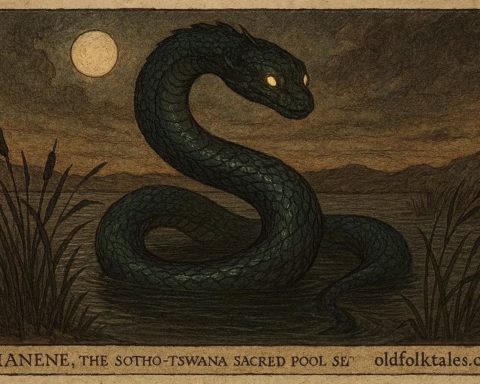
Among all the springs scattered across Dilmun, none was more revered than Ain Umm Sujur. This ancient spring rose in a grove of date palms, its waters so pure and cold that people traveled from distant villages to drink from it. The pool that formed around the spring was deep and still, its surface reflecting the sky like polished bronze. But beneath that tranquil surface, the people whispered, dwelled a powerful guardian.
They called it the Black Snake of Dilmun.
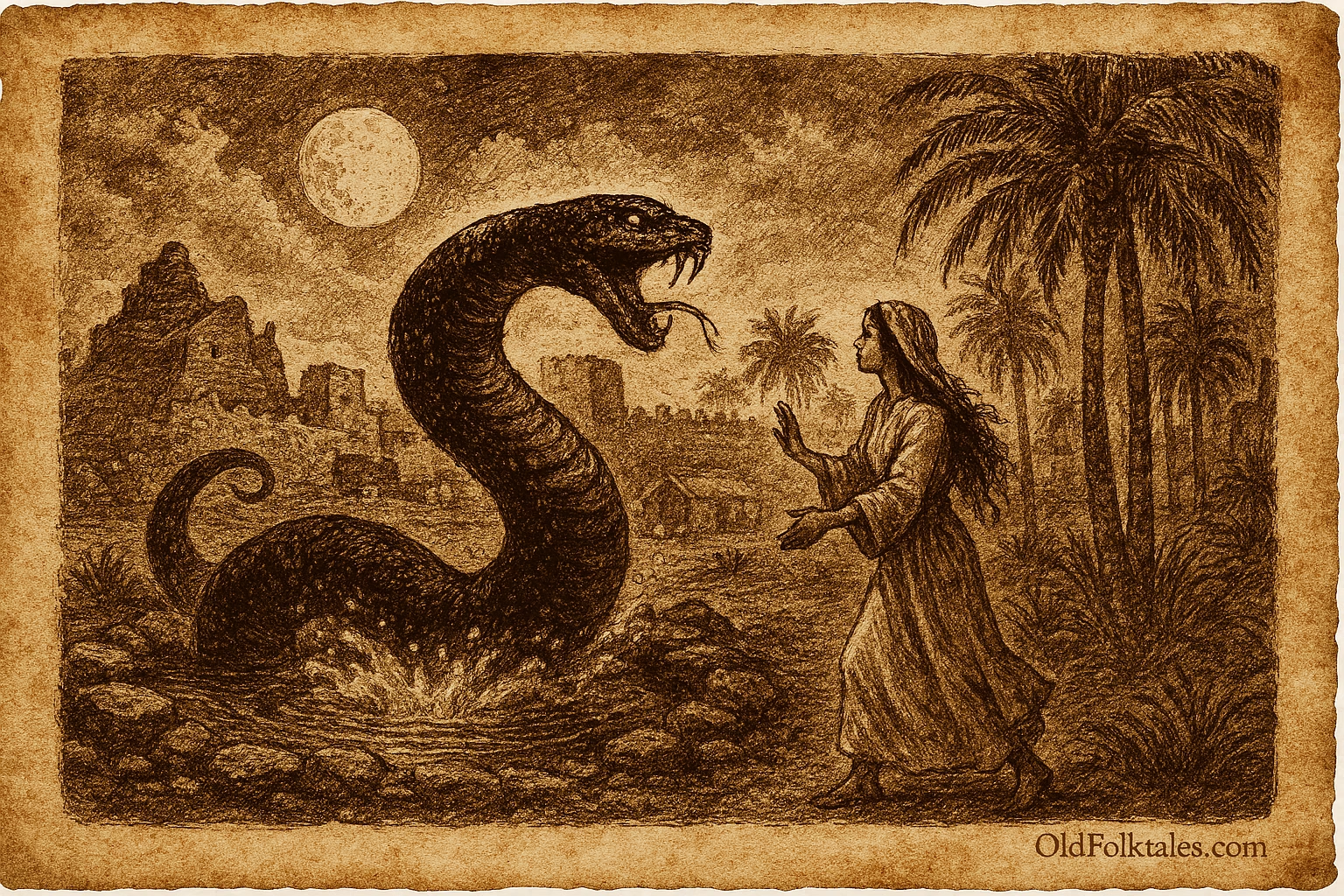
The elders told stories passed down through generations about this magnificent serpent. They said it was as thick as a date palm trunk and longer than ten men lying head to foot. Its scales were black as obsidian, glistening like wet stone when moonlight touched them. Its eyes glowed like hot coals in the darkness, and when it moved through the underground passages beneath the spring, the very earth trembled. The Black Snake was no ordinary creature it was a divine protector, placed at Ain Umm Sujur by the ancient gods to guard the precious water that sustained all life in Dilmun.
The people of the surrounding villages lived by a sacred covenant with the guardian serpent. They approached the spring with respect, speaking prayers of gratitude before drawing water. They took only what they needed, never wasting a single drop. They kept the area around the spring clean, removing any debris or refuse. They made small offerings dates, honey, fresh bread leaving them at the edge of the pool as tokens of their appreciation. And most importantly, they never polluted the waters or disturbed the natural flow of the spring.
In return, the Black Snake allowed them to use the water freely. Generations passed in this harmony. Children grew up hearing the stories, learning to respect the spring and its guardian. Farmers watered their crops, herders brought their animals to drink, and families filled their vessels, all while maintaining the ancient traditions that kept them safe.
But as with many tales of paradise, greed eventually arrived to disturb the peace.
There came a time when a wealthy merchant from across the sea arrived in Dilmun. His name was Malik, and he had made his fortune trading in distant lands. He had accumulated silver, gold, fine textiles, and rare spices, but his hunger for wealth knew no satisfaction. When he heard about Ain Umm Sujur and saw the constant stream of people coming to draw its waters, his mind began calculating profit.
“Why should this water be free for anyone to take?” Malik thought. “If I controlled this spring, I could charge for every vessel filled. The people need water they would pay anything I asked. I would become the richest man in all Dilmun.”
Malik began making plans. He purchased land near the spring and built a large workshop. He hired workers and brought in tools and materials. His scheme was to divert the spring’s flow through channels into a series of reservoirs that only he controlled. He would build walls around the spring, install gates and locks, and force everyone to pay tribute for access to the sacred waters.
The villagers protested, warning him about the Black Snake. “The spring is protected,” they said. “It is sacred. The guardian will not allow this.”
But Malik laughed at their superstitions. “Your snake is nothing but an old wives’ tale,” he scoffed. “I’ve sailed across seas, traded in mighty cities, and dealt with kings and merchants far more powerful than any imaginary serpent. Your primitive fears mean nothing to me.”
He began his work, ignoring all warnings. His workers dug channels to divert the water. They drove stakes into the earth around the spring’s perimeter. They mixed mortar and stacked stones to build walls that would enclose the sacred pool. Each day, Malik’s workshop buzzed with activity as his greedy plan took shape.
The villagers watched in growing dread. They increased their prayers at the spring, begging the Black Snake to forgive them for failing to stop the merchant. They made larger offerings, hoping to appease the guardian. But Malik continued his violation of the sacred covenant, growing bolder with each passing day.
Then came the night when everything changed.
Malik had been working late in his workshop, calculating his future profits by lamplight. Outside, the moon was full and bright, casting silver light across the date palm grove. The night was perfectly still no wind stirred the fronds, no insects sang, no animals called. The silence was absolute and unnatural, like the world itself was holding its breath.
Suddenly, the water of Ain Umm Sujur began to churn and bubble. The surface that had always been so calm and mirror-like now roiled as if boiling. Then, from the depths of the spring, the Black Snake emerged.
Those who witnessed it from a distance villagers who had come to pray at the sacred site would tell the story for the rest of their lives. The serpent rose from the water like a nightmare made flesh, its massive body gleaming black in the moonlight, its eyes blazing like furnaces. Water cascaded from its scales as it lifted its enormous head high into the air. When it opened its mouth, they could see fangs like curved daggers.
The Black Snake turned its burning gaze toward Malik’s workshop.
The ground began to shake. At first, it was a gentle tremor, causing the date palms to sway and tools to rattle in the workshop. But the shaking grew stronger, more violent. Malik stumbled from his doorway, his face suddenly pale with terror as he realized the ancient stories were true.
The earth beneath his workshop began to crack. Great fissures opened in the ground, spreading like lightning across the soil. Malik tried to run, but the ground shifted beneath his feet. The walls of his workshop groaned and buckled. Support beams splintered like dry twigs. The carefully stacked stones of his unfinished wall tumbled down.
With a sound like thunder, the earth opened wide and swallowed Malik’s entire workshop tools, materials, stolen water channels, walls, everything. The merchant himself vanished into the chasm, his scream cut short as tons of earth and stone fell upon him. In moments, it was as if the workshop had never existed. The earth closed over the site, leaving only disturbed soil and a few broken timbers protruding from the ground.
The Black Snake, its duty fulfilled, sank back into the spring. The water gradually calmed, becoming once again the mirror-smooth surface the villagers had always known. The tremors ceased. The night returned to its natural peace, filled with the normal sounds of crickets and wind.
The villagers approached cautiously at dawn. Where Malik’s workshop had stood, they found only a depression in the earth, already filling with sand. His name was never spoken in Dilmun again to speak it would bring bad fortune. Instead, the story of his fate became a warning passed down through every generation.
The people of Dilmun continued to use Ain Umm Sujur, but with even greater reverence than before. They taught their children the sacred covenant: take only what you need, give thanks for what you receive, respect the water and its guardian, and never let greed poison the gifts of paradise.
And in the depths of the ancient spring, the Black Snake continued its eternal vigil, guardian of the sacred waters of Dilmun, protector of the paradise island in the Arabian Gulf.
The Moral Lesson
The legend of the Black Snake of Dilmun teaches that nature’s gifts must be respected and protected, not exploited for selfish gain. Water, especially in arid regions, is sacred and precious, a life-giving resource that belongs to the community, not to individuals who would control it for profit. The story warns against the destructive power of greed and emphasizes the importance of maintaining balance between human needs and natural resources. It reminds us that ancient covenants of respect and gratitude for nature’s bounty must be honored, or devastating consequences will follow. The Black Snake represents the natural world’s power to defend itself against those who would violate sacred trusts.
Knowledge Check
Q1: What was Dilmun and why was it considered paradise in ancient Mesopotamian texts?
A: Dilmun was the ancient name for modern-day Bahrain, described in Mesopotamian clay tablets as a blessed paradise land of purity. It was considered paradise because of its natural freshwater springs that bubbled up from underground even from beneath the sea providing abundant clean water in an arid region where water was scarce and precious.
Q2: Who was the Black Snake in Bahraini folklore and what was its purpose?
A: The Black Snake was a divine guardian serpent that protected the sacred freshwater springs of Dilmun, particularly Ain Umm Sujur. According to legend, it was a massive creature with scales like black obsidian and eyes that glowed like embers. Its purpose was to protect the precious water sources and ensure they remained pure and accessible to all who respected them.
Q3: What was the sacred covenant between the people of Dilmun and the Black Snake?
A: The sacred covenant required people to approach the springs with respect and gratitude, take only the water they needed without waste, keep the area clean, make small offerings of appreciation, and never pollute or try to control the springs for profit. In return, the Black Snake allowed them free access to the life-giving waters.
Q4: Why did the merchant Malik want to control Ain Umm Sujur spring in the legend?
A: Malik was driven by greed and saw the spring as an opportunity for profit. He planned to divert the spring’s flow, build walls around it, and charge people for access to the water. He dismissed the warnings about the Black Snake as superstition, believing his wealth and experience made him superior to local traditions.
Q5: What happened to Malik when he violated the sacred spring in this Asian legend?
A: When Malik attempted to divert and control the sacred spring, the Black Snake emerged from the waters and caused a powerful earthquake. The ground cracked open and swallowed Malik’s entire workshop along with the merchant himself. The earth then closed over the site, erasing all evidence of his greedy scheme, and his name was never spoken again in Dilmun.
Q6: What does the Black Snake legend teach about water resources in Gulf cultures?
A: The legend emphasizes that water is a sacred, communal resource that must be respected and protected, not exploited for individual profit. In the arid Arabian Gulf region, where freshwater is scarce and precious, this story teaches that nature’s gifts belong to everyone and that greed threatens the survival of the entire community. It reflects the cultural importance of water conservation and collective responsibility.
Source: Adapted from Bahraini folklore and oral traditions
Cultural Origin: Arabian Gulf Region, Western Asia
Meta Description
Discover the Black Snake of Dilmun—an ancient Bahraini legend about a sacred serpent guardian who protected paradise springs and punished those who threatened the precious waters of the Gulf.