In the misty highlands of Papua New Guinea, where mountains rise green and steep into clouds that seem to rest upon their peaks, there lived a mother and her son in a small village nestled among the slopes. Their home was a simple dwelling like others in the village, built with materials drawn from the forest: timber posts, woven bamboo walls, and a thatched roof of kunai grass that kept out the frequent rains. Smoke from cooking fires drifted through the settlement each morning and evening, carrying the scent of sweet potato and taro being prepared in earth ovens.
The village clung to the mountainside, surrounded by dense jungle that pressed close from all sides. Ancient trees towered overhead, their canopies alive with birds whose calls echoed through the valleys. Gardens of taro and sweet potato were carved from cleared patches of forest, providing sustenance for the community. Beyond the gardens lay the true wilderness, where few ventured without purpose: a realm of thick undergrowth, hidden ravines, and creatures both familiar and mysterious.
The boy who lived with his mother was entering that difficult age between childhood and manhood, when patience wears thin and emotions run hot. He was not a bad child by nature, but he had developed habits of impatience and disobedience that worried his mother. When she asked him to help with chores, he would complain and delay. When she offered gentle correction, he would respond with sullen silence or sharp words. The respect that should flow naturally from child to parent had begun to fray like an old rope.
The mother bore these difficulties with the patience that comes from deep love, hoping her son would mature and learn the proper ways before his behavior brought serious consequences. She knew that in their culture, respect for parents and elders was not merely preference but sacred obligation, woven into the very fabric of how people should live together. To disrespect one’s mother was to violate one of the fundamental bonds that held the community together.
One afternoon, as the sun climbed toward its zenith and the air grew thick with humidity that promised rain, the boy came to his mother demanding food. She was in the middle of preparing the evening meal, working patiently to ready sweet potatoes in the earth oven. The food was not yet cooked through, still hard in the center, requiring more time over the hot stones to become properly soft and edible.
“I’m hungry now,” the boy insisted, his voice carrying the edge of impatience that had become his constant tone. “Give me food.”
His mother looked up from her work, her face showing the weariness of someone who has had this conversation too many times before. “The food is not ready yet,” she explained calmly. “You must wait until it is properly cooked. If you eat it now, it will be hard and unpleasant, and you will still be hungry.”
But the boy, whose patience had long since worn away to nothing, would not accept this reasonable answer. His face flushed with anger, and his voice rose in pitch and volume. “I don’t care if it’s ready! I want food now! You’re my mother—you’re supposed to feed me when I’m hungry!”
The mother felt something snap inside her, the way a branch breaks suddenly after bending too long under too much weight. For months, perhaps years, she had endured her son’s disrespect, his impatience, his thoughtless demands. She had corrected gently, guided patiently, hoped constantly that he would change. But in this moment, facing yet another unreasonable demand delivered with such entitlement and disrespect, her own patience finally ran out.
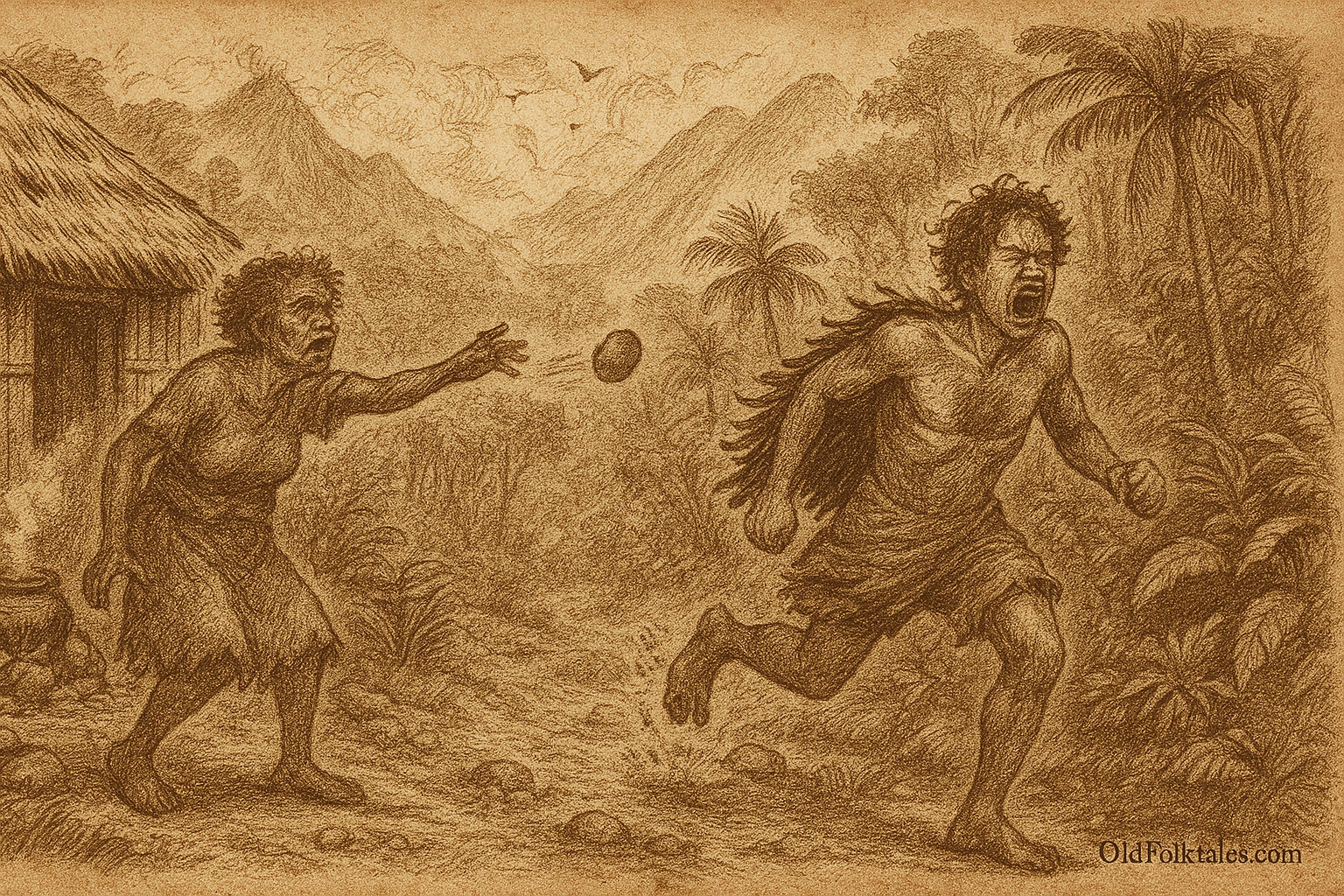
Without thinking, moved by a flash of anger and frustration that overwhelmed her usual restraint, she reached into the earth oven and pulled out a partially cooked sweet potato. It was hot enough to burn her fingers, still hard at the core, nowhere near ready to eat. She turned and threw it at her son, the vegetable striking him in the chest with enough force to make him stumble backward.
“There!” she cried out, her voice breaking with emotions she had kept carefully controlled for so long. “There is your food! Take it and see how you like it!”
The boy stood frozen, the half cooked sweet potato at his feet, a red mark blooming on his chest where it had struck him. But worse than the physical pain was the humiliation that flooded through him like cold water. His mother had thrown food at him. In front of the neighbors who had surely heard the commotion, in the middle of the village where everyone would soon know, his own mother had treated him with such disrespect.
Shame and wounded pride mixed with his anger, creating a volatile storm of emotions that the boy could not contain or understand. Without a word, without looking back, he turned and ran. He ran toward the edge of the village, past the last houses, past the carefully tended gardens, straight into the dense jungle that pressed against the settlement like a living wall.
His mother called after him, her anger already evaporating into concern and regret, but he did not stop or look back. He crashed through the undergrowth, branches whipping at his face and arms, his feet pounding against the jungle floor. Tears of rage and humiliation streamed down his face as he ran deeper and deeper into the forest’s green embrace.
As he ran, something extraordinary and terrible began to happen. His body, driven by the intensity of his emotions, by the depth of his wounded pride, by the completeness of his rejection of his human home, began to transform.
Feathers sprouted along his arms, first as tiny pinpricks that pushed through his skin, then as full quills that grew with supernatural speed. They were not the soft, colorful plumage of parrots or birds of paradise, but coarse, black feathers that gleamed with an oily sheen. His arms themselves were changing, the bones and muscles restructuring, developing the powerful wings of a large flightless bird.
His legs, which had been slender and human, thickened and strengthened. The muscles swelled, becoming powerful enough to propel a large body at tremendous speed. His feet transformed, toes fusing and hardening, developing the distinctive three toed structure of a cassowary, complete with the long, dagger like claw on the inner toe that could disembowel an enemy with a single kick.
His body grew larger, heavier, more powerful. His neck lengthened and developed the bright colors that cassowaries bear: brilliant blue and red skin that would mark him as dangerous and unpredictable. A bony casque began to grow from the top of his head, the distinctive helmet like structure that cassowaries use to push through dense jungle undergrowth.
Most dramatic of all, his voice changed. The angry cries that had been coming from his throat deepened and transformed into the distinctive booming calls of the cassowary: deep, resonant sounds that could carry for miles through the jungle, announcing presence and territory to all who could hear.
The transformation was complete within moments, though to the boy it felt like an eternity of pain and change. Where a human child had been running through the forest, now a fully formed cassowary crashed through the undergrowth, its powerful legs carrying it deeper into the wilderness, its deep calls echoing off the mountainsides.
Back in the village, the mother’s concern had turned to alarm. She ran after her son, following the path he had taken into the jungle, calling his name over and over. Other villagers, hearing the commotion, joined the search. They spread out through the forest, calling, looking, hoping to find the boy and bring him safely home.
But they found no trace of him. The trail disappeared into the thick undergrowth. The calls they heard in response to their shouts were not human voices but the deep, booming cries of a cassowary somewhere in the jungle’s depths. They searched for hours, then days, but the boy was gone. He had vanished into the wilderness, transformed beyond recognition, lost to his family and community forever.
The cassowary that had been a boy retreated into the deepest parts of the jungle, living among the shadows and undergrowth. The bird retained something of the boy’s nature: his quick temper, his unpredictability, his wounded pride. Cassowaries became known as dangerous creatures, beautiful but volatile, commanding respect through their strength and unpredictable behavior. They were revered across many tribes, recognized as powerful and important, but also feared for their capacity for sudden violence when threatened or disturbed.
The people of the highlands learned to treat cassowaries with caution and respect. They understood that these magnificent birds carried within them an echo of human emotion: pride that could be wounded, anger that could explode without warning, strength that demanded acknowledgment. Hunters who encountered cassowaries in the forest knew to keep their distance, to show respect, to never corner or provoke these powerful creatures.
The mother never forgave herself for the moment of anger that had driven her son away. She spent the rest of her life listening for cassowary calls in the jungle, wondering if one of those deep, booming voices might be her son, trying to communicate something across the gulf that now separated them. She told the story to others as a warning and a lesson, though it brought her pain to speak of it.
The tale spread across the highlands, passed from village to village, generation to generation. It became a story that mothers told to impatient children, that elders shared with young people who showed disrespect. The cassowary, that magnificent and dangerous bird, became a living reminder of what could happen when respect breaks down, when anger overwhelms wisdom, when pride and hurt feelings drive people to flee from the connections that make us human.
To this day, when highlanders encounter cassowaries in the jungle, they remember the story of the boy who became a bird. They treat the creatures with the respect and caution they deserve, understanding that these powerful beings carry within them something of human nature: the capacity for wounded feelings, explosive anger, and the tragic consequences of letting emotions overwhelm our better judgment.
Click to read all Myths & Legends – timeless stories of creation, fate, and the divine across every culture and continent
The Moral Lesson
The legend of the boy who became a cassowary teaches us profound lessons about respect, self control, and the consequences of letting emotions overwhelm wisdom. The story shows how disrespect and impatience can erode the sacred bonds between parent and child, how even a loving parent can be pushed beyond endurance, and how a moment of anger on both sides can lead to irreversible consequences. The boy’s transformation into a cassowary represents what happens when we let wounded pride and uncontrolled emotions separate us from our community and our humanity.
Knowledge Check
Q1: What was the relationship between the boy and his mother, and what problems existed?
A: The boy and his mother lived together in a small highland village. The boy was entering the difficult age between childhood and manhood and had developed habits of impatience and disobedience. He would complain about chores, respond with sullen silence or sharp words to correction, and showed decreasing respect for his mother. The proper respect that should flow from child to parent had begun to deteriorate, causing the mother deep concern.
Q2: What triggered the conflict that led to the boy’s transformation?
A: The boy demanded food while his mother was preparing the evening meal. When she explained that the sweet potatoes were not yet properly cooked and he needed to wait, he became angry and insisted she feed him immediately. After enduring months of his disrespect, the mother’s patience finally broke. In a moment of frustration, she pulled a half cooked sweet potato from the earth oven and threw it at him, humiliating him in front of the village.
Q3: How did the boy’s body transform as he ran into the jungle?
A: As the boy ran into the forest, driven by shame and wounded pride, his body underwent a complete transformation. Coarse black feathers sprouted along his arms, which restructured into powerful wings. His legs thickened and strengthened, developing the cassowary’s distinctive three toed feet with dangerous claws. His body grew larger and more powerful, his neck lengthened and developed bright blue and red coloring, a bony casque grew from his head, and his voice deepened into the booming calls of a cassowary.
Q4: What happened when the villagers searched for the boy?
A: The mother immediately regretted her action and ran after her son, calling his name. Other villagers joined the search, spreading through the forest and calling for him. However, they found no trace of the boy. The trail disappeared into thick undergrowth, and the only responses to their calls were the deep, booming cries of a cassowary somewhere in the jungle. Despite searching for days, the boy was gone forever, transformed beyond recognition and lost to his family and community.
Q5: How do cassowary characteristics reflect the boy’s emotions and personality?
A: The cassowary retained something of the boy’s human nature: his quick temper, unpredictability, and wounded pride. Cassowaries are known as dangerous creatures, beautiful but volatile, commanding respect through strength yet prone to sudden violence when threatened or disturbed. Their behavior reflects the boy’s inability to control his emotions and his defensive reaction to perceived disrespect, showing how his human feelings became permanently embedded in his transformed nature.
Q6: What is the cultural significance of this legend in Papua New Guinea highlands society?
A: This myth serves as a powerful teaching tool about respect for parents and elders, which is considered sacred obligation in highland culture. The story is told by mothers to impatient children and by elders to disrespectful young people as a warning about the consequences of losing self control and violating fundamental family bonds. It explains why cassowaries are both revered and treated with caution, and reinforces the understanding that respect and patience are essential to maintaining one’s humanity and place within the community. The permanent nature of the transformation emphasizes that some consequences cannot be undone.
Source: traditional oral narratives from the Papua New Guinea Highlands.
Cultural Origin: Highlands region, Papua New Guinea, Melanesia