In the time before time had weight, in the days when the sun first learned to set and rise again, there lived upon the earth a people who knew not death. Their bones did not weaken, their breath did not fail, and the sleep from which they woke each dawn was but a gentle rest, never the eternal silence. The world was young then, and Unkulunkulu, the Great Ancestor, the First One who emerged from the reeds of existence, walked among his children and saw that they thrived beneath his watchful gaze.
The earth was abundant in those ancient days. The rivers ran clear and full, the cattle grazed on endless grasslands, and the people sang songs that had no ending, for they believed as was true that their days stretched forward without boundary, like the great plains that rolled toward every horizon. Children were born, but none were orphaned. Lovers embraced, knowing no parting save that of temporary distance. The word for “farewell” had not yet been shaped by human tongues, for there was no need to speak of forever.
But Unkulunkulu, in his wisdom vast as the sky, began to perceive a disturbance in the order of things. The earth, though generous, began to strain beneath the weight of those who never departed. The young could not inherit wisdom through loss, nor could they know the value of a moment that might not return. The Great Ancestor sat in contemplation, and a great decision formed in his heart like thunder gathering in distant clouds.
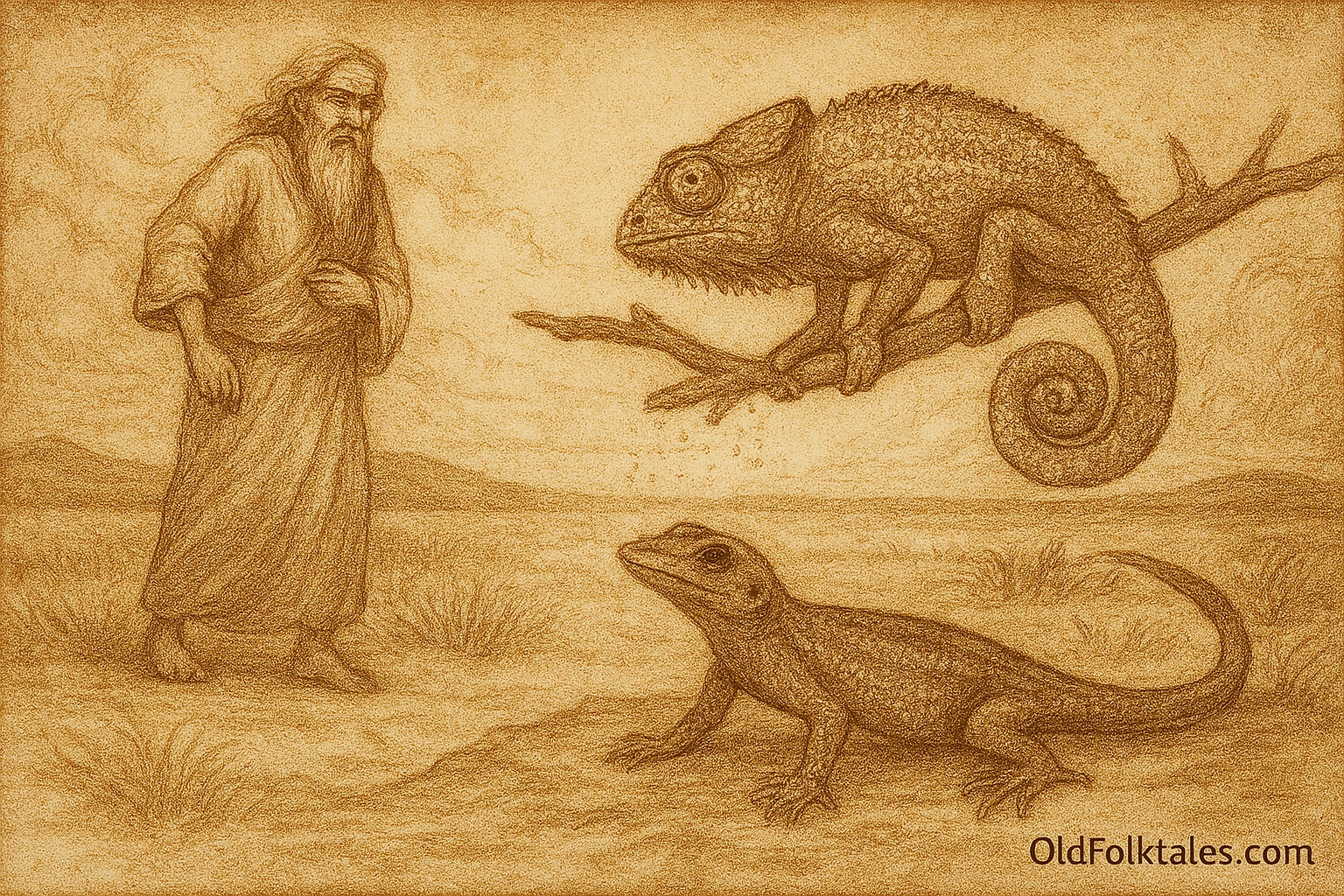
He called forth two creatures from the multitude of living things. First came the chameleon, that ancient walker whose feet moved with the deliberation of one who reads the world with each step. Its eyes swiveled independently, seeing past and future in the same glance, and its skin bore the colors of all seasons at once. To this careful creature, Unkulunkulu entrusted a message of great weight.
“Go to the children of earth,” the Great Ancestor commanded, “and tell them these words: ‘Let not men die. Let them live forever, as they have lived until now.'”
The chameleon bowed its crowned head and began its journey, moving with that peculiar swaying gait that has marked its kind through all the ages. But the chameleon, true to its nature, could not resist the world through which it passed. It paused to observe the morning dew on a spider’s web, each droplet a perfect world unto itself. It stopped to feast upon insects that crossed its path, its tongue darting with sudden speed that contrasted with its measured steps. It rested in the shade when the sun grew fierce, and studied the patterns of clouds when the breeze was cool.
Days passed, then weeks, and still the chameleon had not completed its journey.
Unkulunkulu, watching from the place beyond places, grew troubled. Perhaps his decision required reconsideration. Perhaps the earth’s groaning was a voice that needed to be heard. In a moment that would echo through all generations, he called forth another messenger the lizard, swift and sleek, who darted across hot stones and feared no distance.
“Run,” commanded the Great Ancestor, and his voice now carried a different weight. “Run to the children of earth and tell them: ‘Let men die. Let them return to the earth from which they came.'”
The lizard needed no second urging. Like a thrown spear, it raced across the land, its feet barely touching the ground, its body a streak of determination beneath the watching sun. It crossed rivers without pause, climbed hills without rest, and spoke to no one along the way, for its message burned urgent in its throat.
When the lizard reached the gathering places of humanity, the people crowded around, for messengers from Unkulunkulu were rare and sacred. The lizard’s sides heaved from its long run, but its voice rang clear:
“Hear the word of the Great Ancestor: Let men die. Let them return to the earth. This is the decree that shall be.”
A great silence fell upon the people. Some wept. Some questioned. But the word had been spoken, and in that ancient time, words spoken by the messengers of Unkulunkulu took root in reality like seeds in fertile soil. Even as they stood there, the people felt something shift within them a new awareness of their own heartbeats, a strange sense that each breath was now numbered, however high the number might be.
It was only later, as the sun climbed toward its zenith, that the chameleon finally arrived, moving with its unhurried grace into the same gathering place. The people turned to this second messenger with desperate hope. Perhaps there had been a mistake. Perhaps the lizard had carried false words.
The chameleon, unaware of what had transpired, delivered its message with solemn dignity: “Let not men die. Let them live forever. Thus speaks Unkulunkulu.”
But the words fell like stones into deep water, making ripples but changing nothing. The first message had already been believed, already been woven into the fabric of human existence. Death had entered the world, and no second decree could undo what the first had accomplished.
The chameleon learned then of the lizard’s earlier arrival and sat in sorrowful silence, understanding that its own careful nature had sealed the fate of all humanity. From that day forward, the people regarded the chameleon with mixed feelings respect for its wisdom and deliberation, yet resentment for its slowness when speed had mattered most.
And so death became the inheritance of all who walk upright, all who build fires and tell stories and look up at stars. The Great Ancestor had spoken twice, but only once had humanity heard in time to receive the blessing that was also a burden. From that day to this, we count our days and treasure our moments, for the lizard’s message proved true, and the chameleon’s arrived too late.
Click to read all Myths & Legends – timeless stories of creation, fate, and the divine across every culture and continent
Author’s Note
This profound Zulu narrative speaks to the irreversible nature of certain choices and the weight of timing in the unfolding of destiny. The myth suggests that death, rather than being a punishment, emerged through cosmic circumstance a message delivered out of order. It transforms mortality from divine judgment into something more complex: an accident of fate that nonetheless became immutable truth. The story also carries a moral dimension about the virtues and costs of both haste and deliberation, suggesting that neither speed nor caution holds absolute value context determines wisdom. Most poignantly, it frames death not as humanity’s failure, but as the result of divine ambivalence and mortal chance, making mortality something to be accepted rather than resented.
Knowledge Check
1. Who was Unkulunkulu in Zulu cosmology? Unkulunkulu was the Great Ancestor, the First One who emerged from the reeds of existence and was regarded as the creator figure who walked among his children in the beginning times. He held authority over the fundamental laws governing human existence.
2. What was the original message Unkulunkulu sent with the chameleon? The chameleon was instructed to tell humanity: “Let not men die. Let them live forever,” intending to preserve the immortality that humans had enjoyed since their creation.
3. Why did the chameleon arrive late with its message? The chameleon, true to its deliberate nature, paused repeatedly during its journey observing morning dew, hunting insects for food, resting in shade, and studying cloud patterns causing significant delays in delivering its urgent message.
4. What prompted Unkulunkulu to send a second, contradictory message? As time passed and the chameleon delayed, Unkulunkulu reconsidered his decision, troubled by the earth’s strain under an immortal population and recognizing that humans could not learn wisdom through loss or appreciate fleeting moments.
5. Why couldn’t the chameleon’s message undo what the lizard had proclaimed? In the mythological framework, the first message heard and believed by humanity took root in reality and became woven into existence itself. Once death had been accepted as truth, it became an immutable part of the human condition that could not be reversed.
6. What deeper meaning about mortality does this myth convey? The myth presents death not as divine punishment or human failure, but as an irreversible consequence of cosmic timing and circumstance. It encourages acceptance of mortality as an unavoidable truth while teaching that both haste and delay carry consequences wisdom lies in recognizing when each approach is appropriate.
Origin: Zulu People, South Africa