
Deep in the heart of Cades Cove, nestled within the misty hollows of the Great Smoky Mountains, there lived a man who fell in love with a woman marked by fate from the moment of her first breath. She came into this world during a fierce thunderstorm, with lightning splitting the sky and thunder shaking the mountains down to their ancient roots. The old folks in the cove whispered that such a birth was an omen; anyone born during a thunderstorm would one day meet their end by lightning’s violent hand.
The girl grew up beautiful and talented, her fingers blessed with the gift of quilting. She could take scraps of fabric and transform them into works of art that told stories in every stitch. But she lived her life shadowed by the prophecy of her stormy birth. She took every precaution against the lightning that she believed would claim her. No metal bed would ever grace her bedroom, for metal called to lightning like a moth to flame. When dark clouds gathered on the horizon and the first rumble of thunder echoed through the mountains, she would set down her sewing needles those thin metal instruments and wait for the storm to pass before picking up her work again.
When she married, she poured her heart and soul into making quilts for her new household. Each one was a masterpiece, but there was one quilt that stood out above all the others. She crafted it from pieces of her husband’s shirt the very one he’d worn during their first terrible argument, when harsh words had flown between them like angry hornets. She called it the cussing quilt, and though it was born from conflict, it became one of the finest quilts she ever created. Every stitch seemed to hold memory, every patch a reminder of forgiveness after anger.
But fate, as the old mountain people know, cannot be outrun forever. The woman fell gravely ill, her body weakening day by day. The doctor came from town, shaking his head and offering remedies that did nothing to halt the sickness consuming her. As she lay on her deathbed, her skin pale as moonlight, she called her husband to her side. With her last reserves of strength, she made him swear two solemn promises: he must keep her quilts in the family, passing them down through generations, and he must never place her quilts on a metal bed.
The man clasped her trembling hand and gave his word. His voice was thick with grief as he promised to honor her wishes. She closed her eyes then, seemingly at peace, and slipped away from the world just as quietly as morning mist disappears from the cove.
Time passed, as it always does, and grief eventually loosened its grip on the widower’s heart. He met another woman and brought her home as his new wife. This woman had her own ideas about how things should be done. She insisted on modern conveniences, including a fine metal-framed bed that gleamed in the lamplight. The man, wanting to please his new bride and perhaps having allowed his promise to fade like old ink, agreed.
One cold autumn night, when frost painted the windows and a chill crept through the floorboards, the new wife rummaged through the chest of quilts. She pulled out the most beautiful one she could find the cussing quilt, with its intricate patterns and expert stitching. She spread it across the metal bed, smoothing out the wrinkles with satisfaction.
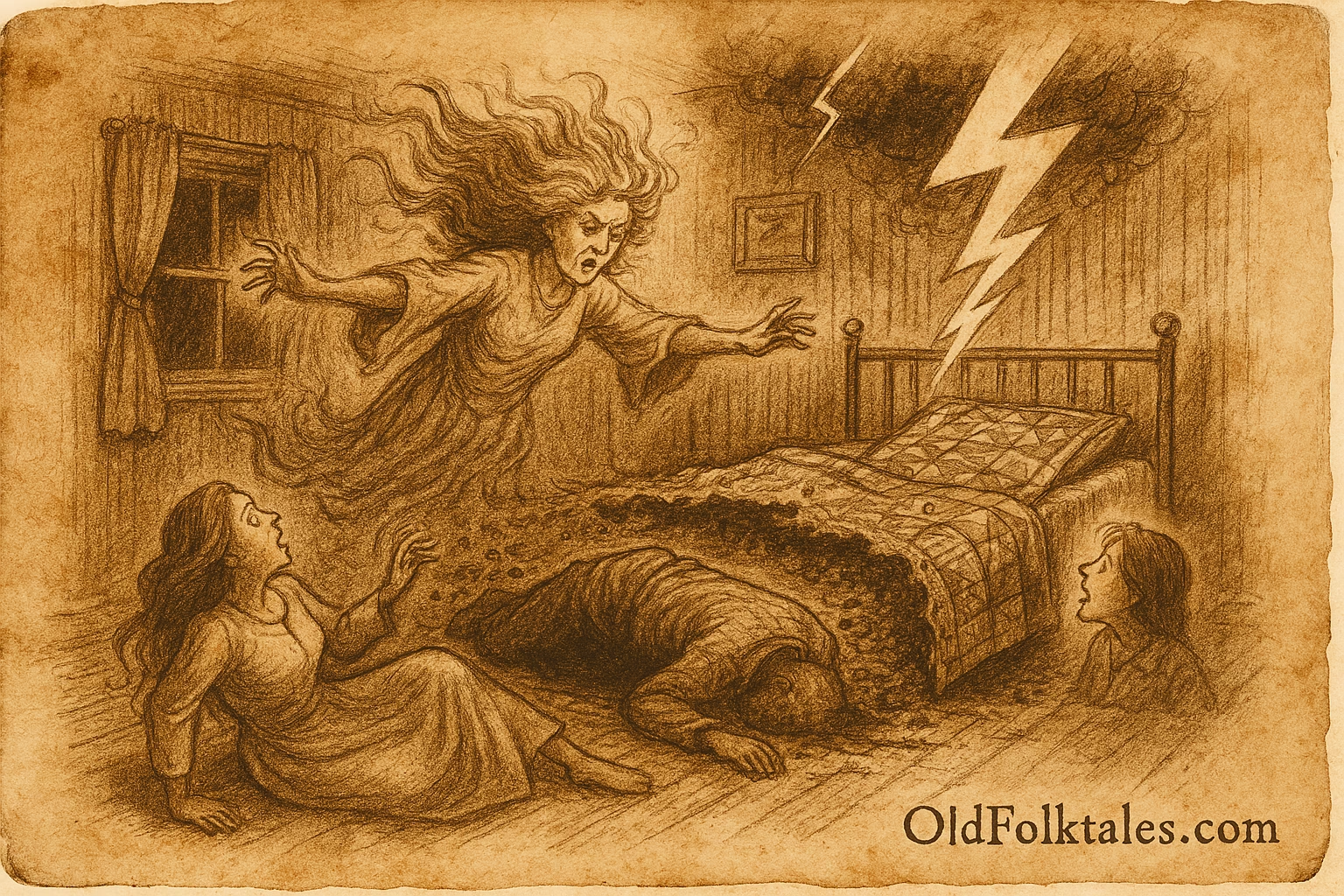
Around midnight, the new wife jerked awake, her skin prickling with an unnatural cold that had nothing to do with the weather. Her breath came in short, frightened gasps. There, hovering above the bed like morning fog that refused to burn away, was the translucent figure of a woman. The ghost’s eyes burned with an otherworldly light as she stared down at the broken promise lying on that forbidden metal bed.
Then the night exploded.
A bolt of lightning brilliant, terrible, and impossibly precise crashed through the roof and struck the bedroom with the fury of divine judgment. The new wife was thrown from the bed, her consciousness scattered like leaves in a storm. When her senses finally returned and her vision cleared through the smoke and confusion, she saw a scene of devastation.
Her husband’s body lay crumpled on the floor, charred beyond recognition by the lightning’s kiss. The metal bed frame had been reduced to nothing but twisted, blackened ashes, as if it had never been more than kindling for some celestial fire. But there, in the center of all that destruction, lay the cussing quilt untouched, unburned, without a single scorch mark marring its surface.
And here was the strangest thing of all, the detail that sent whispers racing through Cades Cove for generations to come there had been no thunderstorm that night. The sky had been clear, the stars bright. Not a single person in the cove had heard thunder rumbling through the mountains.
The lightning had come from somewhere else entirely.
Click to read all Myths & Legends – timeless stories of creation, fate, and the divine across every culture and continent
The Moral of the Story
The Cussing Quilt teaches us that promises made to the dying are sacred bonds that transcend death itself. When we give our word especially to those we love in their final moments we invoke something deeper than mere social obligation. Breaking such promises can bring consequences that reach beyond the natural world, for love, memory, and justice do not always rest quietly in the grave. This Appalachian tale reminds us to honor our commitments and respect the wishes of those who came before us, for some debts follow us even beyond the veil between worlds.
Knowledge Check
Q1: Why was the Cades Cove girl afraid of lightning throughout her life?
A: She was born during a thunderstorm, and according to Appalachian superstition, anyone born during a thunderstorm would eventually be killed by lightning. This belief shaped her entire life, causing her to avoid metal beds and put down metal sewing needles whenever storms approached.
Q2: What was the significance of the cussing quilt in the story?
A: The cussing quilt was made from pieces of the husband’s shirt that he wore during the couple’s first major argument. Despite being born from conflict, it became one of the wife’s finest quilts, symbolizing forgiveness and the transformation of negative experiences into something beautiful and valuable.
Q3: What two promises did the dying wife make her husband swear to keep?
A: She made him promise to keep her quilts in the family for future generations and to never place her quilts on a metal bed. These promises were meant to protect her legacy and prevent the lightning-related fate she had feared her entire life.
Q4: How did the husband break his promise to his first wife?
A: After remarrying, he allowed his new wife to use a metal-framed bed and permitted her to place the cussing quilt on that forbidden metal bed, directly violating both the spirit and letter of his deathbed promise.
Q5: What supernatural event occurred when the promise was broken?
A: The first wife’s ghost appeared hovering over the bed, and immediately afterward, a bolt of lightning struck the bedroom, killing the husband and destroying the metal bed. Mysteriously, there was no thunderstorm that night in Cades Cove, suggesting supernatural rather than natural lightning.
Q6: What is the cultural significance of quilts in Appalachian storytelling?
A: In Appalachian culture, quilts represent family heritage, women’s artistry, and the preservation of memories through generations. They often appear in folklore as powerful objects that carry emotional and spiritual significance, serving as tangible connections between the living and the dead.
Source: Adapted from Appalachian folklore traditions of the Great Smoky Mountains region.
Cultural Origin: Appalachian folklore, Cades Cove, Great Smoky Mountains, Tennessee, United States






