In the time before time had learned to measure itself, in the days when the sky was closer to the earth and the boundary between celestial and earthly realms was thin as morning mist, the Moon lived as both goddess and guardian of the night. She was not the distant silver disc that now hangs cold and remote, but a being who spoke and felt, who watched the creatures below with tender concern, and who understood the burden that mortality placed upon human hearts.
The Moon herself knew the secret of renewal. Each month, the San people watched as she grew full and radiant, her light flooding the Kalahari with silver that made the sand shine like water and cast shadows sharp as obsidian blades. Then, night by night, she would diminish, growing thinner and frailer until she vanished entirely from the sky, leaving the world in darkness. But always, always she returned. Three nights of absence, and then a sliver of light would appear, growing steadily until she stood full and glorious once more, reborn from her own death.
Click to read all Myths & Legends – timeless stories of creation, fate, and the divine across every culture and continent
The Moon looked down upon humanity and saw how they suffered. She watched mothers weep over children who would never wake, saw warriors fall and lie still forever, observed the way old age bent strong backs and dimmed bright eyes with no promise of restoration. Her heart, which waxed and waned with her visible form, grew heavy with compassion for these beings who walked upright and built fires and told stories, yet faced an ending from which there was no return.
“This is unjust,” the Moon declared to the assembled stars, her celestial companions who had witnessed the unfolding of creation. “I die and am reborn. The sun sets and rises. The seasons turn and return. Why should humanity alone face a death that has no resurrection? I will share my gift with them.”
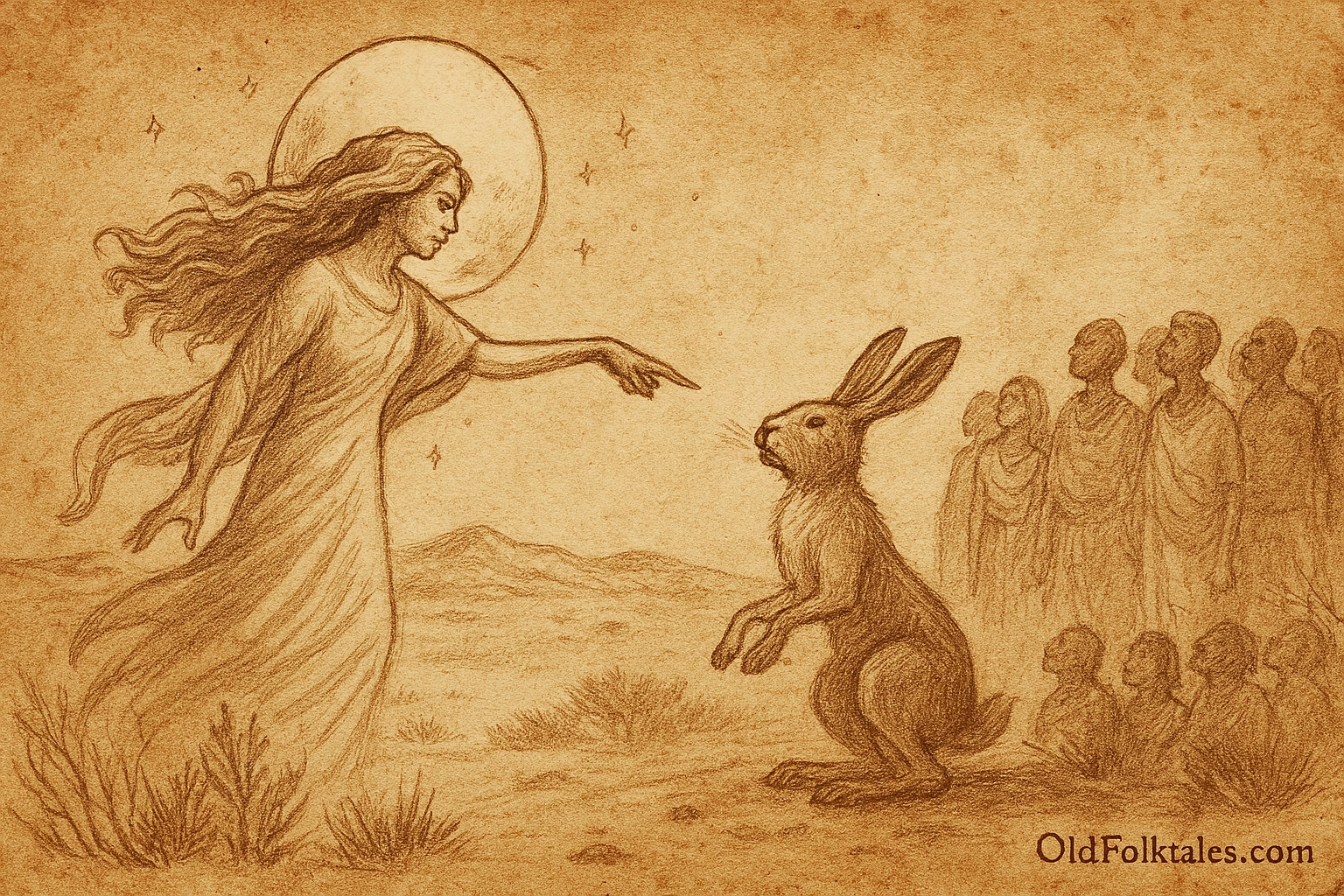
She called before her the hare, that swift creature whose long legs could cover vast distances, whose large ears could hear the faintest whisper, and whose quick wit made him seem the perfect messenger for such an important task. The hare bowed before the Moon’s radiance, honored to be chosen for divine service.
“Go down to the people,” the Moon instructed, and her voice held the gentle authority of one who commands the tides and pulls at the waters of the world. “Tell them these words exactly as I speak them: ‘As I die and rise again, so shall you. As I am renewed with each cycle, so too shall humans return from death, reborn like the new moon from the darkness.’ This is my gift to them the promise of eternal renewal.”
The hare’s ears stood alert, catching every word. He repeated the message back to the Moon, and she nodded with satisfaction. “Go swiftly,” she urged, “for even now, humans die below without hope of return. Carry this message to them so they may know that death is not the end, but merely a passage into darkness before the return to light.”
The hare leaped from the sky, his powerful legs carrying him down toward the earth below. The wind rushed past his long ears, and the stars blurred into streaks of light as he descended. But the hare, for all his quickness of body, possessed a mind that was easily distracted. As he fell through the night air, he began to think about how important he was, how he alone had been chosen for this sacred task. He imagined how the humans would praise him, how they would tell stories of the hare who brought them the gift of immortality.
Lost in these pleasant thoughts, the hare’s memory began to slip. By the time his feet touched the red sand of the Kalahari, he could no longer quite remember the exact words the Moon had spoken. Something about dying and rising… or was it dying and not rising? The message tumbled in his mind like a stone in a gourd, the words mixing and reversing.
The humans, seeing a creature descend from the night sky, gathered around in wonder. The hare, not wanting to appear uncertain, stood tall and spoke with great authority: “Hear the message of the Moon! She who rules the night sends you these words: ‘As I die and do not return, so shall you. As I vanish into darkness and am gone, so too shall humans face death without rebirth.'”
A terrible silence fell over the gathered people. They had hoped for comfort, for some promise that the deaths of their loved ones were not final endings. Instead, this messenger from the heavens confirmed their worst fears that death was indeed the ultimate conclusion, a darkness from which none returned.
High above, the Moon heard the hare’s words, and her light flickered with rage and sorrow. She had offered humanity her greatest gift, the secret of her own renewal, and this foolish creature had reversed it, turning a blessing into a curse. Her silver radiance darkened to the color of old blood, and she descended from her place in the sky with speed that frightened even the stars.
The Moon found the hare still standing among the humans, basking in the attention he had received. “What have you done?” her voice was like thunder in the night, though she spoke barely above a whisper. “I entrusted you with the gift of eternal life, and you have delivered the sentence of permanent death!”
The hare’s ears flattened against his head as memory returned with terrible clarity. He saw now what he had done, how his pride and carelessness had stolen from humanity the very thing they needed most. He tried to speak, to apologize, to explain, but the Moon’s anger was a force as inexorable as her phases.
She struck the hare across his face, her hand moving with the same power that pulls oceans across the world. The blow split the hare’s upper lip, creating a gap that exposed his teeth. The hare cried out in pain and shame, and his cry became the high, keening sound that hares make to this day when they are frightened or hurt.
“You will bear this mark forever,” the Moon pronounced, her voice now heavy with a sorrow that matched her anger. “Every hare that comes after you will carry the split lip as a reminder of what was lost through carelessness and pride. And humanity” she turned to the assembled people, who watched with tears streaming down their faces, ” humanity must now accept the burden my foolish messenger has placed upon you. The words have been spoken. The message has been delivered. I cannot unsay what has been said in my name.”
The Moon began to rise back toward her place in the sky, but she paused and looked down once more. “I can give you this much,” she said, her voice softening. “Watch me in the sky. See how I die and am reborn. Let this be a reminder that death is not the end of all things, even if it has become the end for you. And perhaps, in watching my renewal, you will find some comfort in knowing that while your individual lives must end, humanity itself continues, generation after generation, like my phases that never truly cease.”
From that night forward, the Moon has kept her pattern of death and rebirth, waxing full and waning to nothing, then returning always on the third night of darkness. The hare bears his split lip, a permanent mark of shame and warning. And humanity, denied the gift that should have been theirs, looks up at the Moon with longing, seeing in her cyclical renewal the immortality they almost possessed.
The San people, when they see the Moon growing thin, say that she is dying once again, remembering the death and rebirth that could have been humanity’s inheritance. When they see a hare and notice its distinctive split lip, they tell their children the story of the careless messenger who reversed the blessing into a curse. And in their stories and rock paintings, they remember the night when immortality was offered, misdelivered, and lost forever all because a messenger thought more of himself than of the sacred words he carried.
Author’s Note
This San myth offers a poignant exploration of how cosmic gifts can be lost through mortal failure, and how the natural world bears permanent testimony to ancient mistakes. Unlike many creation myths that attribute mortality to human transgression or divine punishment, this story places the blame on miscommunication, a deeply human and relatable cause for cosmic consequence. The Moon emerges as a compassionate deity whose generosity is thwarted not by malice but by carelessness, making the tragedy feel more profound. The hare’s split lip serves as a perpetual reminder etched into nature itself, transforming every encounter with this animal into a teaching moment about responsibility and the weight of words. The myth also reframes the Moon’s phases from simple astronomical phenomena into a bittersweet memorial she continues to demonstrate the renewal she wanted to share, making her cyclical rebirth both a comfort and a reminder of what humanity lost. This narrative reflects the San people’s sophisticated understanding that great consequences can flow from small failures, and that the natural world speaks in a language of signs and symbols that carry ancient truths.
Knowledge Check
1. What gift did the Moon originally intend to give humanity? The Moon intended to give humanity the gift of eternal renewal the ability to die and be reborn just as she waxes and wanes through her monthly cycle. This would have granted humans immortality through perpetual resurrection rather than permanent death.
2. Why did the Moon choose the hare as her messenger? The Moon chose the hare because of his swift legs that could cover vast distances quickly, his large ears that could hear even faint whispers, and his apparent quick wit qualities that seemed to make him an ideal messenger for such an important divine communication.
3. How did the hare corrupt the Moon’s message? Distracted by thoughts of his own importance and the praise he would receive, the hare forgot the exact wording of the Moon’s message. Instead of saying “As I die and rise again, so shall you,” he told the humans “As I die and do not return, so shall you,” completely reversing the blessing into a curse.
4. What permanent mark did the Moon leave on the hare? In her rage and sorrow, the Moon struck the hare across his face, splitting his upper lip and creating the characteristic gap that exposes a hare’s teeth. This mark was decreed to be carried by all hares forever as a reminder of the carelessness that stole humanity’s immortality.
5. What comfort did the Moon offer humanity after the message was corrupted? Though unable to undo the spoken words, the Moon offered humanity the comfort of watching her perpetual cycle of death and rebirth. She suggested that observing her renewal might provide solace, and that while individual lives must end, humanity itself continues generation after generation, like her never-ceasing phases.
6. What deeper meaning about mortality does this myth convey? The myth suggests that mortality came to humanity not through divine judgment or human sin, but through accidental miscommunication—making death feel both inevitable and tragic. It also transforms the Moon’s phases into a bittersweet reminder of what could have been, teaching that great losses can result from small failures and that the natural world carries permanent testimony to ancient events.
Origin: San People, Kalahari Desert, Southern Africa (Botswana, Namibia, South Africa)