In the time before memory, when the world was still young and people were learning the ways of survival in the frozen lands, there lived Man, Woman, and Son. They dwelled in the vast Arctic, where ice stretched to the horizon and the sea provided all they needed to sustain life. The rhythm of their days followed the movements of the animals the caribou across the tundra, the fish beneath the ice, and most importantly, the seals along the water’s edge.
One crisp morning, Man set out from their dwelling with his hunting knife, walking carefully along the rocky seashore where ice met water. The air was sharp and clean, filling his lungs with the cold breath of the north. As he moved quietly across the landscape, his eyes scanning the water’s edge, he noticed something that made his heart leap with excitement. There, gathered together on the rocks and ice, was a large group of seals more seals than he had seen in many seasons.
Click to read all Myths & Legends – timeless stories of creation, fate, and the divine across every culture and continent
Man’s mind raced with possibility. So many seals meant abundant food, warm fur for clothing, oil for their lamps to light the long dark nights. He imagined returning home to Woman and Son, dragging a magnificent seal behind him. He could already see the pride that would shine in Woman’s eyes, the pure joy that would light up Son’s face. Their bellies would be full for many days perhaps even weeks from such a bounty. No one in their small community would go hungry.
Moving with the practiced stealth of an experienced hunter, Man lowered his body and began creeping slowly toward the gathered seals. He placed each foot carefully, making no sound, disturbing no stone. His knife was ready in his hand, its blade sharp and eager. The seals continued their activities, some grooming their sleek fur, others basking in the pale sunlight, still others watching the water for signs of danger from below.
But seals are cautious creatures, attuned to the slightest disturbance. As Man drew closer, several animals at the edge of the group lifted their heads, their dark eyes alert. They grew restless, shifting their weight, glancing toward the water. Man froze, barely breathing, willing himself to become part of the landscape. He waited, patient as stone, until the seals seemed to settle again. Then he continued his approach, even more slowly than before.
Suddenly, without warning, the seals at the front of the group began sliding rapidly toward the water. The movement spread like a wave through the entire gathering. One by one, with surprising speed and grace, the sleek bodies slipped into the dark water and disappeared beneath the surface. Man watched in growing desperation as his imagined feast vanished before his eyes.
His heart pounded with a frantic urgency. All the seals were escaping! Then, through his panic, he spotted one remaining seal toward the back of where the group had been. This seal was moving more slowly than the others, perhaps older or less agile. Here was his chance his one remaining opportunity to provide for his family.
Man’s hope surged. He imagined once more the scene of his triumphant return, the seal’s weight upon his shoulders, the gratitude and happiness of Woman and Son. He moved toward this last seal with renewed determination, every muscle focused on this final prize. The seal seemed unaware of his presence, or so Man believed. He crept closer, closer, his knife ready, his body tense with anticipation.
But at the last possible moment, just as Man prepared to strike, the seal suddenly sprang to life. With a powerful push of its flippers, it launched itself toward the water and slipped beneath the waves, joining its companions in the safety of the deep. The hunt was over. Every seal had escaped.
Man rose slowly to his feet, standing alone on the empty shore. The silence was profound. Inside his chest, something strange was happening an unfamiliar sensation that seemed to swell and press against his ribs. It was uncomfortable, almost painful. His throat tightened. His face grew hot despite the cold air.
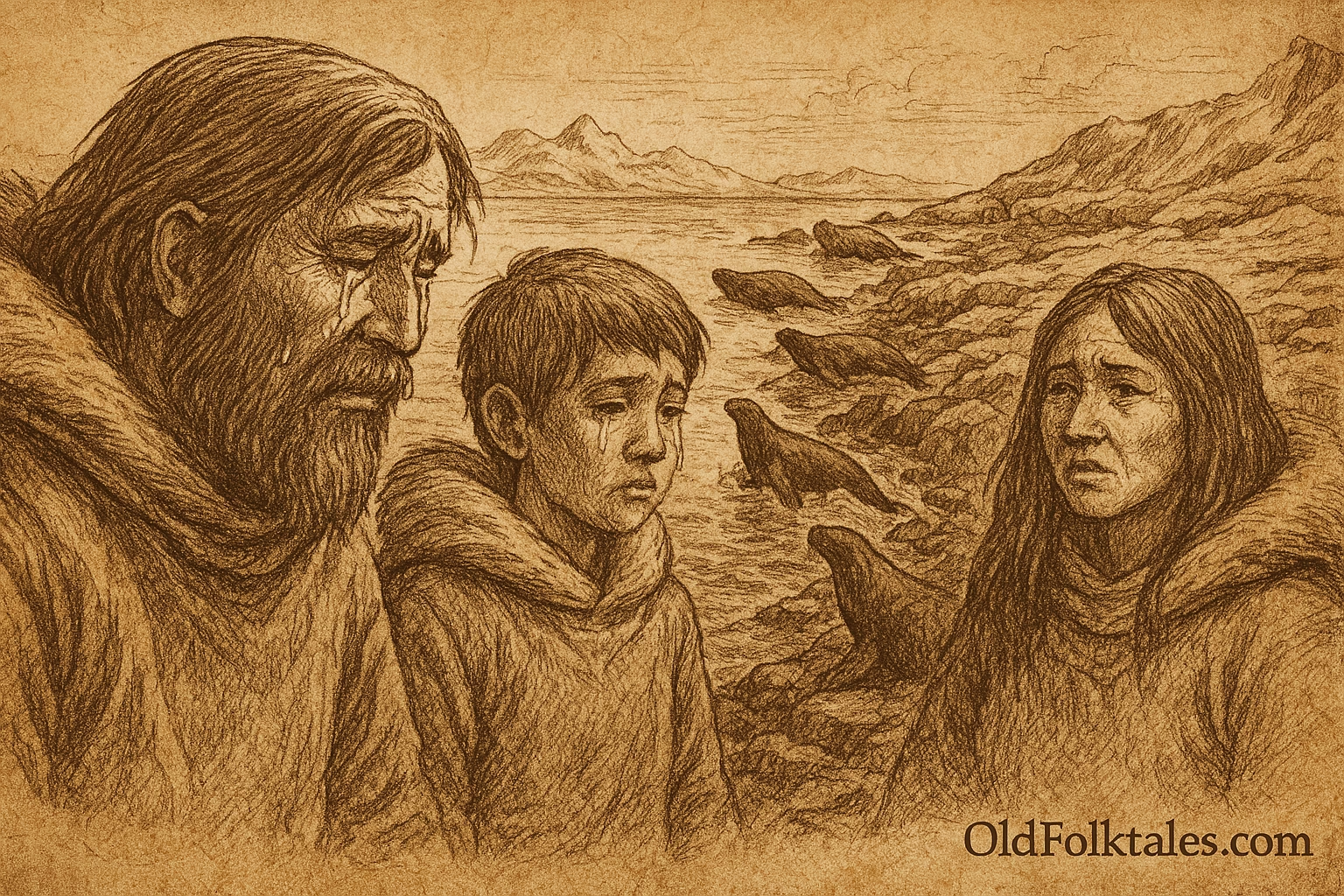
Then something extraordinary occurred. Man felt moisture beginning to flow from his eyes, trickling down his cheeks in small streams. Confused and alarmed, he raised his hand to his face and caught some of the liquid on his fingers. He brought his fingers to his mouth and tasted. The drops were salty, like seawater, but they came from within him. Strange, choking sounds began emerging from his throat and chest sounds he had never made before, sounds he had never heard from any person.
Meanwhile, Son had been playing near their dwelling when he heard the unusual cries coming from the direction of the seashore. The sounds were unlike anything he had experienced they spoke of pain, of loss, of something profound and troubling. Frightened, Son called for Woman, and together they ran toward the water’s edge to discover what had befallen Man.
When Woman and Son reached the shore, they were alarmed and bewildered by what they saw. Water was flowing steadily from Man’s eyes, running down his face in glistening trails. His body shook with the strange sounds coming from deep within him. They had never witnessed such a thing. Was he injured? Was he ill? What strange affliction had come upon him?
Between the choking sounds, Man told them what had happened. He described the shore crowded with seals, more seals than they might find in many hunting trips. He spoke of how carefully he had stalked them, how close he had come. He told of watching helplessly as every single seal escaped his knife, slipping one by one into the water’s safety. As he recounted the story the hope, the anticipation, the crushing disappointment his voice broke with the weight of his emotions.
And then, as Woman and Son listened to Man’s tale and felt his profound disappointment, something remarkable happened to them as well. They felt the same strange tightness in their chests, the same pressure behind their eyes. Soon, water began flowing from their eyes too, streaming down their faces as the same choking sounds emerged from their throats. They stood together on that cold shore Man, Woman, and Son united in this new, shared experience.
This was how people first discovered weeping. This was the moment when tears entered the world, born from disappointment and loss, from dashed hopes and unfulfilled dreams. The emotion that had been nameless now had a physical expression, a release for the sorrow that lives within the human heart.
Later, when the strange new sensation had passed and they had returned to their dwelling, Man and Son went hunting together once more. This time, fortune smiled upon them. Working as a team, they successfully caught a seal. They honored the animal’s sacrifice and used every part of itthe meat for food, the fat for oil, and importantly, they fashioned the seal’s skin into strong, cunning snares that would help them catch more seals in the days to come. From loss came learning; from disappointment came innovation; from tears came the wisdom to hunt in new ways.
The Moral Lesson
The story of The First Tears teaches us that emotions even painful ones like disappointment and sorrow are a natural and essential part of being human. Before this moment, people had experienced loss, but they had no way to express or release these feelings. Tears provide a necessary outlet for grief and disappointment, allowing us to acknowledge our pain and then move forward. The story also shows us that failure is not the end; Man and Son eventually succeeded in their hunt by working together and learning from their experience. Sometimes our greatest disappointments teach us important lessons and lead us to find better ways of achieving our goals. Weeping is not weakness it is part of the human experience that connects us all.
Knowledge Check
Q1: Who are the three main characters in The First Tears Inuit myth? A: The three main characters are simply called Man, Woman, and Son. This naming reflects the universal, archetypal nature of the story these could be any people, representing all of humanity. They live in the Arctic and depend on hunting seals for their survival.
Q2: What was Man hunting when he first experienced tears? A: Man was hunting seals along the water’s edge. He had spotted a large group of seals gathered on the shore more than he had seen in many seasons and was attempting to catch one to provide food, fur, and oil for his family. The seals’ escape led to the first tears.
Q3: Why did tears first appear in this Inuit origin story? A: Tears first appeared because Man experienced profound disappointment and loss when all the seals escaped despite his careful hunting. He had imagined providing a great feast for his family, but every seal slipped into the water. This crushing disappointment created a new emotion that manifested as water flowing from his eyes the first tears humanity ever shed.
Q4: How did Woman and Son learn to weep in the story? A: Woman and Son learned to weep through empathy and shared experience. When they heard Man’s strange cries and ran to the seashore, they listened to his tale of disappointment. As they understood his feelings and felt the same disappointment themselves, water began flowing from their eyes too. This shows how emotions can be shared and passed between people.
Q5: What happened after Man, Woman, and Son experienced the first tears? A: After experiencing tears for the first time, Man and Son went hunting together again. This time they were successful and caught a seal. They used the seal’s skin to make snares for catching more seals in the future. This shows that after disappointment and tears, life continues and people can learn better ways to achieve their goals.
Q6: What is the cultural significance of this Inuit origin myth? A: This Inuit origin myth explains how an essential human emotion—the ability to weep came into existence. For the Inuit people living in the harsh Arctic environment, where survival depends on successful hunting and emotional resilience, this story acknowledges that even strong hunters experience disappointment and teaches that expressing emotion is natural and human. It validates feelings of loss while also showing the importance of persistence and learning from failure.
Source: Adapted from traditional Inuit oral narratives as retold by S.E. Schlosser and compiled in collections of Arctic Indigenous folklore.
Cultural Origin: Inuit First Nations, Arctic Canada and Circumpolar North