The Gerewol is an acclaimed annual courtship and cultural gathering of the Wodaabe, a nomadic subgroup of the Fula people living across the Sahel, particularly in Niger and Chad. For centuries, Wodaabe clans have moved with their cattle through arid grasslands, following seasonal rains and maintaining a pastoral life shaped by mobility, beauty ideals, and lineage pride. The Gerewol occurs at the end of the rainy season, a time when herds are strong and dispersed families reunite. This festival is not simply a celebration; it is a ritualized moment where beauty becomes sacred, competition creates harmony, and courtship becomes a window into the Wodaabe relationship with nature, cattle, and ancestral order.
Description
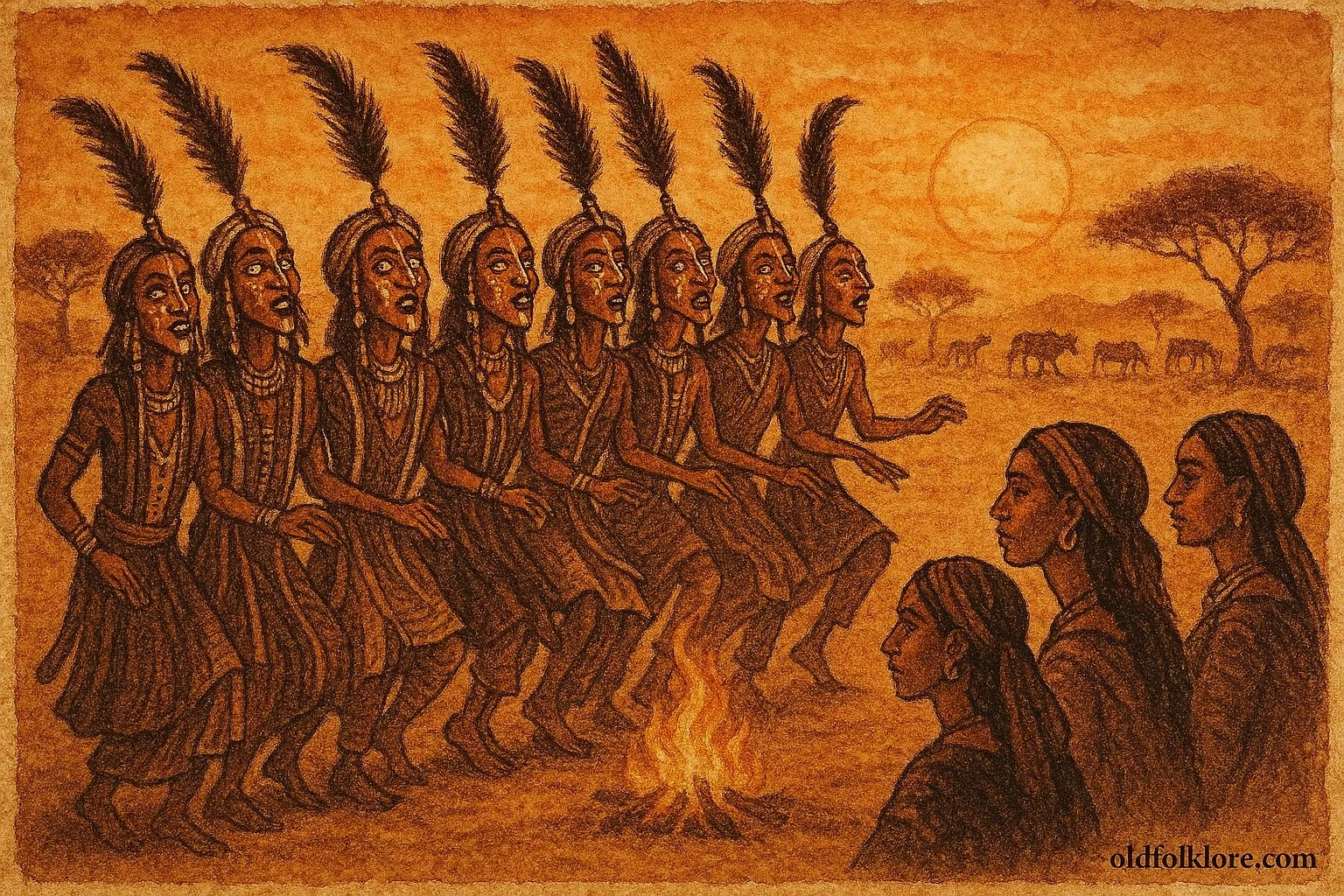
The Gerewol is among the most visually striking ceremonies in Africa. Its dramatic mixture of music, color, dance, and competitive beauty forms a ritual theater of identity. Preparations begin as young men, often organized by lineage, gather to adorn themselves for the coming nights. They apply bright ochre, yellow, and black pigments to lengthen facial features, whiten their eyes, and highlight symmetrical beauty. Elaborate necklaces shine under the Sahel sun, and tall feathered headdresses add height, a valued trait associated with elegance and vitality.
When the festival opens, men assemble in long, shimmering lines. They begin the yaake, a rhythmic, hypnotic dance performed in unison. Movements are subtle yet deliberate: elongated postures, rolling eyes, exposed teeth, and gentle sways that demonstrate endurance. The dancers chant in deep, repetitive tones, guided by a chorus of elder singers whose voices anchor the ritual’s cosmic rhythm. This combination of stillness, vibration, and stamina is a public test of self-presentation, confidence, and lineage pride.
Women, often from neighboring camps, observe carefully. Their role is central: they are judges, choosing the most compelling dancers based on grace, beauty, charisma, and harmony with the ritual songs. These choices are respected even when they cross lineage boundaries. While modern portrayals sometimes oversimplify the event as merely a “beauty contest,” the Gerewol is far deeper. It is a social negotiation, a moment when alliances are shaped, relationships validated, and the next generation symbolically acknowledged.
Throughout the festival, Wodaabe camps host visiting families, exchanging news, songs, and seasonal blessings. The Gerewol is also a time for conflict resolution. Lineages discuss disputes, settle misunderstandings, and renew bonds that sustain pastoral life. The entire gathering reinforces shared identity, reminding participants that beauty is not vanity but a spiritual expression of inner balance and social integrity.
Night and day alternate across the festival’s duration. In darkness, the dancing becomes mystical, the firelight reflecting off painted faces and shimmering beads. At dawn, the Sahel’s pale horizon casts a silver glow on the dancers, symbolizing renewal. Every hour of the ritual demonstrates how the Wodaabe place emotion, endurance, and aesthetics at the center of communal life.
Forms of Gerewol vary by region and family. Some communities integrate broader market gatherings, while others maintain intimate, lineage-based events. Yet the underlying essence remains: a pastoral celebration of beauty, continuity, and cosmic order.
Mythic Connection
Although the Gerewol is not a mythic reenactment in the classical sense, its symbols express a cosmology deeply rooted in Wodaabe spirituality. Wodaabe mythic thought ties beauty to harmony with nature, a well-painted face reflects the balanced mind of a person aligned with ancestral values. The tall headdresses mimic the elegance of cattle, animals believed to be gifts of divine origin and anchors of cosmic stability. The dancers’ slow, measured movements echo ancestral rituals that taught the importance of patience and endurance in the Sahel’s demanding environment.
Ritual songs invoke ancestors and cattle-protecting spirits, praising those who guide herds through drought and guard families from misfortune. These songs often contain metaphors linking human beauty to herd fertility, suggesting that a graceful dancer mirrors the grace of well-tended cattle. By performing the yaake, dancers symbolically echo the ancient rhythms that sustain life, seasonal cycles, migration paths, and cosmic patterns.
Women’s role as judges also has mythic resonance. Their choices symbolize the fertile agency that shapes lineage future, echoing ancestral mothers who ensured social balance. Through their decisions, the community reaffirms a worldview in which feminine insight collaborates with masculine display to maintain cosmic order.
In this sense, the Gerewol is a living myth: a ceremony where beauty becomes a spiritual principle, where dance mirrors the natural world, and where ancestral memory pulses through chants that stitch past and present into a single rhythmic thread.
Author’s Note
This article offers a historical and cultural overview of the Gerewol courtship festival, highlighting its relationship to pastoral cosmology, ancestral symbolism, and the aesthetic traditions of the Wodaabe people. It reflects how the ritual integrates beauty, endurance, and social renewal in harmony with Sahelian life.
Knowledge Check
1. What groups primarily celebrate the Gerewol?
The Wodaabe, a nomadic Fula subgroup in Niger, Chad, and the wider Sahel.
2. What dance lies at the center of the festival?
The yaake, a long, rhythmic dance performed by rows of men.
3. Why are men’s faces painted?
To highlight beauty, symmetry, and lineage identity through symbolic colors.
4. What role do women play in the festival?
They judge dancers, selecting partners based on beauty and charisma.
5. How does the ritual reflect Wodaabe cosmology?
It links beauty, endurance, and cattle symbolism to ancestral and natural harmony.
6. What larger social purpose does the Gerewol serve?
It strengthens alliances, resolves disputes, and renews seasonal and lineage bonds.