The Gerewol, also spelled Guérewol, is an annual courtship and beauty festival practiced by the Wodaabe, a subgroup of the Fula people living across Niger, Chad, and northern Cameroon. It takes place during seasonal gatherings of nomadic clans, often coinciding with the Cure Salée, the great salt and pastoral festival of the Sahel. While the Gerewol is most famous for its vibrant dances and striking cosmetics, its deeper purpose is rooted in Wodaabe spirituality, ancestral ethics, and the cultural celebration of beauty as a divine gift. The ritual embodies a worldview in which harmony with nature, mobility, and social continuity are seen as sacred responsibilities.
Description
Among the Wodaabe, beauty is not superficial, it is a moral and cosmological value. Physical elegance represents inner balance, lineage purity, and vital force. The Gerewol expresses this belief through a series of performances in which young men display themselves before women who may choose a suitor. Though it resembles a public competition, it is also a spiritual presentation before ancestral spirits who watch over the clan as it moves across the Sahel.
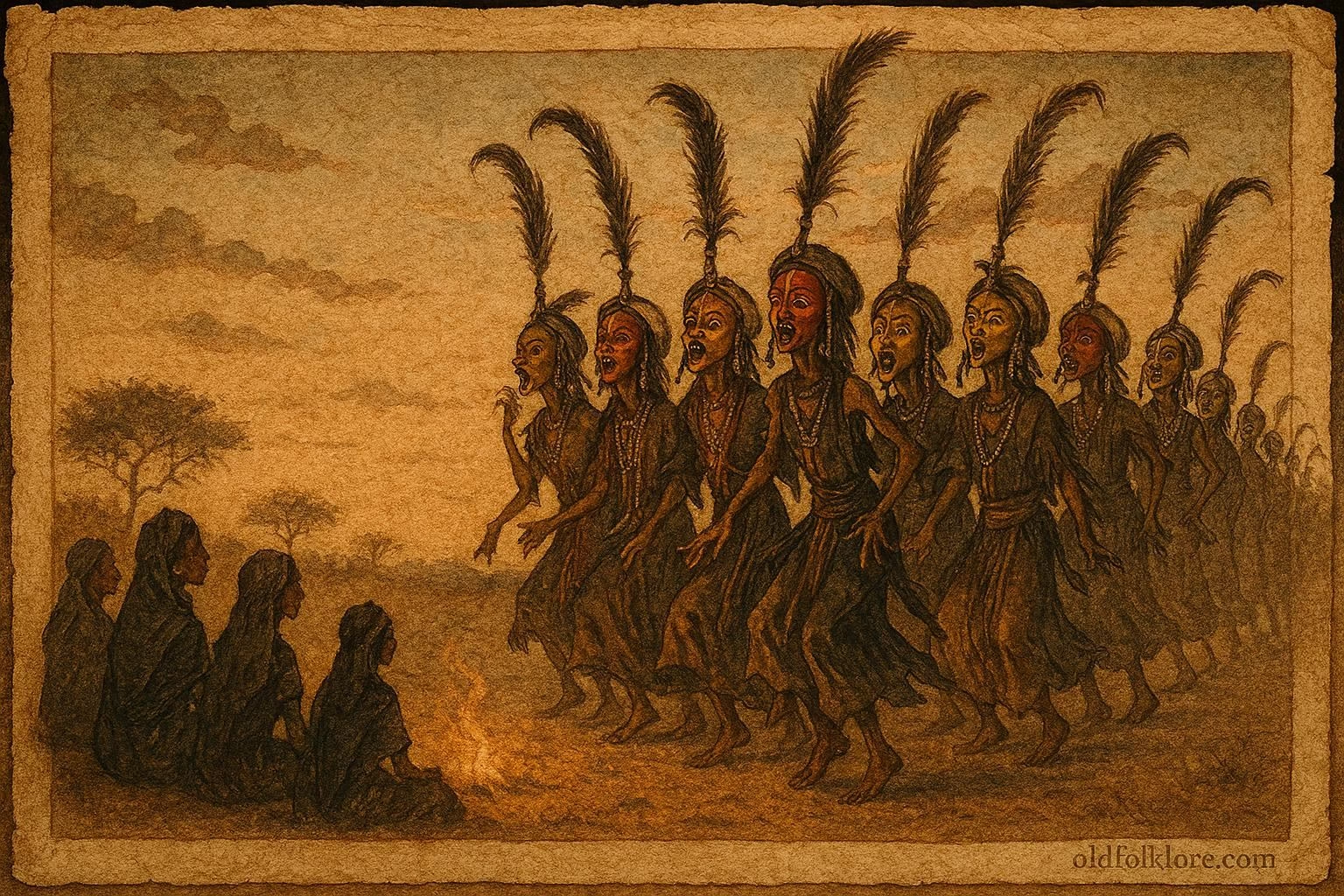
The heart of the festival is the Yaake dance, performed by long lines of young men adorned in tall ostrich-feather headpieces, elaborate jewelry, and bright face paint. The colors carry meaning:
-
Red ochre symbolizes vitality and desert strength.
-
Yellow and white pigments highlight eyes and teeth, signs of beauty and good health.
-
Black lines emphasize symmetry, which the Wodaabe regard as a mark of divine order.
As drums pulse and chanted melodies rise, the men stand in tight formation and begin their controlled movements. They roll their eyes wide, bare their teeth, and stretch their bodies upward to appear taller and more luminous. These gestures are not random. They draw on ancestral aesthetics meant to imitate the grace of desert animals, such as the gazelle, admired for its beauty and agility. Through these movements, dancers honor spiritual forces that protect the nomadic journey and ensure the clan’s prosperity.
Women, dressed in fine ornaments and carrying traditional perfumes, observe the dancers with careful attention. In the final selection, a woman quietly chooses the man she finds most beautiful or spiritually radiant. Her decision is respected without question. In some cases, this choice can lead to new unions, even if the woman is already married, reflecting Wodaabe marriage customs that emphasize personal attraction, freedom, and the sacred power of beauty.
The Gerewol is often held near temporary encampments where families trade goods, share stories, settle disputes, and reaffirm bonds before beginning new cycles of migration. While tourism and media have brought outside attention, many Wodaabe communities intentionally maintain traditional forms of the festival to protect its cultural meaning.
Mythic Connection
Though the Gerewol is not tied to a single god or mythic narrative, it is deeply spiritual. The Wodaabe worldview sees beauty as a reflection of semteende, a life force that combines dignity, modesty, and inner wisdom. To appear graceful is to honor the cosmic order established by ancestral spirits. Beauty is therefore not vanity but ethical discipline.
The Yaake dance is also a reenactment of ancient ideals. Wodaabe oral tradition tells that the first ancestors learned beauty from the natural world itself, watching the calm stride of cattle, the alert eyes of desert wildlife, and the way light moves across the Sahel at dawn. These teachings formed the basis of the Gerewol’s aesthetic rules: symmetry, brightness, and controlled motion.
In addition, the festival acknowledges the spirits believed to travel with nomads. These spirits protect herds, guide migration routes, and ensure that rain arrives at the right season. The Gerewol is a moment to stand before these unseen powers in a state of perfected beauty, offering harmony and seeking blessings for the coming year.
Thus, the Gerewol reflects more than attraction. It expresses the Wodaabe belief in a universe where well-being is achieved through balance—between body and spirit, humans and cattle, clans and ancestors. Courtship becomes a sacred act, linking personal desire with cosmic rhythm.
Author’s Note
This article explores the Gerewol as a cultural and spiritual ceremony rooted in Wodaabe aesthetics, ancestral ethics, and Sahelian nomadic life. It highlights how beauty functions as a symbol of balance, vitality, and cosmic order, revealing the deep moral meaning beneath the festival’s performances.
Knowledge Check
1. What is the core purpose of the Gerewol?
The festival serves as a courtship ritual where young men display beauty and stamina to be chosen by women.
2. Why is beauty spiritually important to the Wodaabe?
Beauty reflects inner balance and the ancestral force of semteende, symbolizing moral integrity.
3. What is the Yaake dance?
It is the central Gerewol performance where men use stylized movements, eye-rolling, and tooth-showing to appear radiant.
4. Why do dancers use bright face paint?
The pigments highlight eyes and teeth, signifying health, vitality, and ancestral ideals of symmetry.
5. How does the Gerewol relate to nature?
Its movements and aesthetics imitate graceful desert animals and honor spirits that guide nomadic life.
6. What role do women play in the ritual?
Women act as judges, choosing the dancers they find most beautiful or spiritually compelling.