In the rolling hills of Zimbabwe, where the earth was red and fertile, there lived a woman named Pitipiti. By all accounts, she should have been the happiest woman in the village. Her husband was a wealthy man, respected throughout the land, with many cattle grazing on his expansive pastures. Their herds were so numerous that their lowing could be heard from sunrise to sunset. Yet despite all this abundance, despite the comfort of her home and the security of her position, Pitipiti’s heart carried a heavy burden that no amount of wealth could lift.
Years had passed since her marriage years marked by hope and prayer, by visits to healers and diviners, by offerings and supplications. But still, her arms remained empty. She had not been able to give her husband the children that a man of his stature deserved, the sons and daughters who would inherit his cattle and continue his lineage. This was a source of deep sorrow that grew heavier with each passing season.
Pitipiti watched, powerless and heartbroken, as her husband’s love for her slowly dimmed like a dying ember. The warmth that once shone in his eyes when he looked at her grew cold and distant. The disappointment hung between them like morning mist, unspoken but ever-present.
The day her husband took a second wife, Pitipiti felt her world shift beneath her feet. Though traditional customs allowed such arrangements, especially when there were no children, the pain cut deep into her spirit. She retreated into herself, nursing her grief in silence. Yet when she learned that the new wife had given birth to a child, and then another, Pitipiti’s heart generous despite its wounds felt genuine happiness for her husband. At last, he would know the joy of fatherhood.
Following tradition and seeking to maintain peace in the household, Pitipiti approached the new wife each time a child was born, bringing carefully chosen gifts for the newborns. But her gestures of goodwill were met with cold rejection and cruel words.
“My husband wasted too many years with you,” the new wife would sneer, her voice dripping with contempt. “In just a short time, I have already given him what you never could. Take your gifts and go away no one wants them here! No one wants you!”
Each rejection was like a thorn pressed into Pitipiti’s heart. She watched as her husband’s eyes, which once held affection for her, now sparkled only with pride when he looked upon his children with the new wife. The love she had known was completely replaced, pushed aside like yesterday’s ashes. Yet Pitipiti endured. She continued to work her fields, tending the crops with the same care she would have given to children of her own, living as best she could in her growing solitude.
Several months passed in this manner, seasons turning as Pitipiti found rhythm in her loneliness. One afternoon, while working in her fields under the warm African sun, she heard an unusual screeching sound coming from the nearby bushes. Wiping the soil from her hands, she approached cautiously to investigate.
There, perched on a high branch, sat a guinea fowl. His speckled feathers caught the dappled sunlight filtering through the leaves, and his bright eyes regarded her with surprising intelligence. To her astonishment, the bird spoke to her in clear words.
“I am really lonely,” the guinea fowl cackled, his voice both strange and somehow plaintive. “Will you make me your child?”
Pitipiti stepped back in surprise, her heart racing. “How can I make you my child?” she responded, her voice uncertain. “You are a guinea fowl! Everyone in the village would mock me. They already whisper about my childlessness imagine what they would say if they knew I claimed a bird as my son!”
But the guinea fowl was persistent. He hopped to a lower branch, closer to her, his head tilting thoughtfully. “Then keep me as your child only at night,” he suggested. “I will come to you when darkness falls and no one can see. I will leave before dawn breaks, before even the roosters crow. No one will ever know of our arrangement.”
Pitipiti considered this proposal carefully as she walked slowly through her field. Her house was so empty, so silent in the evenings. The loneliness sometimes felt like it would consume her entirely. Perhaps having someone even a guinea fowl to care for and share meals with would ease the ache in her heart. After a long moment of thought, she agreed to his unusual request.
“You may come to me at night,” she said finally. “But you must leave before sunrise, before anyone might see you.”
The guinea fowl fluttered his wings with joy and promised faithfully to honor their agreement.
That very evening, after Pitipiti had returned home and begun preparing her simple meal, she heard the familiar screeching at her window. She opened it, and the guinea fowl hopped inside with an air of contentment. They shared the meal together, the guinea fowl eating with surprising delicacy, and then settled down for the night. It was the first time in many months that Pitipiti’s home had felt warm with companionship.
Days turned into weeks, and their arrangement continued peacefully. Pitipiti found genuine joy in caring for her unusual child. She would prepare special grains for him, tell him stories in the quiet evenings, and found herself smiling more than she had in years. The guinea fowl proved to be attentive and affectionate, as devoted as any human child might be.
But their peaceful existence could not completely shield them from the cruelty of the outside world. Very often, the new wife would pass by Pitipiti’s fields, and each time she would stop to jeer and mock.
“What a waste!” she would call out, her voice sharp and cutting. “Our husband gave you so much good land to work, and for what? You have no one to feed but yourself! All this effort for one barren woman!” Then she would laugh a harsh, ugly sound before strutting off to tend her own fields, her head held high with pride.
Pitipiti had learned to endure such insults in silence, letting the words pass over her like wind through grass. She would not give the cruel woman the satisfaction of seeing her pain. But the guinea fowl, hidden in the bushes and listening to every word, could not bear to hear his mother spoken to with such disrespect. His small heart burned with protective anger.
One morning, after witnessing yet another scene of mockery, the guinea fowl flew to the bushes bordering the new wife’s fields. He perched himself where he could see her working, bent over her crops, proud and satisfied. Then he began to sing a strange, compelling song that echoed across the fields:
Come and eat, my friends, there is lots of grain here Come and eat, my friends, eat all of this woman’s grain
The new wife heard the singing but paid it little attention. She simply assumed it was an ordinary bird, perhaps celebrating the morning like all the others. She had no idea of the purpose behind those words, no sense of the approaching consequence of her cruelty.
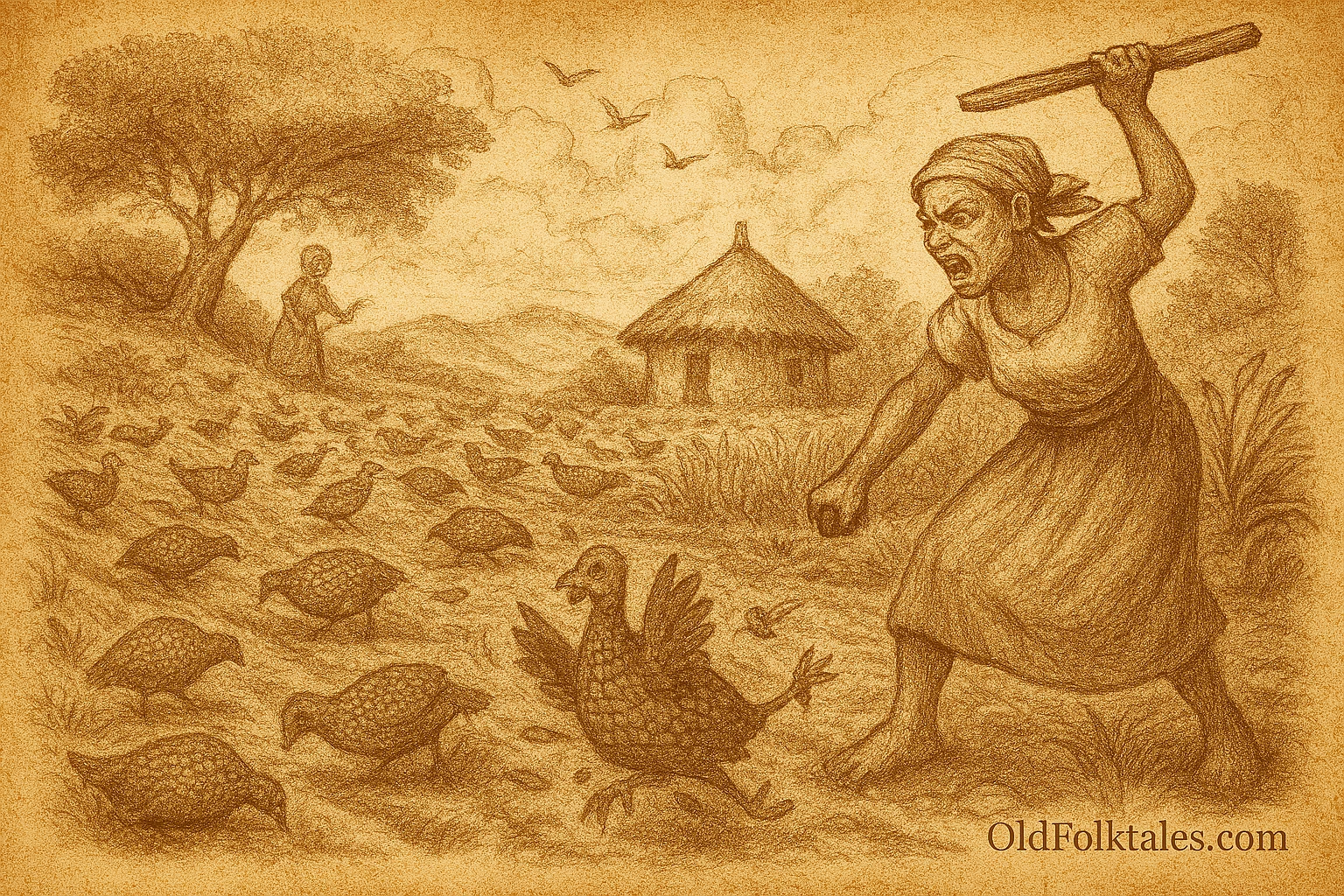
But the guinea fowls of the surrounding bush heard the song, and they understood its meaning perfectly. One by one, they began to arrive, emerging from the trees and tall grasses. Soon, the new wife’s fields were covered with guinea fowls dozens upon dozens of them descending upon her crops like a living carpet of speckled feathers.
They pecked at the grain with enthusiastic hunger, their beaks working quickly to fill their bellies with the fruits of her labor. The new wife, who had been working at the far end of her field, suddenly noticed the invasion. Her eyes widened in horror and rage.
“No! Get away! Get away from my fields!” she screamed, rushing toward them with wild gestures.
But the guinea fowls continued their feast, seemingly deaf to her shouts. In her panic and fury, the new wife grabbed whatever she could find stones, sticks, her farming tools and began attacking the birds. One by one, she struck them down, killing them in her rage. Among the fallen was Pitipiti’s son, the one who had called his fellows to this vengeful feast.
The new wife, seeing the dead birds scattered across her damaged field, suddenly had an idea. A cruel smile spread across her face as she gathered up the bodies. “At least something good will come of this,” she muttered. “My husband will be pleased with such a feast.”
She carried the guinea fowls home and spent the afternoon preparing them, plucking their feathers and seasoning their meat. By evening, she had created an impressive meal, the birds roasted to golden perfection and arranged beautifully on large platters.
Her husband arrived home to the rich aroma of the feast. His eyes lit up with pleasure when he saw the abundance spread before him. “What a wonderful wife you are!” he exclaimed, embracing her warmly. “Such a magnificent meal! You work so hard for our family.”
They sat together at the table, the new wife basking in her husband’s praise, and began to eat. The meat was tender and flavorful, and they ate with great appetite, piece after piece, until every bone was picked clean. They sat back, satisfied and content, their bellies full, speaking of trivial matters and laughing together.
But just as they finished the very last bite, as the final morsel disappeared down their throats, something extraordinary and terrible happened. They heard singing the same song the guinea fowl had sung in the fields, but now it seemed to come from inside them, from their own stomachs:
Come and eat, my friends, there is lots of grain here Come and eat, my friends, eat all of this woman’s grain
The couple looked at each other in confusion and growing horror. The singing grew louder, more insistent. They looked down at their bellies, and to their absolute terror, they could see movement beneath their skin, shapes pressing outward as if something alive was trying to escape.
Panic seized them both. In their fear and desperation, they grabbed the knives from the table and began stabbing at themselves, trying to silence the terrible singing, trying to stop the movement in their stomachs. With each frantic thrust of the knives, holes opened in their bodies, and from these wounds, the guinea fowls flew out fully restored to life, their wings beating strongly, their bodies whole and healthy.
The birds circled the room once, then flew out through the open door, heading straight back to the fields to finish eating the remaining grain. Behind them, the couple lay motionless on the floor, victims of their own cruelty and fear.
When news of the tragedy reached Pitipiti, her first feeling was not joy but a quiet sense of justice being served. She would no longer have to endure the daily insults and mockery that had made her life so bitter. The cruel words would finally stop echoing in her ears.
But there were practical matters to consider as well. As the first wife, and now the only wife, all of her husband’s wealth came to her the cattle, the land, the home, everything he had built during his lifetime. She became one of the wealthiest women in the region.
The story of what had happened spread quickly throughout the village and beyond. People spoke in hushed, amazed tones about the guinea fowl child who had avenged his mother’s suffering. The tale grew with each telling, and soon Pitipiti’s name was known far and wide.
Many men, hearing of her wealth and of her remarkable, intelligent son, came seeking her hand in marriage. They saw in her not a childless woman to be pitied, but a woman blessed with unusual fortune and protected by extraordinary powers. Pitipiti, who had once been rejected and scorned, now had her choice of suitors.
And through it all, the guinea fowl child continued to visit her in the quiet hours of the night, a faithful son to a mother who had accepted him when she had nothing else, and who now had everything.
Click to read all Myths & Legends – timeless stories of creation, fate, and the divine across every culture and continent
The Moral of the Story
This powerful Zimbabwean folktale teaches us profound lessons about the consequences of cruelty and the unexpected forms that blessings can take. Pitipiti’s patient endurance in the face of constant mockery and her willingness to show love even to an unusual child like the guinea fowl demonstrates that kindness and acceptance are virtues that do not go unrewarded. The new wife’s cruelty, both in her treatment of Pitipiti and in her violent reaction to the birds, ultimately led to her own destruction. The story reminds us that those who mock and abuse others, especially the vulnerable and suffering, will face consequences for their actions. It also teaches that divine justice, though it may seem delayed, eventually balances the scales. Moreover, the tale suggests that we should never judge the value of a blessing by its appearance what seems unusual or unworthy may prove to be our greatest treasure. Pitipiti’s acceptance of the guinea fowl as her child, despite social pressure and potential mockery, brought her both companionship and ultimate vindication.
Knowledge Check
Q1: Why was Pitipiti sad despite being married to a wealthy man?
A1: Despite her husband’s wealth and many cattle, Pitipiti was deeply sad because she was unable to bear children after many years of marriage. In her culture, having children especially for a wealthy, important man was extremely significant. Her childlessness caused her husband’s love for her to fade, and he eventually took a second wife who could give him the children he desired. This left Pitipiti feeling rejected, lonely, and diminished in her husband’s eyes.
Q2: How did the new wife treat Pitipiti, and why was this significant to the story?
A2: The new wife treated Pitipiti with extreme cruelty and contempt. She refused all of Pitipiti’s gifts for the newborn children and constantly mocked her in the fields, saying her husband had wasted years with her and that she was useless because she had no one to feed. This cruelty is significant because it demonstrates the new wife’s character and sets up the moral lesson of the story that those who abuse and mock the vulnerable will eventually face consequences for their actions. Her cruelty also motivated the guinea fowl child to seek justice for his mother.
Q3: Why did Pitipiti agree to keep the guinea fowl as her child, and what conditions did she set?
A3: Pitipiti agreed to keep the guinea fowl as her child because she was deeply lonely and longed for someone to care for and share companionship with. The guinea fowl’s persistence and his suggestion that he could be her child only at night appealed to her practical concerns she feared the mockery of the village if anyone discovered she had claimed a bird as her child. She agreed on the condition that he would come only at night when no one could see him, and leave before dawn each morning, keeping their relationship secret from the community.
Q4: What symbolic meaning does the guinea fowl child represent in Zimbabwean folklore?
A4: In this Zimbabwean folktale, the guinea fowl child represents several symbolic concepts. First, he embodies the idea that blessings can come in unexpected forms what society might reject, or mock can prove to be valuable and protective. Second, he represents divine justice and retribution, serving as an agent who balances the scales when human cruelty goes unchecked. Third, he symbolizes loyalty and filial devotion, showing that true family bonds are based on love and acceptance rather than blood or conventional expectations. Finally, his magical nature connects to traditional African beliefs about the spiritual world intersecting with the physical world, where animals can possess supernatural powers and serve as instruments of fate.
Q5: How did the guinea fowl child take revenge on the new wife, and what happened as a result?
A5: The guinea fowl child took revenge by flying to the bushes near the new wife’s fields and singing a special song that called all the other guinea fowls to come and eat her grain. When the new wife saw her crops being destroyed, she flew into a rage and killed all the guinea fowls, including Pitipiti’s son. She then cooked them for dinner, and her husband praised her for the feast. However, after they finished eating, the couple heard the guinea fowl’s song coming from their own stomachs. In terror, they stabbed themselves trying to stop the singing, and the guinea fowls flew out of the wounds alive, leaving the couple dead. This supernatural revenge ensured that the cruel wife and her complicit husband faced ultimate consequences for their actions.
Q6: What is the cultural significance of storytelling about childless women in African folklore?
A6: Stories about childless women in African folklore, like Pitipiti’s tale, address one of the most significant social challenges in traditional African societies, where a woman’s value was often tied to her ability to bear children. These tales serve multiple cultural purposes: they provide comfort and validation to women facing similar struggles, they critique the cruel treatment of childless women, they explore themes of patience and divine justice, and they often show that worth comes from character rather than reproductive ability. Such stories also teach communities about compassion and warn against mocking or abusing vulnerable members of society. In Pitipiti’s case, the story demonstrates that her kindness and acceptance qualities that truly define good character ultimately brought her greater blessings than her rival’s fertility ever could.
Source: Adapted from Zimbabwean oral tradition, courtesy of Mama Afrika storytelling collection. This tale has been passed down through generations among the Shona people and other ethnic groups in Zimbabwe.
Cultural Origin: Shona people, Zimbabwe, Southern Africa