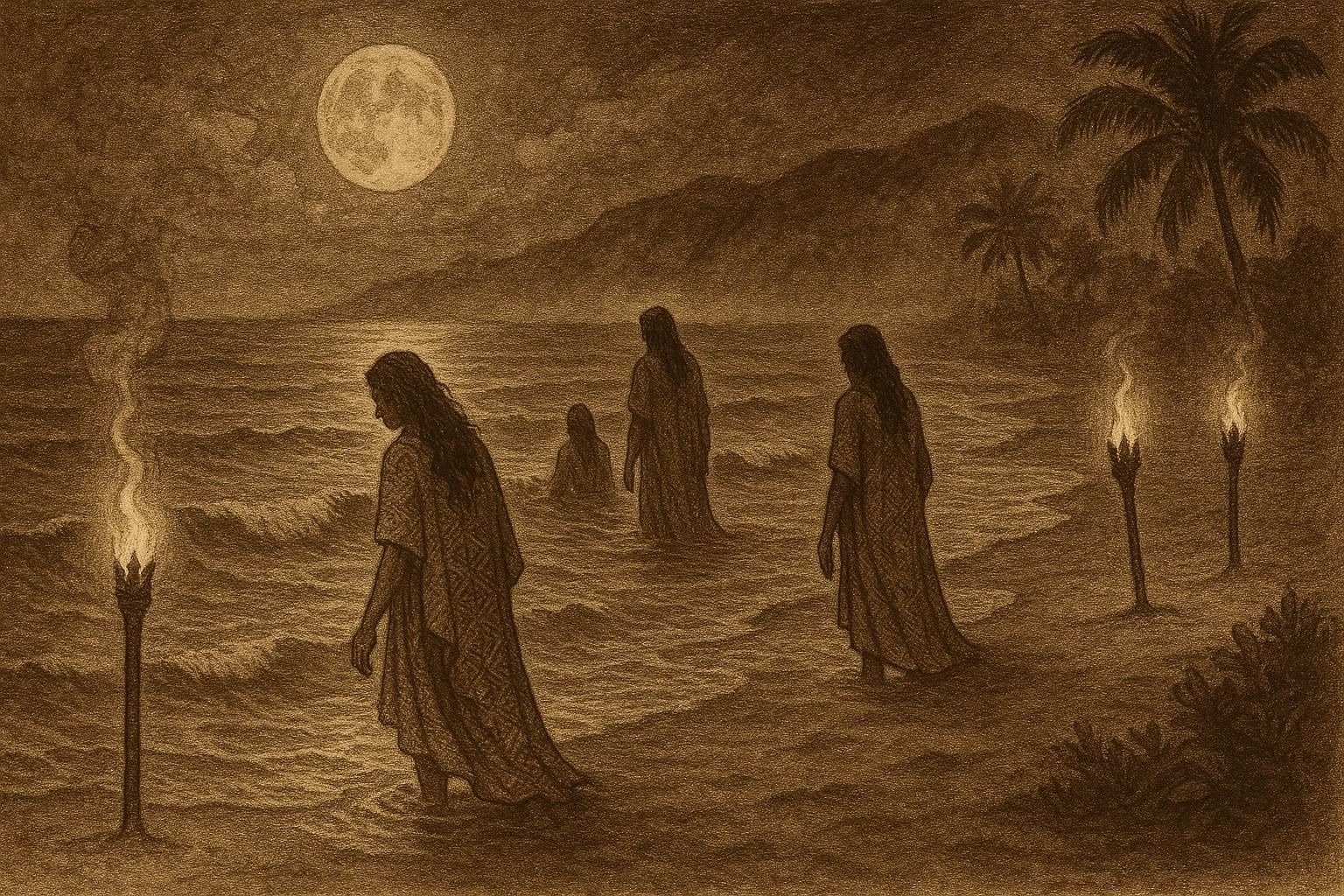
The Hi‘uwai ritual is a traditional Hawaiian purification ceremony rooted in the worldview of Native Hawaiian spirituality, where the ocean is regarded as a living, life-giving entity. Practised for centuries across the Hawaiian Islands, the ritual historically marked the transition into the Makahiki season, a months-long festival dedicated to Lono, the god of peace, fertility, agriculture, rain, and renewal. Its earliest documentation appears in oral traditions collected by nineteenth-century Hawaiian historians such as David Malo and Samuel Kamakau, who described communal nighttime ocean immersions that symbolised spiritual cleansing and the washing away of burdens. Local genealogies and chants (mele) connect the practice to older Polynesian water-purification customs, suggesting its continuity from ancestral voyagers who revered the sea as a boundary between the human world and the realm of the gods.
Description
Traditionally performed at night or at the break of dawn, the Hi‘uwai ritual gathered entire communities at the shoreline. Participants would enter the ocean quietly, often guided by priests (kahuna) or cultural leaders, carrying with them symbolic impurities—negative emotions, misfortunes, illness, spiritual imbalance, or conflicts. The ceremony did not require elaborate tools; rather, the elements themselves played the central role. The sea, the salt, the moonlight, and the rhythmic movement of the waves all shaped the ritual experience.
Before entering the water, individuals might be asked to focus on forgiveness, release, or intentions for renewal. Some communities incorporated chants invoking Lono or ancestral guardians (ʻaumākua). Others remained silent, allowing the sound of the ocean to act as the spiritual voice. As participants submerged themselves in the water, symbolic “washing away” took place. The ocean, believed to hold both physical and spiritual healing properties, was understood to carry away darkness (pōuli) and replenish each person with light and vitality (mana).
After immersion, groups sometimes returned to the shore to light torches, create offerings of food or lei, or participate in Makahiki celebrations. In some islands, Hi‘uwai was followed by communal feasting or competitions honouring Lono. Even in modern practice, it remains a communal act often performed at New Year’s, cultural festivals, or personal milestones such as childbirth, marriage, recovery from illness, or spiritual rededication. Its essence remains unchanged: letting go of the old and welcoming the new with purity and clarity.
Mythic Connection
The Hi‘uwai cleansing ritual is inseparable from Hawaiian cosmology. Water, especially the ocean, carries profound mythological significance in Native Hawaiian belief. Kanaloa, the god associated with the deep ocean and healing, and Lono, the deity of rain, fertility, and renewal, are both invoked symbolically through the ritual. Their domains intersect in the transformative power of water: Kanaloa represents depth and restoration, while Lono represents growth and new beginnings.
The Makahiki season itself is tied to the annual return of the Pleiades (Makali‘i), marking a sacred period of peace when warfare stopped and communities honoured Lono through ceremonies, offerings, and games. Hi‘uwai served as spiritual preparation for this season, cleansing practitioners so they could enter Makahiki with purity of mind, body, and heart.
Hawaiian creation stories also reinforce the ritual’s symbolic meaning. The Kumulipo, a foundational Hawaiian cosmogonic chant, describes life emerging from the depths of the sea. Humans, animals, and plants are genealogically connected to the ocean and to each other. Thus, entering the sea during Hi‘uwai is not merely symbolic cleansing, it is a return to the primordial source of life, reaffirming unity with the natural world and the lineage of ancestors.
In modern Hawaiian cultural renaissance movements, Hi‘uwai continues to express this ancestral relationship. Practitioners see the ocean as a relative (ka moana), a healer, and a witness to personal transformation. The ritual affirms key Hawaiian values: aloha (love, compassion), lokahi (unity), malama (care), and ho‘oponopono (restoration of balance). Through myth and practice, Hi‘uwai becomes not just a ceremonial act but a lived expression of Hawaiian identity.
Author’s Note
This article examines the Hi‘uwai cleansing ritual of Hawai‘i as a cultural and spiritual practice rooted in Native Hawaiian cosmology, highlighting its origins within the Makahiki season, its role in communal purification, and its mythological ties to deities such as Lono and Kanaloa. It outlines how the ceremony functions as a means of renewal, harmony, and connection between humans, ancestors, and the ocean, emphasising its enduring relevance in contemporary Hawaiian cultural life.
Knowledge Check
1. What seasonal event was the Hi‘uwai ritual traditionally associated with?
The Makahiki season dedicated to the god Lono.
2. Why was the ritual performed at night or dawn?
Because these times symbolised transition, calmness, and spiritual openness.
3. What did participants symbolically release during immersion?
Impurities such as emotional burdens, illness, conflict, and misfortune.
4. Which two deities are most closely linked to the ritual?
Lono, the god of peace and renewal; and Kanaloa, the god of the deep ocean and healing.
5. What cultural text reinforces the ritual’s symbolism?
The Kumulipo, which describes life emerging from the ocean depths.
6. How does the ritual express Hawaiian values such as lokahi and malama?
By promoting unity, healing, care for the self and community, and restoration of spiritual balance.