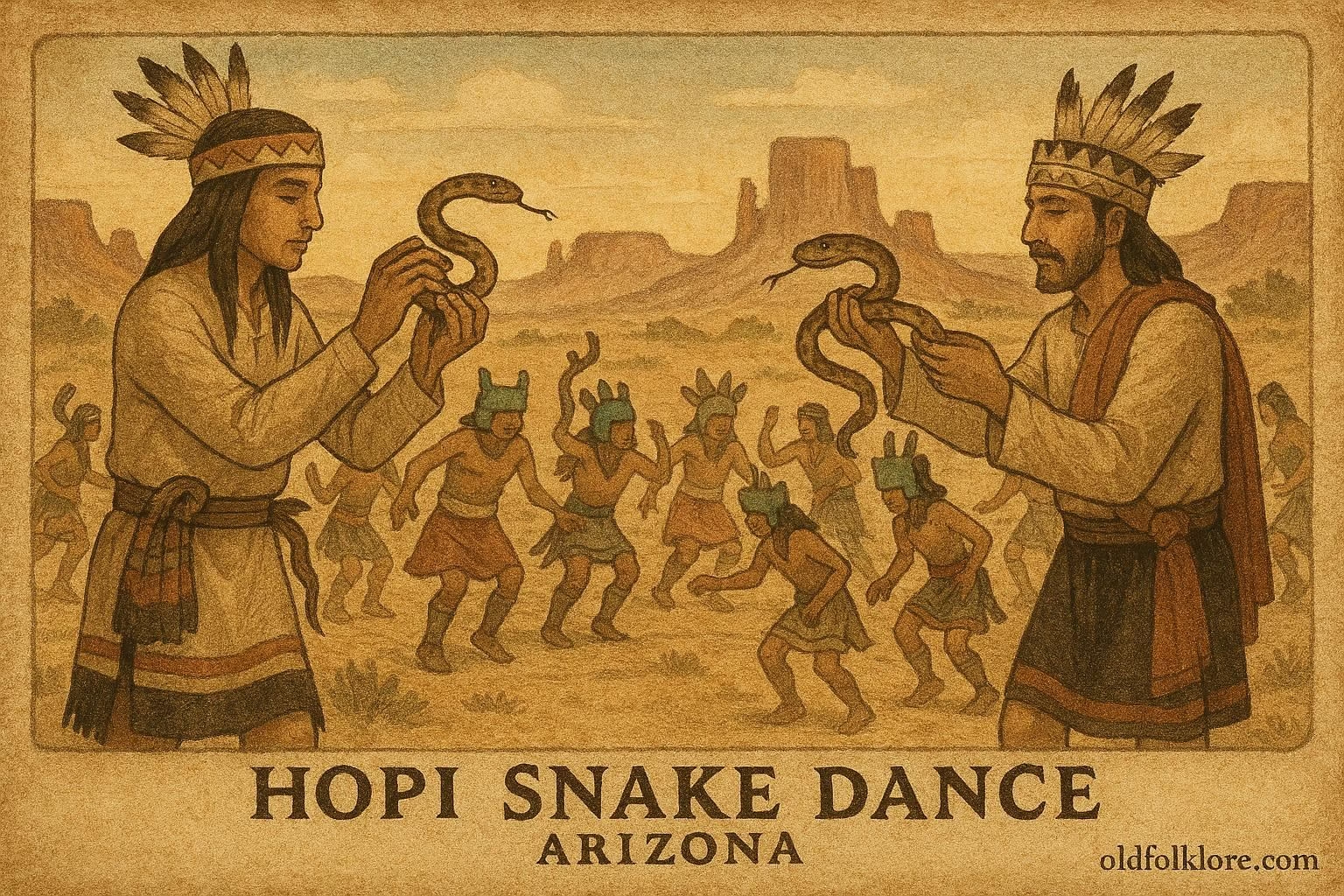
Among the Hopi of northeastern Arizona, few ceremonies carry the spiritual weight and seasonal hope of the Snake Dance, a late-summer ritual performed as part of the larger Snake, Antelope ceremonial cycle. Publicly known for its dramatic handling of live snakes, the ritual is far deeper than its most visible element. It is an act of prayer, renewal, and cosmic alignment. For the Hopi, the Snake Dance links the community with their ancestors, the katsinam, and the elemental forces that bring life-giving rain.
The ceremony developed long before outside contact and remains tied to the Hopi understanding of a world shaped by balance. In Hopi cosmology, the people exist in an ongoing relationship with spiritual beings who guide rain, seasons, and crops. The Snake Dance reflects this relationship by calling on natural and ancestral forces to restore harmony. Through song, movement, and precise ritual care, dancers help maintain the fragile balance that sustains Hopi agriculture in the arid high desert.
Description
The Snake Dance takes place after a long sequence of preparations that unfold inside the kivas, the sacred underground ceremonial chambers. For several days, the Snake Priests and Antelope Priests perform prayers, craft ritual items, and gather snakes from the surrounding land. These snakes, typically non-venomous and occasionally venomous species—are collected respectfully and held with strict ritual protocols. The care taken in this process reflects the Hopi belief that snakes are messengers capable of carrying prayers to spiritual realms.
When the public portion of the ceremony begins, participants emerge in regalia that varies by role. The Antelope Priests start the ritual with songs that call the katsinam and honor the elemental power of rain. Their movements are steady and rhythmic, anchoring the ceremony in an ancient pattern that has been observed for generations.
The Snake Priests follow, each holding a live snake carefully and deliberately. The snakes are not treated as deities or objects of worship. Instead, they are partners in prayer—beings whose presence strengthens the connection between the Hopi and the natural world. As dancers circle the plaza, other participants support them by brushing dust from their bodies, symbolically clearing obstacles and maintaining ritual purity.
The climax arrives when the dancers carry the snakes to the open desert and release them. In Hopi understanding, these snakes travel along the earth, taking the community’s prayers for rainfall to the spirit world. The release is an act of trust in nature, a gesture of hope, and a renewal of spiritual responsibility.
While the Snake Dance once drew large numbers of outside spectators, many portions of the ceremony today are closed to protect its sanctity. The visible segments remain powerful symbols of endurance and cultural continuity.
Mythic Connection
In Hopi cosmology, snakes are linked to the underworld, fertility, and the deep powers of the earth. They are seen as spiritual messengers who move between realms. Their zigzagging path resembles lightning, the sky-borne force of summer storms. This visual connection helps explain why snakes play a central role in a ceremony focused on rain.
The broader Snake–Antelope cycle honors the katsinam, ancestral beings who govern rain, growth, and seasonal renewal. Through ritual care, song, and dance, participants invite these sacred beings to restore harmony to the land. The ceremony also reinforces Hopi values: communal responsibility, spiritual discipline, and respect for all living things.
The Snake Dance is not merely a ritual for agricultural success. It expresses a worldview in which humans, animals, ancestors, and nature share a single, interdependent system. By participating, each dancer takes on the duty of maintaining balance in that system. This responsibility, passed down through generations, remains at the heart of Hopi cultural identity.
Though its public visibility has changed and modern concerns have shaped its presentation, the spiritual meaning of the Snake Dance remains constant. It continues to affirm the Hopi relationship with gods, nature, and the ancestral forces that shape their world.
Author’s Note
This article summarizes the cultural, historical, and spiritual foundations of the Hopi Snake Dance, highlighting its connection to rain, ancestral spirits, and ceremonial balance. It reflects the ritual’s structure as a prayerful cycle rooted in Hopi cosmology and environmental harmony.
Knowledge Check
1. What is the main purpose of the Hopi Snake Dance?
To offer prayers for rain, renewal, and balance within the Hopi spiritual and natural world.
2. Why are snakes central to this ceremony?
They are viewed as messengers who carry prayers across realms and symbolically resemble lightning.
3. What role do the Antelope Priests play?
They perform opening songs and movements that anchor the ritual and invite spiritual presence.
4. How are snakes gathered before the ceremony?
With strict ritual care, reflecting respect for their symbolic and spiritual roles.
5. What does releasing the snakes represent?
Sending prayers into the world through natural messengers to bring rainfall and harmony.
6. Why are some parts of the ceremony closed today?
To protect cultural integrity and respond to community concerns about privacy and respect.