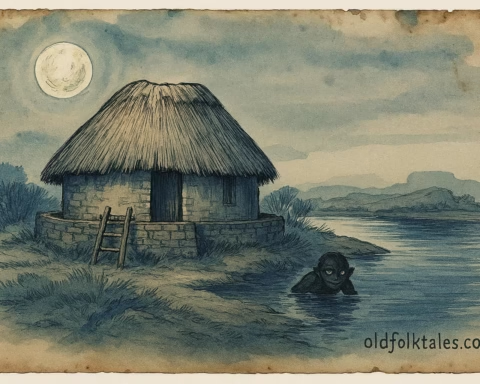
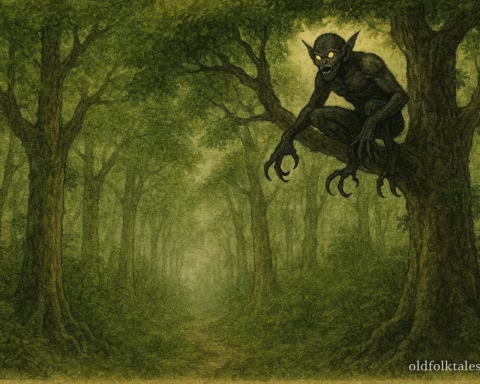
At the foot of the towering cliffs of KwaZulu Natal, where waterfalls thunder through mist filled valleys, the people tell stories of a spirit whose presence can be felt with every rush of wind. They speak of the Inkanyamba, the ancient storm serpent who coils in the deepest pools beneath the falls, raising its head only when humans forget the respect owed to the spirits of earth and sky. Elders say that the Inkanyamba is older than memory itself, a creature born from the meeting of rain clouds and mountain rock, given purpose by the ancestors to balance storms and seasons.
Long before villages spread across the hills, a small settlement stood near the great Howick Falls. Here lived a young herder named Lindelani, known for his brave heart but also for his impatience. His grandfather was the respected keeper of weather rites, entrusted with prayers and offerings that kept the storms gentle. Many believed the Inkanyamba listened to the old man’s voice and kept its anger hidden beneath the waters. But as the years passed, fewer villagers attended the ceremonies and fewer still remembered the sacred words. The young believed they no longer needed such customs. They trusted the land to behave itself.
Lindelani was among them. He spent his days guiding cattle across the grassy ridges, mocking the stories of serpents and storm spirits. Whenever his grandfather reminded him that the winds must be honored, he laughed and said that storms followed the sky, not the wishes of a creature no one had seen. Yet deep within him lay a quiet fear. Each season he observed how the winds near the waterfall could change without warning. Birds scattered. Leaves spun upward instead of falling. The pool below roared louder for reasons no one could explain. Still he refused to admit any belief in the Inkanyamba.
One summer afternoon, gray clouds gathered quickly across the valley. The cattle became restless. The wind whistled as if drawing breath. The old man hurried to prepare the offering bowl, but Lindelani brushed past him and drove his cattle toward the waterfall path. He believed he could beat the rain and return before the storm arrived. But as he reached the cliffs, he felt the air grow heavy and still, as though the valley itself was holding its breath.
Suddenly a thunderous roar erupted from the pool below. Mist burst upward like smoke blown through a giant flute. Then the wind crashed against the rocks with such force that Lindelani fell to his knees. Out of the mist rose a shape both beautiful and terrifying. A long serpentine body shimmered like wet stone, and its horse like head glared with glowing yellow eyes. The Inkanyamba lifted itself higher and the winds circled around it like slaves obeying a command.
The cattle scattered in every direction. Lindelani tried to stand, but the wind pushed him back. He realized with a painful clarity that he had ignored the warnings of his grandfather and the teachings of the ancestors. The storm was not simply weather. It was a spirit angered by human neglect.
The Inkanyamba opened its mouth, and Lindelani heard no words but felt a meaning that rang inside his bones. Respect had been forgotten. Rituals had been abandoned. It demanded acknowledgment before its fury would settle. Trembling, Lindelani knelt low and whispered the few ceremonial words he remembered. His voice shook. His heart pounded. The storm serpent watched him, unblinking.
When his grandfather arrived at the cliff’s edge, he carried the sacred bowl. Without hesitation, the old man chanted the full prayer, calling on the ancestors to calm the spirit of storms. The wind softened. The mist lowered. Slowly, the Inkanyamba sank back into the pool, leaving the valley quiet once more.
Lindelani helped gather the scattered cattle, humbled by the encounter. From that day, he joined every ritual and listened closely to the teachings he once mocked. He encouraged others to return to the ceremonies as well, reminding them that nature hears more than humans admit.
The seasons began to shift with renewed harmony. Rain arrived gently. Winds carried blessings instead of warnings. And though no one saw the Inkanyamba again for many moons, its presence remained in every whisper of wind near the cliffs.
To this day the people believe that storms rise when humans forget respect for sacred waters or neglect the rituals passed down by their ancestors. Those who honor the Inkanyamba are protected. Those who challenge it face whirlwinds that remind them of the ancient balance that must never be broken.
Explore the shadows of world mythology, where demons test the soul and spirits watch over mankind
Author’s Note
This story reflects the deep relationship between communities and natural forces in Southern African traditions. The Inkanyamba symbolizes both the beauty and the danger of nature, urging humans to show respect for the elements that sustain life.
Knowledge Check
-
Where does the Inkanyamba live?
It lives beneath powerful waterfalls in deep sacred pools. -
Why did the storm serpent become angry?
Because people neglected the rituals and forgot to show respect to the spirits. -
What mistake did Lindelani make?
He ignored his grandfather’s warnings and approached the waterfall during a rising storm. -
How did the grandfather calm the Inkanyamba?
He performed the full ancestral ritual and offered prayers. -
What lesson did Lindelani learn?
He learned the importance of honoring traditions and respecting nature. -
What happens when communities honor the Inkanyamba?
The weather becomes balanced and storms remain gentle.