
In the quiet village of Longwei, surrounded by mist covered mountains and ancient stone paths, the people lived close to their ancestors. Shrines stood in nearly every home, filled with offerings of fruit, incense, and tea. Children grew up hearing warnings that the spirit world walked beside the living and that those who ignored tradition might invite the return of a Jiangshi, the dreaded hopping corpse whose rest had been disturbed.
Master Liang was once a respected herbalist, known for his disciplined manner and strict adherence to ancestral duty. When he passed away after a long illness, the village expected a ritual filled burial. Yet his sons, who had moved to the city years earlier, returned home only briefly. They hurried the preparation of his body and refused to pay for a full funeral ceremony. Rather than inviting the elder priests, they hired a single young attendant from a distant town who barely knew the rituals.
Elder Ming, the village ritual keeper, warned them that rushing a burial was a dangerous act. He spoke of restless spirits, untied bonds, and the ancient belief that a soul might cling to its body if proper rites were ignored. But the sons waved him away and left before dusk, uninterested in old traditions.
Journey through the world’s most powerful legends, where gods, mortals, and destiny intertwine
That night, as the lanterns flickered along the dirt paths, strange sounds came from the freshly covered grave. A heavy thud, then another, then a slow scraping. Dogs howled and hid in dark corners. The village watched through shuttered windows as mist hovered low and cold air swept across the fields.
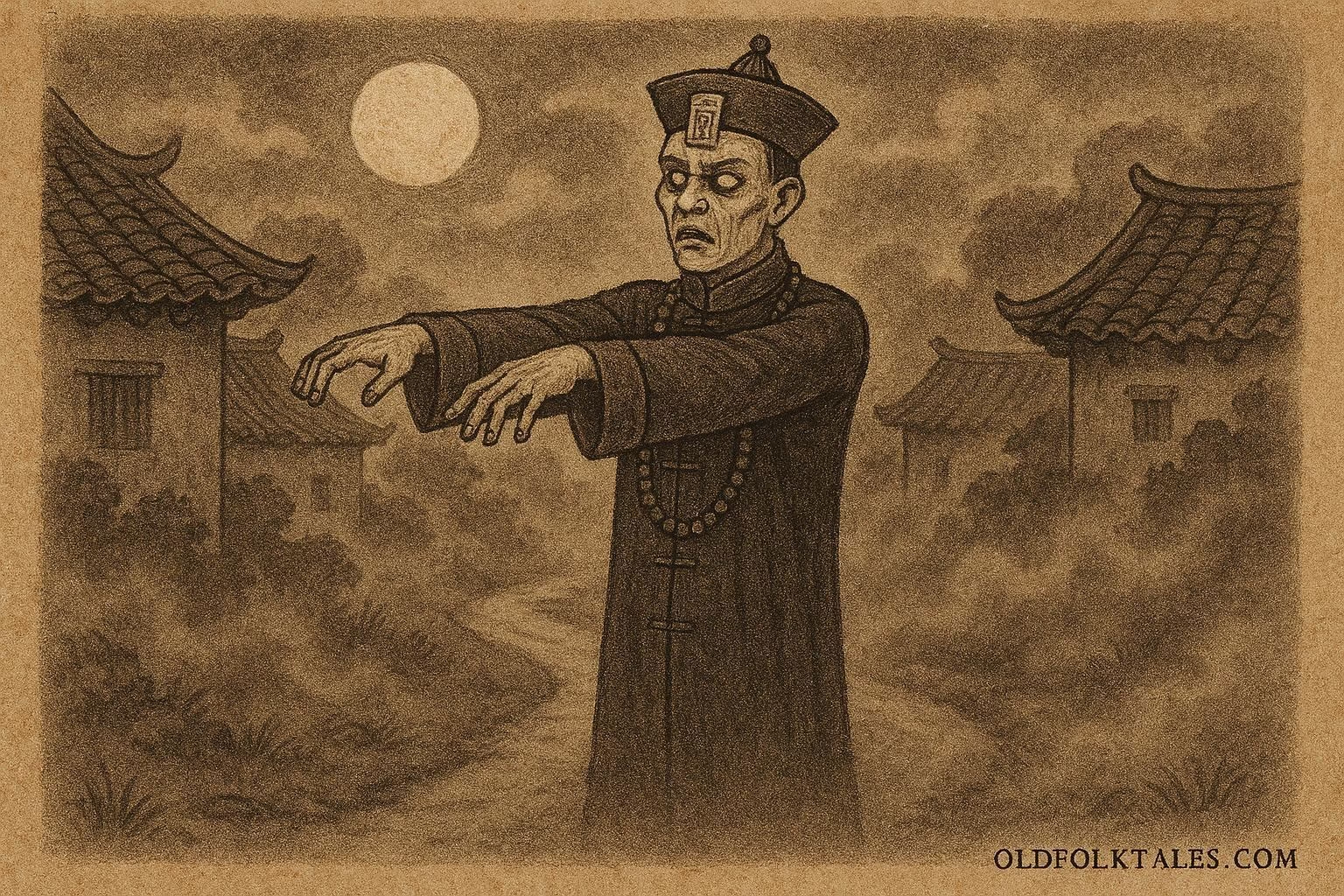
By midnight, the first witness saw it. A hunched figure stood near the grave, frozen in unnatural stillness. Its limbs were stiff, its arms held straight before it, its clothing unchanged from burial. When the moonlight broke through clouds, the villagers saw grey skin, lifeless eyes, and the unmistakable rigid stance. It was Master Liang, though no breath moved from his lips and no warmth lived in his flesh.
The Jiangshi had risen.
It moved in a single jerking hop, its legs too stiff to bend, its body pulled upright as if by invisible strings. With every hop came a sound like dried branches snapping. Its long fingernails, pale and hardened, hung like sharpened talons. The Jiangshi moved through the village searching for something, driven by bitterness and broken rites.
When villagers saw it approach, they shut their doors and pressed talismans against them. Children hid beneath quilts as parents whispered ancient protection chants. The Jiangshi drifted along the paths, its motions slow yet unstoppable, as though following a thread held by the world of spirits.
It approached the abandoned home of Master Liang. The house felt cold, its hearth empty, its walls silent. The spirit paused as if sensing the neglect of his memory. Suddenly it turned sharply toward the village shrine, its hops shaking the earth. Offerings there had not been renewed since the sons left, and the Jiangshi’s resentment grew.
Elder Ming watched from the shadows, his heart steady despite the dread. He had prepared for this possibility. In his hands he carried a set of ritual bells, a brush, and yellow talisman papers inked with sealing characters. As the Jiangshi neared the shrine, Elder Ming stepped into the open courtyard.
The Jiangshi froze. Its head tilted in a slow, unnatural arc.
Elder Ming rang the bells, their sharp tones cutting through the cold night. He chanted the ancient words, each syllable invoking ancestral authority, binding spirit to body. The Jiangshi hissed, its corpse stiffening further. It hopped toward him with sudden force, raising its arms.
The elder threw a talisman onto its chest. The Jiangshi convulsed, then went still for a moment. But the binding was weak without a proper burial to anchor the soul. Elder Ming knew he had only moments.
With trembling hands, he called for the villagers hiding nearby. Slowly doors opened, and lanterns emerged. The people gathered behind him, offering their voices to the chant. Generations flowed into the ritual, as ancestors were honored again.
Their united call strengthened the talisman. The Jiangshi’s limbs shook and its rigid posture softened. Its eyes dimmed, and with a final hop backward, it collapsed. The corpse lay motionless on the stone path.
The next morning, the villagers uncovered Master Liang’s grave and performed the full rites he had been denied. Offerings were placed at the shrine, prayers were spoken, and incense curled through the crisp air. Elder Ming guided every step, restoring harmony between the living and the dead.
The Jiangshi did not rise again.
But Longwei never forgot that night. The villagers taught every child the danger of forgetting traditions and the sacred duty owed to ancestors. And on quiet nights, when the wind rustled through bamboo and the moon shone pale and distant, some claimed they still heard the faint echo of a hop, reminding them to honor the rites that keep the world in balance.
Explore the shadows of world mythology, where demons test the soul and spirits watch over mankind
Author’s Note
This story reflects the long cultural importance of ancestral rites within Chinese communities. Though dramatized, the Jiangshi symbolizes the belief that respect for the dead protects the living and that broken customs create spiritual imbalance.
Knowledge Check
-
What causes the Jiangshi to rise from its grave?
It rises because improper burial rites disturbed its rest. -
How does the Jiangshi move at night?
It moves by hopping due to its stiff, rigid limbs. -
Why was Master Liang’s burial incomplete?
His family rushed the burial and skipped essential ancestral rites. -
What does Elder Ming use to subdue the Jiangshi?
He uses chants, ritual bells, and a sealing talisman. -
What lesson does the village learn from the Jiangshi’s appearance?
They learn the importance of respecting and completing ancestral rituals. -
What does the Jiangshi symbolize within Chinese spiritual belief?
It symbolizes the consequences of neglecting ancestral duties and spiritual boundaries.








