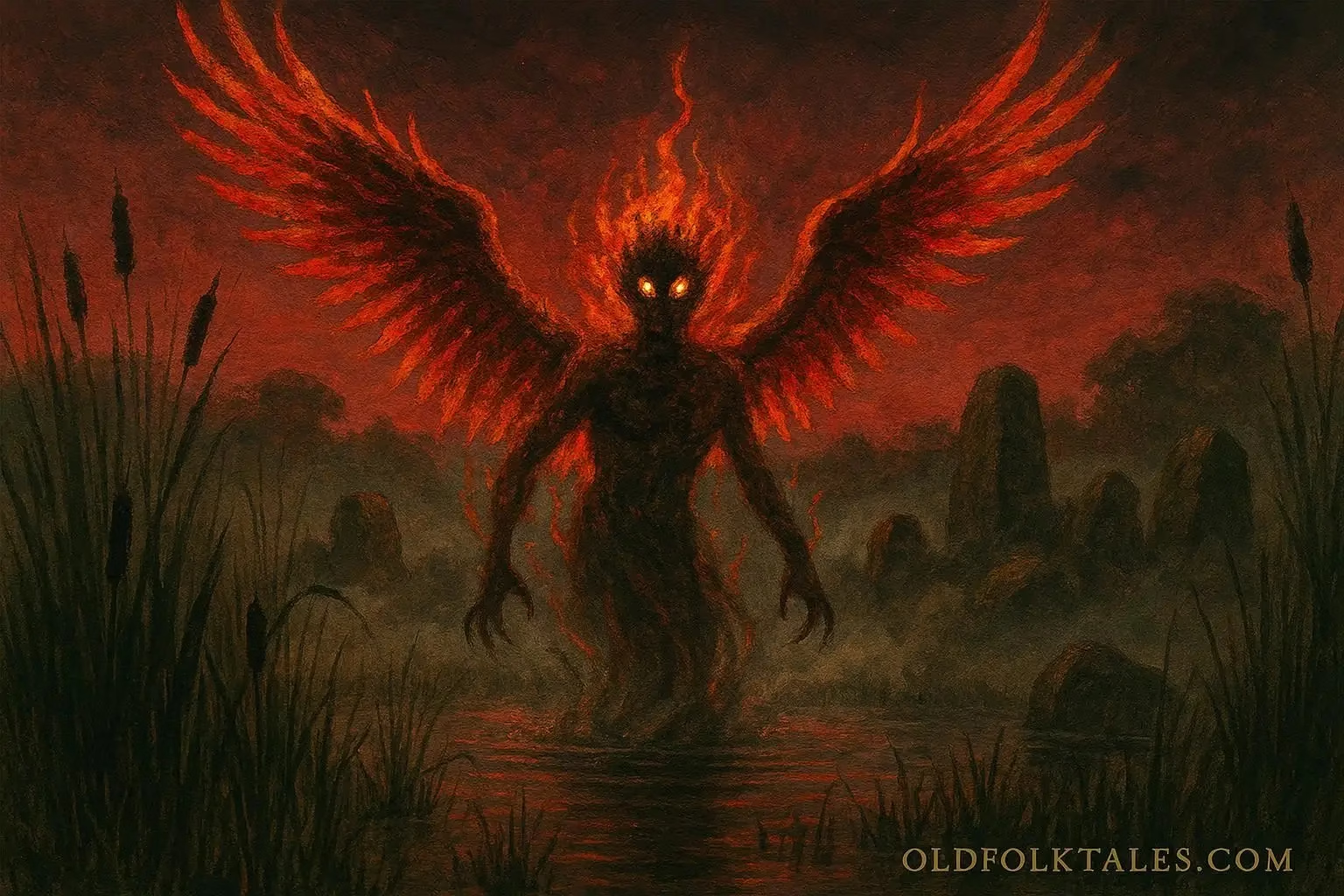
Deep within the wetlands of western Zambia, where the reeds rise taller than a person and the earth sings with the breath of ancient waters, there lived a spirit known only in whispers. The Luvale and Kaonde elders called it the Kongamato, the breaker of boats, the fiery winged guardian of the marsh. Its presence stretched across the swamps like a hidden memory, awakened only when humans crossed boundaries they were never meant to cross.
Old fishermen told of glowing eyes that drifted above the waters at night, eyes that did not blink and did not fear the dark. Hunters who wandered too close to forbidden pools spoke of the air trembling, as though something powerful had lifted itself from the mud. Most people listened to these stories, honoring the marsh paths marked by the elders and offering quiet greetings to the ancestors whenever they set foot on swamp soil. Yet there were always travelers who believed they knew the land better than the spirits.
One such traveler was a young man named Kasonso. He was brave, proud, and quick to laugh at warnings. He believed that the stories of the Kongamato were simply ways to frighten children or control the curious. When he moved from village to village trading goods, he often crossed the wetlands without pausing to speak to the spirits who lived there. He carried his canoe through reeds carelessly, leaving broken stalks behind him. He splashed water on sacred stones without apology. And each time, the marsh seemed to grow a little colder.
Encounter dragons, spirits, and beasts that roamed the myths of every civilization
One season, when the rains were late and travelers had to take narrower and more dangerous routes, Kasonso decided to venture deeper into the wetlands than he ever had before. The villagers begged him to wait for safer weather, but he refused. He wished to reach the next market before his rivals. He loaded his canoe with baskets, ignored the ancestral markers near the water, and pushed out into the slow moving marsh.
At first, the journey seemed peaceful. The water glided beneath his canoe like polished obsidian. The reeds whispered softly, swaying as though urging him to turn back. But Kasonso only smirked and paddled harder. When a sacred lily drifted across his path, he pushed it aside with his paddle. When a sudden gust of wind rippled the water, he lifted his chin proudly, refusing to acknowledge that the land might be warning him.
The sun dimmed. The sky grew heavy with an unnatural red glow. The frogs fell silent. Even the insects stopped humming. The cold that settled over the water felt ancient, older than the villages, older than the trees. Kasonso slowed his paddling, listening. A single splash echoed across the marsh, though no fish rose to the surface. Then another. Then a great shadow passed beneath his canoe.
He froze.
The water erupted.
A pair of wings burst from the swamp, wide as the shade of an entire tree. They glowed with a strange fiery sheen, as though embers lived beneath the leathery skin. A long reptilian neck rose above the water, its head tapering to a sharp beak that clacked with the sound of breaking branches. The creature’s single eye burned like a trapped flame.
It was the Kongamato.
The winged spirit hovered above him without flapping, suspended by ancestral power rather than wind. The marsh seemed to kneel beneath it. Kasonso shook as the creature lowered its head until its burning eye met his. Every careless step he had taken through the wetlands echoed in his mind. Every time he broke reeds without mercy. Every sacred stone he ignored. Every warning he laughed at.
The Kongamato opened its beak wide enough to swallow his canoe whole and released a scream that cut through the wetland like the tearing of the sky. Kasonso clutched the sides of the canoe, tears streaming down his face. The spirit dipped its head once more, then flapped its enormous wings. The resulting wind struck the canoe hard, overturning it and sending Kasonso thrashing into the water.
But instead of pulling him under, the spirit simply hovered. It watched him struggle to right himself. It waited until he gasped a trembling apology to the marsh and to the ancestors whose land he had disrespected. Only then did the Kongamato lift its fiery wings, rise into the red tinted sky, and vanish into the heart of the swamp.
Kasonso dragged himself back to shore and knelt for a long time. He placed his hands on the earth and promised the ancestors he would never again enter the wetlands without their blessing. When he returned to the village, he did not boast. Instead, he taught others the songs of respect and the proper rituals. And though he never again saw the Kongamato, he felt its presence whenever the wind trembled across the reeds.
The villagers say the spirit still watches the marsh. Travelers who honor the land pass safely. Those who do not feel a burning gaze upon them, a reminder that sacred places remember everything.
Author’s Note
This tale reflects ancient Luvale and Kaonde respect for wetlands as living ancestral spaces. The Kongamato serves as a guardian reminding listeners that sacred geography carries memory and consequence.
Knowledge Check
-
What triggers the appearance of the Kongamato?
It appears when travelers disrespect sacred marsh paths or ancestral waters. -
Why did Kasonso enter the wetlands despite warnings?
He wished to reach the next market quickly and ignored all spiritual cautions. -
How did the marsh behave as Kasonso traveled deeper?
It grew silent and cold, signaling danger and spiritual unrest. -
What did the Kongamato do when confronting Kasonso?
It overturned his canoe and forced him to confront his disrespect. -
How did Kasonso change after the encounter?
He became humble and taught others to honor the wetlands. -
What does the Kongamato symbolize in the story?
It represents ancestral protection and the consequences of ignoring sacred geography.