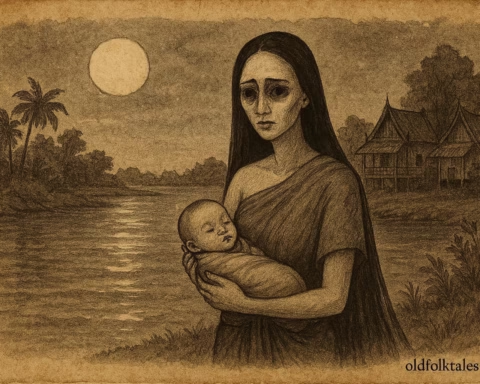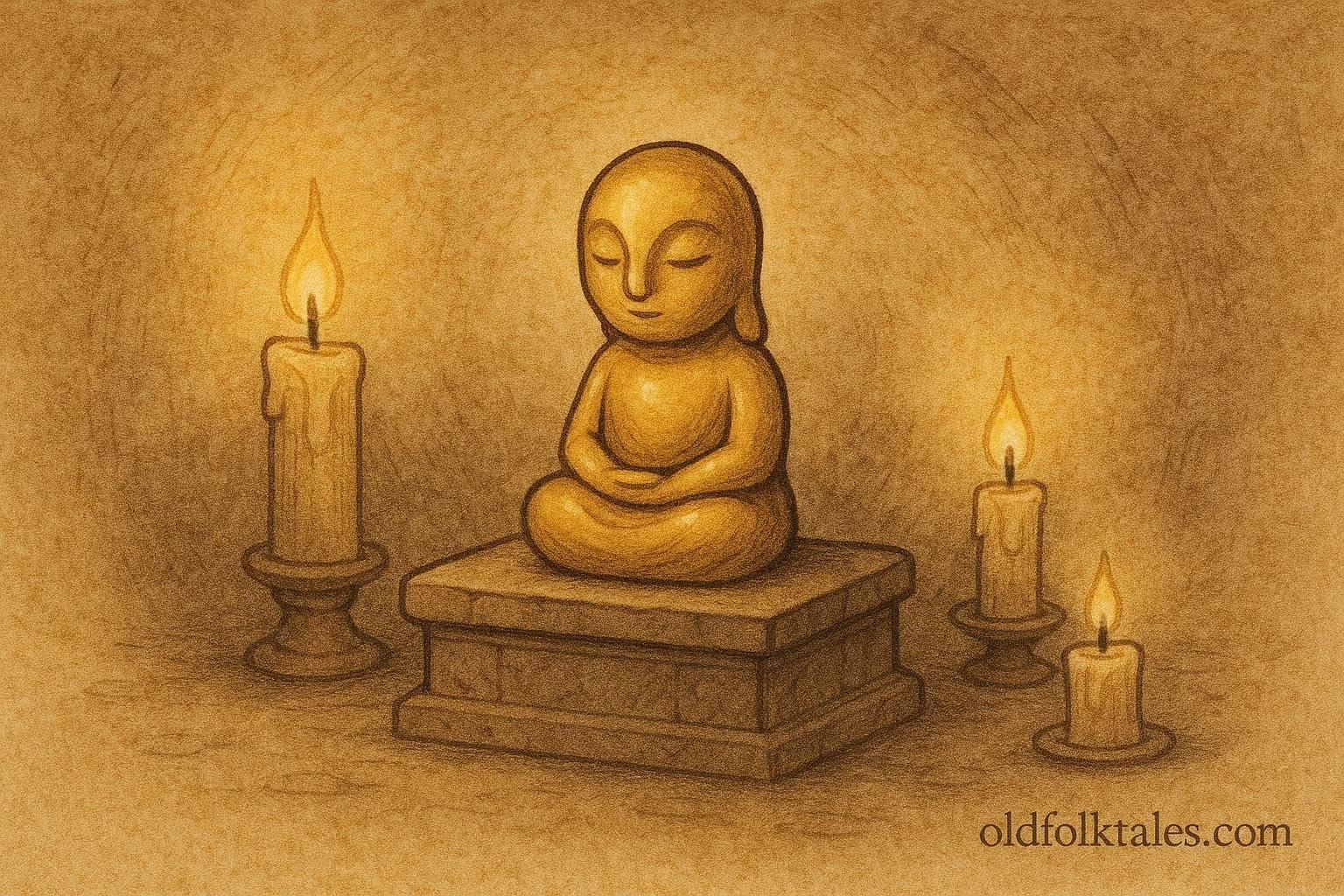
In the heart of old Siam, where river temples glimmered beneath the rising sun and monks chanted before the world fully woke, there lived a woman named Ratri. She was known throughout her village as a devoted mother, though she had no children of her own. Instead, she cared for a small golden figurine wrapped in red cloth and placed on a carved wooden altar. The villagers whispered that it housed a Kuman Thong, a spirit child believed to bring protection and fortune when properly honored.
Ratri had received the spirit from an elder practitioner who traveled through the region. The elder told her that a Kuman Thong was not an ordinary companion. It was a spirit formed through ancient rites, calling upon energies that required respect, balance, and daily acknowledgment. If treated with care, the Kuman Thong would guard her home, guide her intuition, and warn her of unseen dangers. But if she neglected it, if she forgot its offerings or disrespected the sacred bond, the spirit could turn restless and unpredictable.
For many years, Ratri tended to the altar every morning. She placed fruit, sweet rice, and tiny garlands to honor the spirit within the golden figurine. She whispered kind words as though comforting a living child. In return, she felt an unseen presence around her house. When thieves once approached at night, they fled the moment a sudden chill swept through the air. When illness threatened her crops, she dreamt of a small boy pointing her toward healing herbs in the nearby forest. She trusted that her Kuman Thong watched over her.
Discover the gods, goddesses, and divine spirits who ruled the heavens and shaped human fate
The villagers noticed that fortune always found its way to Ratri. Her garden flourished, her roof never leaked, and even the monsoon winds skirted her home as though guided by unseen hands. A few villagers envied her blessings and wondered if they should seek their own Kuman Thong. But the monks warned them that this spirit required more than desire for wealth. It demanded unwavering care, a heart free of cruelty, and a willingness to shoulder spiritual responsibility.
Ratri understood this well. But time, as it always does, slowly changed her life. As she grew older, her eyesight weakened and her movements slowed. Her nephew Arun moved into her home to assist her, a young man known more for his ambition than his patience. He called himself practical and modern, dismissing old customs as superstition. Though he respected his aunt, he had little regard for rituals or spirits.
When Ratri became bedridden for several weeks, the care of the Kuman Thong fell to Arun. At first he tried to follow her instructions. But he quickly grew careless. Some mornings he forgot. Other days he left only a simple bowl of rice without prayers. He laughed at the red cloth on the altar and wondered why his aunt still clung to what he called childish beliefs.
Soon small disturbances began in the house. At night, the wooden floorboards creaked in patterns too deliberate to be the wind. Objects slid across the table with no one touching them. A whispering sound echoed from the corners of the room. Arun blamed rats, then drafts, then his own imagination.
When Ratri regained her strength and rose from bed, she sensed the change immediately. The air carried a tension she had never felt before. She approached the altar and saw that the fruit offerings were dried out, the sweet rice had spoiled, and the small figure seemed strangely cold. She called for Arun, her voice trembling.
He confessed that he had forgotten some days and scoffed at the idea that a spirit could cause any harm. But as he spoke, a sudden gust slammed the shutters closed. The candle flames rose straight upward without flickering. Ratri bowed her head, mourning the imbalance now present in her home.
That night, the house shook with soft thuds, like the footsteps of a child running through the halls. Arun awoke to see the shadow of a small figure standing by his door. It whispered, not in words he recognized, but in tones filled with disappointment. He felt a cold breath brush against his neck. Panic surged through him.
He rushed to Ratri’s room and found her already kneeling at the altar. She was chanting softly, asking the spirit for forgiveness and promising renewed devotion. She offered fresh fruit, sweet rice, and incense while Arun watched with trembling hands.
Ratri explained to him that a Kuman Thong binds itself through trust. Neglect wounds it, not as a living child would be wounded, but as a spirit stranded between affection and abandonment. Its reactions were not those of anger but confusion and sorrow, which became manifest in unsettling ways.
Together they restored the altar. Arun learned the proper chants, the respectful gestures, and the importance of sincerity. Over time, the disturbances quieted. The air warmed again. The whispering softened until it faded entirely. Arun felt humbled, recognizing that the world held forces older and greater than his judgment.
Ratri passed down the altar to Arun when she could no longer tend to it. He cared for it with a balance of reverence and caution. And though he never spoke openly of the spirit within, he often felt the gentle brush of a presence guiding him, reminding him of the delicate line between protection and danger, devotion and neglect.
The villagers continued to speak of the Kuman Thong in hushed tones, recognizing that such spirits offered both blessing and warning. And anyone who asked Arun about it received only one answer: that power gained without responsibility becomes a burden, and spirits treated without respect become shadows of sorrow.
Author’s Note
The Kuman Thong is part of complex Thai spiritual traditions. This story presents the spirit respectfully, focusing on responsibility and the moral consequences of disregard, rather than ritual details. It reflects the cultural teaching that power must always be balanced with care.
Knowledge Check
-
Why does Ratri keep a Kuman Thong in her home?
She believes it protects her household and guides her through its spiritual presence. -
What causes the disturbances to begin in the house?
Arun neglects the offerings and fails to honor the spirit properly. -
How does the Kuman Thong show its displeasure?
It creates cold air, moving objects, and whispered sounds throughout the home. -
What does Arun learn from the experience?
He learns that spiritual responsibility requires respect, sincerity, and consistency. -
Why does the spirit become restless when neglected?
It feels abandoned and confused due to the broken ritual bond. -
What is the main theme of this story?
The story teaches that power must be balanced with responsibility and respect.