The Lakalaka, often called the “national dance of Tonga,” is one of the most important ceremonial traditions in Polynesia. Performed at state events, coronations, chiefly funerals, and major national celebrations, the Lakalaka is both performance and sacred protocol. Its roots stretch deep into Tonga’s pre-Christian past, when oral poetry, posture dances (meʻelaufola), and ritualized speech formed the backbone of political and spiritual identity. The tradition evolved within a social hierarchy shaped by divine kingship, ancestral honor, and a belief that the chief served as a bridge between mortals and the gods.
While today’s Lakalaka has been shaped by Christian influence, its core remains unmistakably ancient. It preserves the structure of older Tongan ritual life, where genealogies, cosmology, and social order were expressed through choreographed movement and poetic praise. UNESCO recognizes the Lakalaka as a Masterpiece of the Intangible Cultural Heritage of Humanity, affirming its deep cultural significance.
Description
A Lakalaka performance begins long before any dancer enters the ceremonial ground. Poets, composers, and punake (master choreographers) craft the sung speeches, ensuring they honor the correct lineages, chiefs, and historical episodes. Every word, gesture, and formation is deeply intentional. Nothing is improvised.
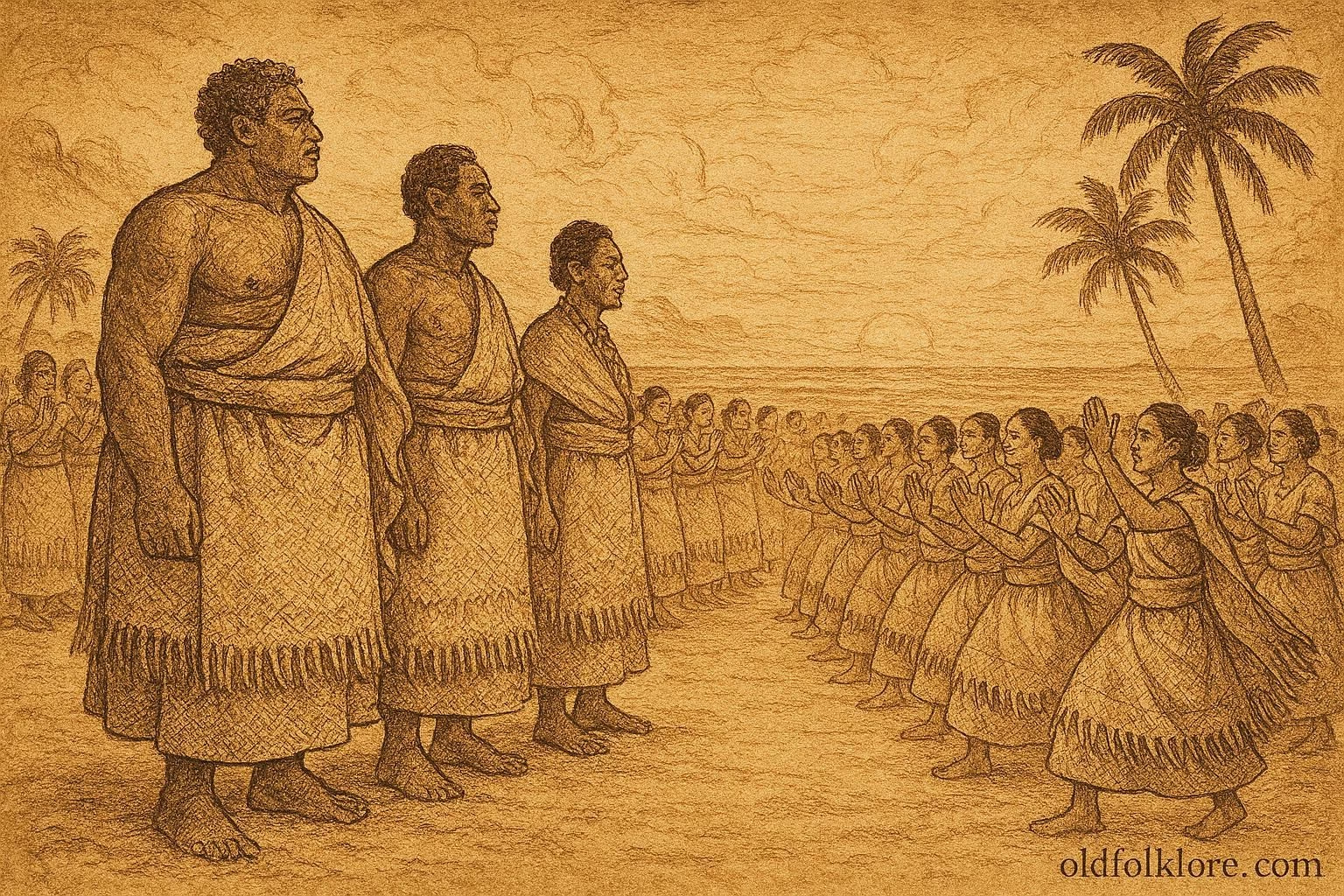
When the day arrives, large groups, sometimes hundreds, arrive in coordinated rows. Men and women may stand separately, but their movements intertwine, symbolizing unity across families and roles. The dancers wear traditional garments, often mats, waist girdles, or the finely woven kie reserved for important events.
Once the singing begins, the atmosphere shifts. Voices rise in harmonic layers, each phrase carrying political meaning, ancestral memory, or praise of the ruling monarch. The dancers’ hands trace lines in the air, pointing to ancestors, chiefs, islands, or spiritual concepts. Movements remain grounded, dignified, and deliberate. Unlike many Polynesian dances known for hip motions, the Lakalaka emphasizes posture, discipline, and coordinated precision.
The front row typically includes individuals of high rank. Their placement reflects Tonga’s hierarchical order, where the spiritual authority of chiefs sustains societal harmony. Children may also take part, symbolizing the continuation of lineage and knowledge.
The performance usually ends with a climactic affirmation, a unified vocal flourish followed by the final rhythmic gesture known as tā. The crowd responds with respectful silence or soft applause, acknowledging the sacred weight of what they have witnessed.
Mythic Connection
Although often seen today as a cultural performance, the Lakalaka is fundamentally mythic. It expresses a worldview where human society mirrors the divine order established by Tangaloa, Maui, and ancient Polynesian gods. In Tongan cosmology, the highest chiefs descend from gods. Their authority is not merely political but cosmic. The Lakalaka dramatizes this structure.
1. The Dance as an Offering
Early Tongans believed that chants and dances pleased ancestral spirits and gods, who in turn protected the land and its people. The Lakalaka’s harmonious choreography reflects the balance between heaven, earth, and society.
2. Embodying the Social Hierarchy
Tongan society was organized through rank, lineage, and sacred duty. The positioning of dancers, chiefs in front, others behind, symbolizes the cosmic arrangement of order over chaos. This practice echoes the myth of creation in which the universe forms through layered, structured realms.
3. Oral Literature as Ritual Breath
Sung speeches in the Lakalaka are not mere text. They are talanoa, the living breath of ancestors. Tongan mythology teaches that one’s genealogy is a spiritual inheritance. When dancers recite ancestral names or perform gestures tied to mythic episodes, they call these spirits into the present moment.
4. Renewal of Harmony and Prosperity
Like many Polynesian ceremonies, the Lakalaka is a ritual of renewal. The performance reaffirms relationships, between chiefs and people, ancestors and descendants, land and sea. Through dance, the community restores spiritual balance, ensuring prosperity, unity, and protection.
Thus, each Lakalaka performance is not just a display of art. It is a reenactment of ancient cosmic truths, a reminder that Tonga’s identity flows from the gods who shaped its islands and the ancestors who carried their wisdom.
Author’s Note
This article reflects the historical, cultural, and mythic dimensions of the Lakalaka, exploring its role as a ceremonial expression of lineage, divine order, and ancestral continuity. The Lakalaka remains a living symbol of Tonga’s spiritual worldview and collective identity.
Knowledge Check
1. What is the Lakalaka?
It is Tonga’s national ceremonial dance, combining sung speeches with choreographed movements.
2. Why is the dance linked to ancient traditions?
The Lakalaka evolved from older posture dances and oral poetic forms rooted in Tongan myth and social hierarchy.
3. Who composes the sung speeches?
They are created by punake, master choreographers and poets responsible for accuracy and lineage honor.
4. What does performer placement symbolize?
The arrangement reflects Tonga’s sacred social hierarchy, with chiefs positioned in front.
5. How does the Lakalaka connect to mythology?
Its structure mirrors divine order, ancestral breath, and cosmic harmony established by Polynesian gods.
6. Why is the Lakalaka important today?
It preserves Tonga’s cultural identity, renews social unity, and honors ancestral and divine relationships.