
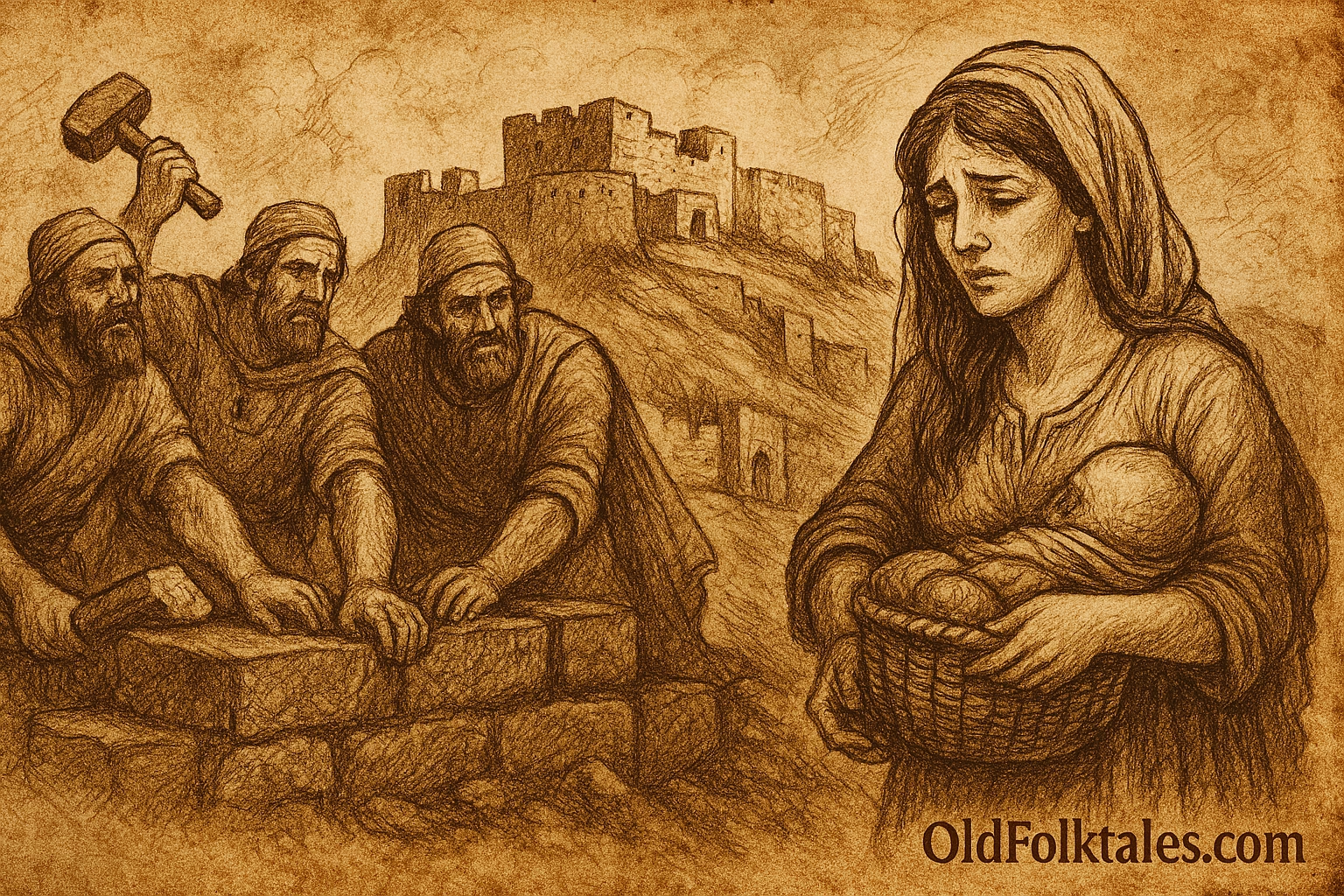
In the ancient lands of Albania, where the mountains meet the sky and rivers carve their paths through valleys old as time, there stood a hill overlooking the city of Shkodër. Upon this hill, three brothers dreamed of building a fortress so mighty that it would protect their people for generations to come. They were strong men, skilled craftsmen who knew the language of stone and mortar, and they worked with hands calloused by labor and hearts filled with purpose.
Each dawn brought renewed hope as the brothers climbed the hill, their tools slung across their shoulders, ready to continue their great work. From sunrise until the stars emerged in the evening sky, they labored tirelessly. Stone upon stone they placed, building walls that reached toward the heavens. The sound of their hammers rang out across the valley like a promise of safety and strength. Sweat dripped from their brows as they lifted heavy blocks, their muscles straining with each placement, their voices rising in songs of work and brotherhood.
Click to read all Myths & Legends – timeless stories of creation, fate, and the divine across every culture and continent
But when morning came again, their hearts would sink like stones into dark water. The walls they had built with such care lay crumbled on the ground, reduced to rubble as if giant invisible hands had torn them down in the night. Day after day, week after week, the cruel pattern repeated itself. The brothers built, and unseen forces destroyed. Their hands grew raw, their spirits began to waver, and whispers of dark magic filled their worried minds.
In desperation, the three brothers sought out a wise old man who lived in the mountains, a keeper of ancient knowledge whose eyes had seen many winters. They found him in a cave where smoke from his fire curled like secrets into the air. When they told him of their troubles, he stroked his long white beard and gazed into the flames for what seemed like an eternity.
Finally, he spoke, his voice grave and heavy with sorrow: “Your walls will never stand unless you bind them with sacrifice. The spirits of this place demand blood and bone. You must wall a living soul into the foundation only then will your fortress endure.”
The brothers recoiled in horror, but the old man raised his weathered hand. “It must be one of your wives,” he continued, his words falling like stones into still water. “Tomorrow, whichever woman brings you food first she must be the offering.”
The night that followed was filled with torment and whispered conversations. The brothers gathered in the darkness and made a solemn pact: they would agree to the terrible bargain, but they would say nothing to their wives, letting fate decide who would come first. Yet when the two older brothers returned to their homes, fear overcame honor. They whispered warnings to their wives, telling them to stay away from the fortress the next day, to delay, to find any excuse not to bring food.
Only the youngest brother kept the vow of silence, though his heart broke with every breath. That night, he held his infant son close, watching his wife, Rozafa, as she moved about their modest home, her face glowing with the quiet beauty of a woman who knew nothing of the doom that awaited her. She hummed softly as she prepared bread for the next day, her gentle voice filling their home with warmth.
When dawn broke over Shkodër, painting the sky in shades of rose and gold, only one figure climbed the hill toward the fortress. Rozafa walked steadily up the path, a basket of fresh bread balanced on her hip, her face bright with the simple joy of bringing nourishment to her beloved husband. She did not know that this morning would become legend, that her name would echo through centuries.
As she approached, she saw the three brothers standing in silence, their faces masks of anguish. The two older brothers could not meet her eyes. It was then that Rozafa understood. The terrible truth washed over her like ice water, yet she did not scream, did not run. She stood tall, though her hands trembled, and looked at her young husband with eyes full of sorrow and love.
“Tell me,”she said softly, and they told her everything.
Rozafa closed her eyes, and when she opened them again, they shone with tears that would never fall. She thought of her infant son, of his tiny hands and hungry cries, of the life stretching before him that she would never see. Then, with a voice steady as the mountains themselves, she spoke her final wish.
“If my life must become the foundation of this fortress, if my body must be sealed in stone for eternity, then I ask only this: leave my right eye free so I may watch my son grow. Leave my right hand uncovered so I may caress his soft hair. Leave my right breast exposed so I may continue to nourish him with my milk. And leave my right foot free so I may rock his cradle and sing him to sleep.”
The brothers, weeping openly now, honored her request. Rozafa stepped into the space within the walls, and stone by stone, they sealed her living body into the fortress. She stood within the darkness, her love transcending death itself, her sacrifice binding the stones with power no mortal force could break.
From that day forward, the walls of Rozafa Castle stood firm against every storm, every siege, every passing age. And it is said that even now, centuries later, the ancient stones weep with a milky-white moisture that seeps through the cracks the eternal milk of a mother’s love, Rozafa still nurturing the children of Albania, her spirit forever watching over the land she saved with her sacrifice.
The Moral Lesson
The legend of Rozafa teaches us about the boundless nature of maternal love and the profound sacrifices made for family and community. Rozafa’s story illustrates how true love transcends even death, and how selflessness can transform tragedy into enduring legacy. Her final wish reveals that even in the darkest moments, a mother’s instinct to nurture and protect remains unbroken. The tale reminds us to honor the sacrifices of those who came before us and to recognize that the strongest foundations whether of fortresses or societies are built not just with stone, but with love, courage, and devotion.
Knowledge Check
Q1: Who was Rozafa in Albanian folklore and why is she important?
Rozafa was the wife of the youngest of three brothers who were building a fortress in Shkodër. She became the legendary figure who sacrificed her life to ensure the fortress walls would stand. Her importance lies in her representation of maternal love, selfless sacrifice, and the enduring spirit that continues to protect Albania symbolically through the ages.
Q2: Why did the walls of the fortress keep collapsing before Rozafa’s sacrifice?
According to the legend, the walls kept collapsing because the spirits of the place demanded a human sacrifice. A wise old man told the brothers that only by walling a living person into the foundation would the fortress stand permanently, as the sacrifice would bind the stones with supernatural power.
Q3: What was Rozafa’s final wish before being sealed in the wall?
Rozafa requested that her right eye, right hand, right breast, and right foot be left exposed outside the wall. She wanted to continue watching over her infant son, caressing him, nursing him, and rocking his cradle even after being entombed, demonstrating her unbreakable maternal bond.
Q4: What is the cultural significance of the weeping stones at Rozafa Castle?
The milky-white moisture that seeps through the castle walls is said to be Rozafa’s milk, symbolizing her eternal presence and continued nurturing of her child and, by extension, all of Albania’s children. This phenomenon has made the castle a powerful symbol of maternal sacrifice and enduring love in Albanian culture.
Q5: Why did only Rozafa come to the fortress on the fateful morning?
Only Rozafa appeared because the two older brothers broke their vow and secretly warned their wives to stay away. The youngest brother kept his promise of silence, leaving Rozafa unaware of the danger. This highlights themes of honor, fate, and the tragic cost of keeping one’s word.
Q6: Where is Rozafa Castle located and what does it represent to Albanians today?
Rozafa Castle is located on a hill overlooking the city of Shkodër in northern Albania. Today, it represents not only a historical fortification but also embodies Albanian values of family devotion, maternal love, and sacrifice. The castle and its legend remain powerful symbols of Albanian cultural identity and the strength found in selfless love.
Source: Adapted from Albanian oral folklore tradition
Cultural Origin: Albanian folklore, Shkodër region, Northern Albania






