
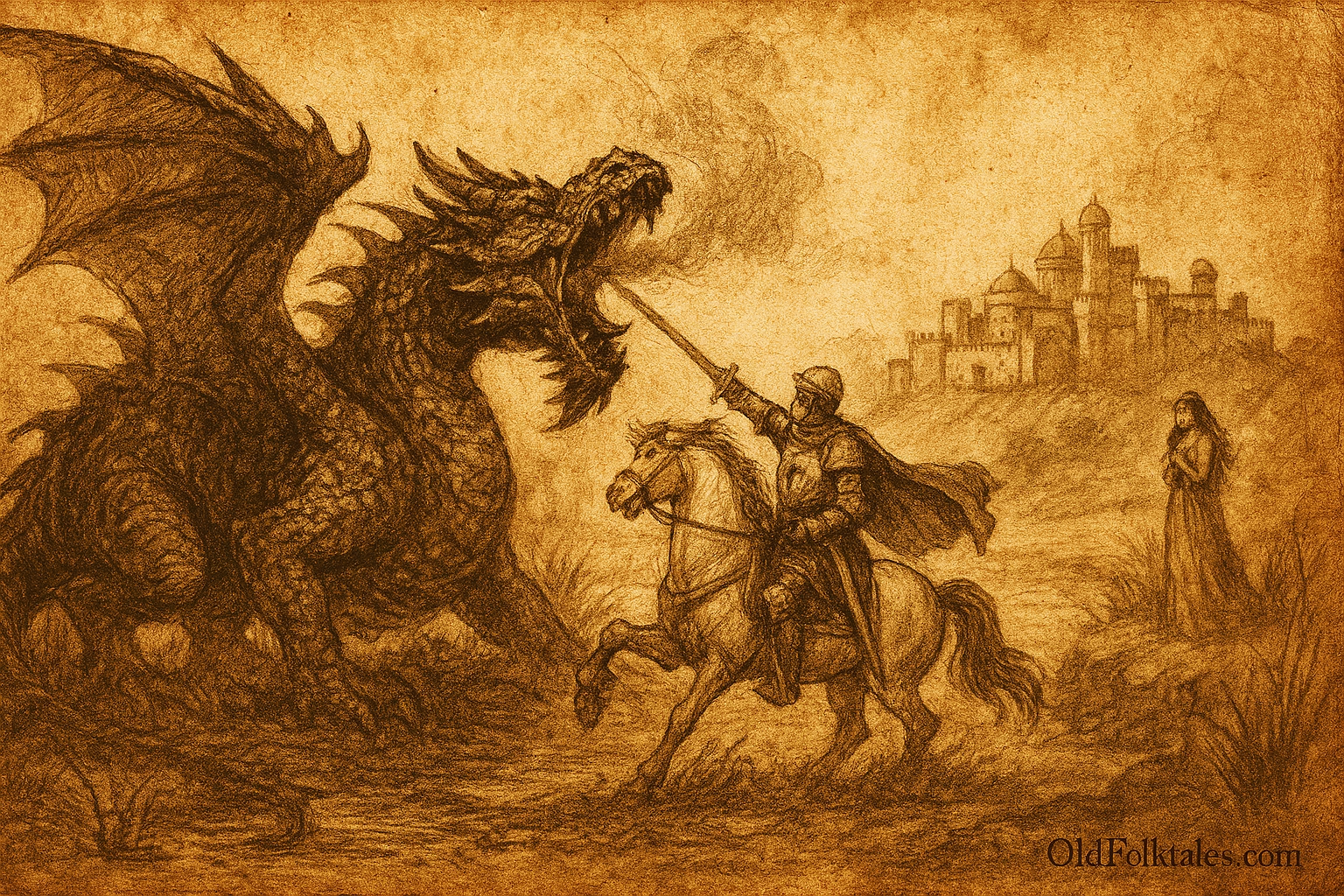
In a distant land, where the desert winds swept across ancient stones and the sun blazed mercilessly upon a walled city, there lived a people gripped by unspeakable terror. Outside their gates, in the darkness of a fetid swamp, dwelled a creature of nightmare a dragon so monstrous, so vile in its appearance and breath, that merely to approach it meant certain death.
This was no ordinary beast. The dragon’s scales were black as a moonless night, harder than the finest armor, impervious to arrows and spears. Its eyes burned with an unholy fire, twin pits of malevolence that reflected no mercy, no understanding, only an insatiable hunger for destruction. When it opened its massive jaws, lined with teeth like curved daggers, a pestilential breath poured forth a toxic miasma that poisoned the very air, bringing plague and death to all who inhaled it. The vapor would roll across the fields like an evil fog, withering crops, sickening livestock, and causing men, women, and children to collapse in agony.
Click to read all Myths & Legends – timeless stories of creation, fate, and the divine across every culture and continent
The people of the city had tried everything to rid themselves of this curse. Their bravest warriors had marched out to slay the beast, their armor gleaming in the sun, their hearts filled with courage and determination. But none returned. The dragon consumed them all, their bones scattered across the muddy ground around its lair, a grim warning to any who might follow.
In desperation, the terrified citizens consulted their wise men and priests. After much prayer and deliberation, a terrible solution was proposed. To appease the dragon’s wrath and keep it from approaching the city walls, they would offer it a sacrifice two sheep each day, driven to the edge of the swamp where the beast could devour them without venturing closer to the populated areas.
For a time, this arrangement held. The dragon feasted on the sheep, and the plague-breath remained at a distance. But the city’s flocks could not sustain such losses forever. As the pastures emptied and the remaining sheep grew fewer, panic spread once more through the streets. What would happen when there were no more animals to offer?
Again the elders gathered, and again they reached a horrifying conclusion. If the sheep were gone, they would have to offer human lives. A lottery would be held. Each day, one person would be chosen by chance to walk alone to the dragon’s lair, there to meet their fate so that the rest might live. Rich and poor, young and old, all would be placed in the lottery. No one would be exempt not even the king’s own household.
The city descended into a waking nightmare. Each morning, when the lots were drawn, wails of grief would echo through the streets as some family learned their loved one had been chosen. Parents watched their children led away. Husbands and wives said final farewells. The condemned would walk slowly through the gates, often weeping, while the surviving citizens watched from the walls, their hearts heavy with guilt and horror but their fear greater than their compassion.
Then came the day when the lot fell upon the king’s own daughter a princess of such grace and beauty that she seemed to embody all that was good and pure in the kingdom. When her name was drawn, the king threw himself upon the ground and wept like a broken man. He offered his entire treasury to spare her. He begged the people to take him instead, to let the old king die rather than his innocent child. But the citizens, hardened by their own losses, refused to show favoritism even to their sovereign. The law was the law. The lottery was sacred. If exceptions were made, chaos would follow. The princess must go.
The next morning, dressed in her finest robes as if for a wedding rather than a funeral, the princess walked through the city gates. The crowds parted before her in silence, many weeping openly at the sight of her calm dignity in the face of such a terrible fate. She carried no weapon, for what good would a sword or dagger do against a creature that had destroyed armies? She wore no armor, for she knew no metal could protect her from the dragon’s teeth or its poisonous breath. She walked alone across the barren fields toward the dark swamp where the dragon waited.
But that morning, traveling the same dusty road toward the city, came a knight unlike any the people had seen before. His name was George, a soldier of Christ, a warrior who had dedicated his life to fighting evil in all its forms. He rode a magnificent white horse, its coat gleaming like fresh snow in the harsh sunlight. His armor was simple but well-maintained, marked with the sign of the cross. His face was strong and kind, weathered by travel but lit with an inner fire of faith that made him seem more than merely human.
As George approached the city gates, he saw the princess walking toward her doom. He reined in his horse and called out to her, “Lady, where do you go alone? Why do you walk toward that evil place?”
The princess, startled to see anyone on the road, turned to face him. Tears streaked her beautiful face, but her voice remained steady. “Good knight, ride away from here as quickly as you can. There is a dragon in that swamp, a monster that will kill you if you remain. I go to die so that my people might live a little longer. Do not stay to share my fate.”
But George’s eyes blazed with holy purpose. “I am a servant of God,” he declared, his voice ringing with conviction, “and I do not flee from evil. If there is a dragon that terrorizes innocent people, then by God’s grace, I shall face it. Return to the city, lady. Tell your people to have faith and to pray. Today, with Christ as my strength, this evil shall end.”
Before the princess could protest further, George spurred his horse forward, galloping toward the swamp. The ground grew soft and treacherous, the air thick with the stench of decay. And then, from the dark waters and twisted vegetation, the dragon emerged.
It was even more terrible than the stories had described. Its body was as large as a house, covered in those impenetrable scales that gleamed with an oily sheen. Its wings, though torn and ragged, stretched wide enough to cast a shadow over the entire field. Its tail lashed behind it, crushing reeds and small trees with each movement. And from its mouth came that deadly breath, a green-yellow cloud that rolled toward George like a living thing, bringing with it the smell of death and disease.
George raised his lance and cried out, “In the name of Christ, who conquered death itself, I command you to cease your evil!”
The dragon roared, a sound so loud it seemed to shake the very earth. It charged forward, its massive claws tearing up the ground, its jaws wide enough to swallow horse and rider whole. George met the charge without flinching. At the last possible moment, he drove his lance forward with all his strength, guided by divine power, and the point found the one vulnerable spot the soft flesh beneath the dragon’s jaw where no scales protected it.
The lance pierced deep, and the dragon’s roar of rage turned to a shriek of pain. It thrashed wildly, trying to shake off the weapon, but George held firm, driving the lance deeper. Black blood poured from the wound, smoking and hissing where it struck the ground. The dragon’s movements grew weaker, its breath coming in ragged gasps rather than poisonous clouds.
Finally, the great beast collapsed, its strength gone, its malevolence ended. George dismounted and approached cautiously, drawing his sword. With one swift stroke, he severed the dragon’s head from its body, ensuring it could never rise again to terrorize the innocent.
The princess, who had watched the entire battle from a safe distance, her heart caught between hope and terror, now ran forward. She fell to her knees before George, weeping with joy and gratitude. “You have saved me! You have saved us all! You are truly a servant of God!”
George lifted her gently to her feet. “It was not my strength alone that won this victory, but the power of Christ working through me. Go now and tell your people what has happened. Tell them that the God who can slay dragons can also save their souls if they but turn to Him in faith.”
The princess ran back to the city, her voice raised in jubilation, calling out the news of the dragon’s defeat. The people poured out of the gates, hundreds of them, rushing across the fields to see for themselves. There they found George standing beside the massive corpse of their tormentor, his sword still in hand, his white horse standing calmly nearby.
The king arrived, his robes hastily thrown on, his face still bearing the tracks of tears. When he saw his daughter alive and well, he embraced her with such force that he lifted her off the ground. Then he turned to George and declared, “Name your reward, brave knight! Anything in my kingdom is yours gold, lands, titles, even my daughter’s hand in marriage if you wish it! Only say what you desire, and it shall be yours!”
But George shook his head. “I desire no earthly reward, Your Majesty. I came here not for wealth or honors but to serve God by protecting the innocent. If you would truly reward me, do this: let all your people be baptized in the Christian faith. Build a church in this place where the dragon died, so that all may remember it was divine power, not human strength, that brought victory today. Dedicate your kingdom to Christ, and that shall be reward enough.”
The king looked at his daughter, at his people, at the dead dragon, and at the humble knight who wanted nothing for himself. In that moment, his heart was transformed. He declared that very day that he and all his household would be baptized, and he commanded that a great church be built on the spot where the dragon had fallen.
In the days that followed, thousands came to be baptized so many that the priests could barely keep pace with the demand. The kingdom that had been gripped by fear and darkness became a land of light and hope. The church was built, a magnificent structure that stood as a testament to faith’s victory over evil.
And George, his work complete, mounted his white horse and rode away, seeking other places where evil needed to be confronted, other innocents who needed protection. His name became legend, spoken with reverence throughout the Christian world Saint George, the dragon-slayer, the defender of the innocent, the knight whose faith was stronger than any monster’s evil.
The Moral of the Story
The legend of St. George and the Dragon teaches profound spiritual lessons about courage, faith, and the ultimate triumph of good over evil. George’s willingness to face overwhelming danger to protect the innocent demonstrates the Christian ideal of selfless service and sacrifice. His refusal of earthly rewards in favor of spiritual transformation for the kingdom shows that true heroism seeks not personal glory but the greater good. The dragon represents not merely physical danger but the forces of evil, sin, and spiritual corruption that threaten humanity. George’s victory through faith and divine assistance illustrates the belief that with God’s help, even the most terrifying evil can be overcome. The story emphasizes that conversion should follow demonstration of God’s power through acts of mercy and deliverance.
Knowledge Check
Q1: Why was the city terrorized by the dragon and what made it so dangerous?
A: The dragon lived in a nearby swamp and possessed poisonous breath that spread plague and death. Its pestilential vapor would poison the air, withering crops, killing livestock, and causing people to sicken and die. The beast was also covered in impenetrable scales and had already killed all warriors sent to fight it.
Q2: How did the city try to appease the dragon before St. George arrived?
A: First, the city offered two sheep daily to keep the dragon away from the walls. When the sheep ran out, they instituted a terrible lottery where one person each day, chosen by chance from all citizens including the royal family, would be sent to the dragon as a human sacrifice.
Q3: What happened when the king’s daughter was chosen in the lottery?
A: When the princess was chosen, the king offered his entire treasury and even his own life to spare her, but the people refused to make exceptions to the lottery law. The princess accepted her fate with dignity and walked alone toward the dragon’s lair dressed in her finest robes.
Q4: How did St. George defeat the dragon?
A: St. George faced the dragon on his white horse with faith in Christ as his strength. He drove his lance into the one vulnerable spot beneath the dragon’s jaw where no scales protected it. After weakening the beast, he dismounted and beheaded it with his sword, ending its reign of terror forever.
Q5: What reward did St. George request after saving the kingdom?
A: St. George refused all earthly rewards including gold, lands, and marriage to the princess. Instead, he asked only that the king and all his people be baptized in the Christian faith and that a church be built where the dragon died to commemorate God’s victory over evil.
Q6: What does the dragon symbolize in Christian tradition and what is the story’s spiritual meaning?
A: In Christian tradition, the dragon symbolizes Satan, sin, and the forces of evil that threaten humanity’s spiritual and physical wellbeing. St. George represents the faithful Christian warrior who, through faith in Christ rather than personal strength alone, can overcome even the most terrifying manifestations of evil. The story illustrates spiritual warfare and the transformative power of faith.
Source: Adapted from the Legenda Aurea (The Golden Legend) compiled by Jacobus de Voragine, preserved in Vatican libraries and collections.






