The Mamuthones ritual is one of the most ancient winter traditions of the Barbagia region in central Sardinia, particularly the town of Mamoiada. Though performed during the Christian feast of Saint Anthony on January 17, the ceremony’s roots stretch far beyond Christianity. It likely descended from pastoral purification rites practiced by the island’s pre-Roman and Nuragic cultures. These early societies lived according to the rhythms of the land, moving herds through rugged mountains and performing seasonal ceremonies to protect animals, ensure survival, and maintain harmony with unseen forces of nature.
Barbagia’s isolation preserved many rites that vanished elsewhere. This protected the Mamuthones and Issohadores procession, one of Europe’s most enigmatic masked rituals, from cultural erasure. Today, while it has taken on modern meanings, its ancient core remains intact.
Description
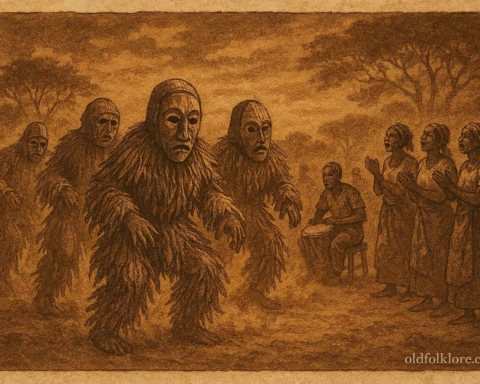
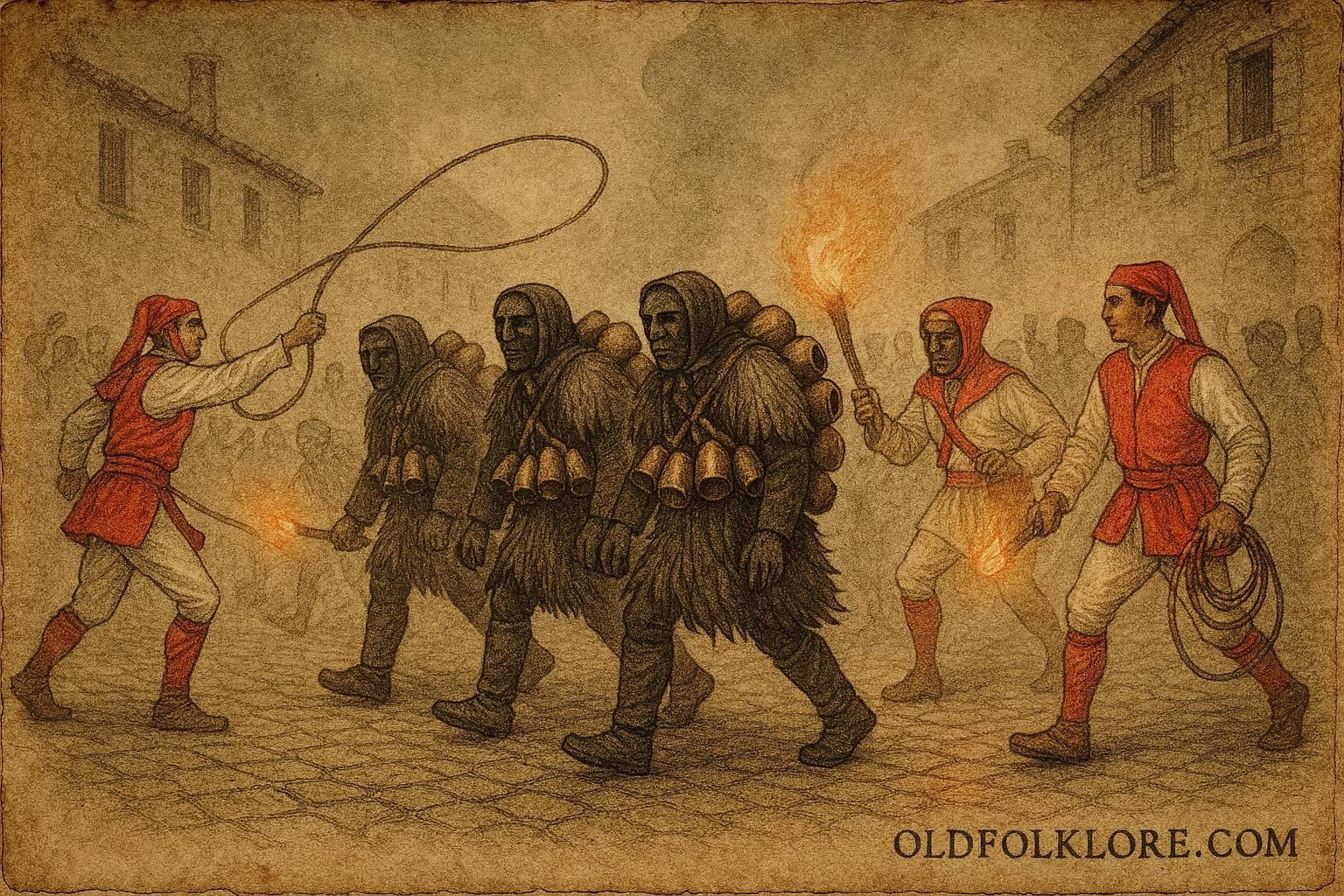
Every year in January, as winter’s cold still grips Sardinia’s central highlands, two groups emerge: the Mamuthones, dressed in black sheepskins and heavy metal cowbells, and the Issohadores, who wear bright white masks and red jackets. Their movements follow a strict, centuries-old choreography that transforms Mamoiada’s streets into a ritual stage.
The Mamuthones move slowly, hunched under the weight of their bells. Each carries nearly thirty kilograms of iron, carefully arranged to produce a deep, unified sound. With each synchronized step, the bells ring out in a solemn rhythm. This sound is not random. It is deliberate, heavy, and repetitive, echoing ancient pastoral cycles and mimicking the disciplined movement of herds.
In contrast, the Issohadores move lightly and confidently. Their red and white costumes stand out against the dark clothing of the Mamuthones. They leap, shout, and crack ropes into the air. Sometimes they symbolically “capture” spectators by looping a rope around them. Being caught is seen as a blessing, and locals believe it brings good luck for the year ahead.
The entire procession follows a fixed order: Mamuthones in the center, Issohadores guiding and controlling them from the sides. This pattern creates a visible tension between disorder and structure, reflecting the ritual’s deeper symbolism.
Although the performance appears theatrical to outsiders, it is not meant as a show. For local participants, becoming a Mamuthone or an Issohadore is a profound cultural responsibility, passed down through family lines and maintained with discipline. Even today, the ritual preserves an air of sacred seriousness.
Mythic Connection
The Mamuthones ritual is filled with mythic meaning, even if the original stories have faded over centuries. Scholars interpret the masked figures through several interconnected symbolic lenses.
One understanding sees the Mamuthones as spirits of winter, embodying hardship, darkness, and the weight of cold months. Their slow steps and heavy bells imitate the burden of winter pressing on the land. The Issohadores, by contrast, represent forces of order, vitality, and the returning light. Their ability to restrain or guide the Mamuthones reflects the cultural belief that chaos must be controlled through ritual action.
Another interpretation ties the ritual to animal ancestors and ancient pastoral rites. The bells may act as protective charms, echoing a time when herders performed processions to ward off misfortune, illness, or predatory spirits threatening their flocks. In this view, the Mamuthones become mythic intermediaries, half-human, half-animal, moving between the mortal world and unseen realms to secure seasonal renewal.
A third theory connects the ritual to fertility and purification, themes shared with many Mediterranean winter festivals. The cycle of death and rebirth appears in the heavy winter-moving Mamuthones and the lighter, liberating movement of the Issohadores. Their contrasting energies symbolize the turning of the year: winter declines, and the seeds of spring begin to stir.
Although the ritual is now tied to Saint Anthony’s feast, its structure clearly predates Christianity. Saint Anthony became a protective figure that fit naturally into older seasonal patterns. Yet the deeper logic of the ceremony, balancing hardship with hope, chaos with harmony, remains unmistakably ancient.
Today the ritual reflects Sardinia’s enduring relationship with nature. The mountains, seasons, and herding traditions continue to shape identity. Through the Mamuthones, Sardinians reaffirm a timeless truth: survival requires unity, rhythm, and reverence for the cycles governing the land.
Author’s Note
This article presents the historical, symbolic, and cultural background of the Mamuthones ritual of Sardinia. It explores how procession, masking, and movement reveal ancient beliefs about chaos, renewal, and the shaping forces of nature. The surviving ritual reflects the island’s deep ancestral heritage and its enduring relationship with seasonal change.
Knowledge Check
1. What region is the Mamuthones ritual from?
It originates from the Barbagia region of central Sardinia, especially the town of Mamoiada.
2. Why do the Mamuthones wear heavy bells?
The bells echo ancient pastoral practices and symbolize protection, purification, and the ordered movement of herds.
3. What is the role of the Issohadores?
They guide the procession, control the Mamuthones, and symbolically “capture” spectators to bestow luck.
4. What deeper theme does the ritual express?
It dramatizes the movement from chaos to harmony and from winter’s weight toward seasonal renewal.
5. Why is the ritual tied to Saint Anthony today?
Christianity integrated the older rite into the January feast, but the ceremony itself predates Christian influence.
6. How does the ritual reflect Sardinia’s relationship with nature?
It mirrors pastoral life, seasonal hardship, and the cultural belief that harmony must be restored through ritual action.