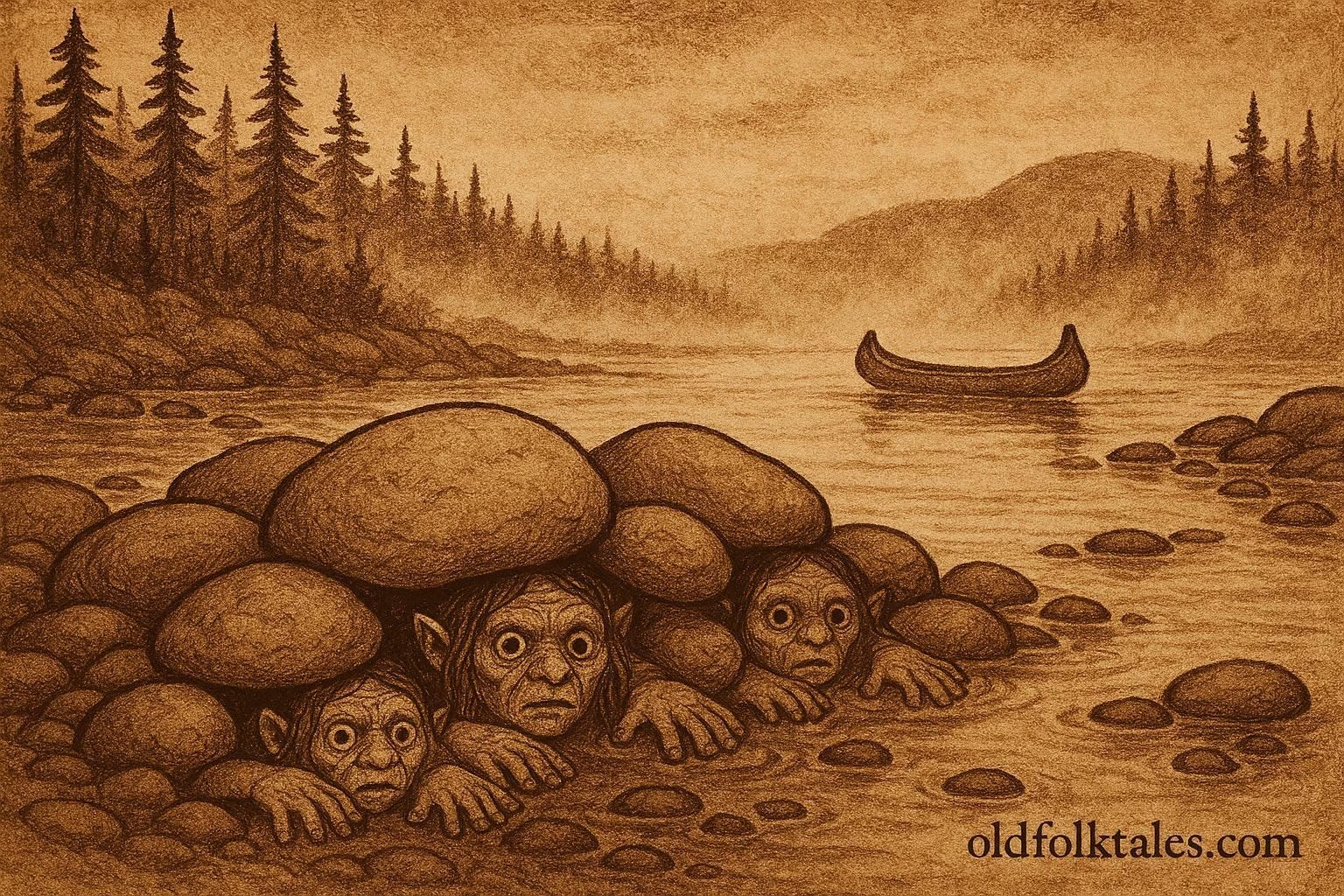
Along the winding rivers of the northern Cree homeland, where the waters move with ancient memory, people speak of the Mannegishi. These small river spirits live beneath flat stones near rapids and hidden bends. They are no larger than a child, with slender bodies, wide eyes that gleam like wet pebbles, and six fingers on each hand. Though mischievous, they are neither fully harmful nor fully kind. They serve as watchers of the river, ensuring that every traveler remembers the power of the water and the need to journey with humility.
Long ago, in the season when the ice had just melted and the river grew restless with new strength, a young hunter named Kaskite arrived at the banks of the Big Stone River. He had spent the winter listening to elders speak of the Mannegishi, yet he doubted that such spirits existed. He believed strength alone could conquer the current, and he scoffed at the warnings carried through generations.
Kaskite prepared his canoe for travel to a distant hunting ground upstream. He ignored the offerings of tobacco that elders placed by the river. He even kicked aside a smooth stone that had been resting upright, a stone the elders called a river marker placed long ago by the Mannegishi themselves. His arrogance stirred the water, and the quiet ripples thickened into darker swirls.
Discover the gods, goddesses, and divine spirits who ruled the heavens and shaped human fate
As he pushed his canoe into the river, he felt the current resist him. Still he paddled hard, believing the river would yield. But beneath the surface, the Mannegishi stirred. Four of them slipped from beneath their stone shelters. Their faces were playful, yet their eyes held the sharp intelligence of spirits who knew the ways of the river better than any human.
One Mannegishi leaped onto a nearby rock and slapped the water with its six fingered hand. A sudden wave rose, far larger than it should have been. Kaskite’s canoe lurched sideways. Before he could correct it, another Mannegishi tugged at the water beneath the canoe, swirling it round and round. Kaskite struggled, shouting to the wind that he needed no help, that he commanded the river just as he commanded his bow and arrow.
The spirits laughed in their high ringing voices. They loved to test humans, especially those who carried pride like armor. They waited for the moment when Kaskite would learn that the river was not something to master but something to respect.
The canoe tipped, and Kaskite plunged into the cold swirling water. He fought the current while the Mannegishi watched with curiosity. They did not intend to drown him. They simply wished to humble him so that he might hear the truth of the river.
As the waters pulled him toward a dangerous rock, Kaskite felt his strength failing. In that moment, he remembered the stories of his grandmother, who told him that spirits will help only those who show honesty and humility. With a breath that tasted of cold river air, he called out, not in anger but in surrender.
He said he was sorry for his pride. He said he respected the river and the spirits who guarded it. He promised to listen to the teachings of those who came before him.
The Mannegishi exchanged glances. His words rang true. Their mischief faded into calm silence. One of them slapped the water gently, creating a smooth path toward a safe bend. Another pushed his canoe toward him so he could climb aboard. A third steadied the current so that it carried him softly instead of pulling him under.
When Kaskite reached the riverbank, trembling but alive, the Mannegishi perched along the stones. They watched him with wide luminous eyes. He bowed his head and placed tobacco on a flat rock in gratitude. The spirits accepted the offering, then slipped beneath the stones once more.
From that day forward, Kaskite traveled the river with care. He listened to the elders, honored the river markers, and reminded young hunters that the Mannegishi were always watching. They did not punish for the sake of cruelty. They reminded people that strength without humility leads to danger, while respect opens paths that even strong currents cannot close.
Travelers still tell of sudden waves that appear out of nowhere and of soft guiding currents that arrive when least expected. Some say they hear faint laughter echoing between the rocks when someone shows too much pride. Others say they feel the gentle lift of the water when they whisper prayers of respect.
The Mannegishi remain guardians of the river, tricksters who test the hearts of those who travel upon it. For the river remembers, the spirits watch, and balance must always be kept.
Explore the shadows of world mythology, where demons test the soul and spirits watch over mankind
Author’s Note
This tale reminds us that the northern rivers carry both wisdom and power. The Mannegishi teach that humility is not weakness but a way of listening to the world around us. When travelers honor the land and its unseen guardians, the journey becomes a partnership rather than a challenge. Respect sustains harmony, and harmony sustains life among the waters of the Cree homeland.
Knowledge Check
-
Who are the Mannegishi in Cree tradition?
They are small river spirits known for trickery and guidance. -
Why did the Mannegishi disrupt Kaskite’s journey?
They wished to humble him for showing arrogance and disrespect. -
What changed the spirits’ behavior toward Kaskite?
His sincere apology and acknowledgment of the river’s power. -
Where do the Mannegishi live?
They live beneath flat stones along riverbanks and rapids. -
What offering did Kaskite leave for the spirits?
He left tobacco on a stone as a sign of respect. -
What is the main lesson of the story?
Respect for nature and humility ensure safety and balance.
Source
Adapted from Cree oral traditions in Myths and Legends of the Northern Tribes collected by Egerton R. Young 1890, Toronto: William Briggs