
In the ancient times when the great civilizations of the north still flourished and the Toltec cities stood proud under the sun, there lived a leader whose name would echo through the generations. Topiltzin Acxitl was not merely a chief or a warrior, though he possessed both wisdom and courage in abundance. He was a man touched by the divine, one who could hear the voices of the gods in his dreams and see visions of paths not yet walked.
The Pipil people, descendants of the proud Nahua nations, had lived for generations in the lands of the Toltecs, that great empire that had once dominated the valleys and mountains of what would one day be called Mexico. But the world was changing. The old order was crumbling like ancient stone temples overtaken by jungle vines. Wars erupted between cities that had once been allies. Drought withered crops in fields that had fed thousands. The gods, it seemed, were calling their people to move, to seek new lands where they might flourish once more.
It was in this time of uncertainty and upheaval that Topiltzin Acxitl began to receive his dreams. Night after night, as he slept beneath the stars or within his dwelling, visions came to him with startling clarity. He saw a land far to the south, a place of volcanic mountains wreathed in mist, of rivers running clear and cold from highland springs, of valleys so fertile that maize grew tall and strong without struggle. He saw his people there, prosperous and at peace, building new cities and raising their children under skies blessed by the gods.
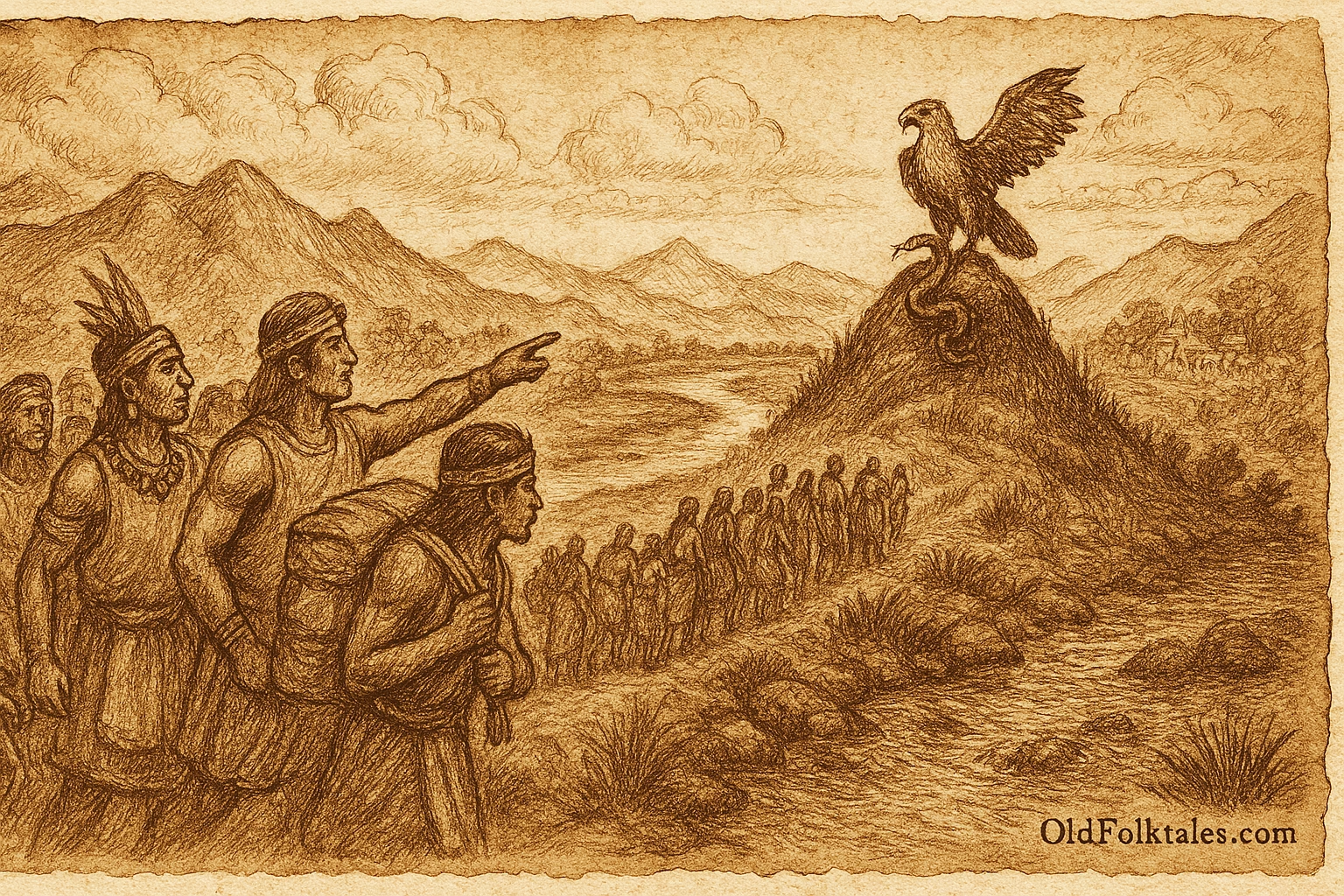
But more than the beauty of this promised land, Topiltzin saw the sign that would mark it as their destined home. In his dreams, an eagle, the sacred bird that connected earth to sky, carried in its talons a serpent, symbol of the earth’s power and wisdom. The eagle would land upon a specific hill in this southern country, and where its talons touched the ground, there the Pipil would build their greatest city.
When Topiltzin Acxitl shared these visions with the elders and priests of his people, some believed immediately, recognizing the unmistakable signs of divine guidance. Others were skeptical, reluctant to leave the familiar lands where their ancestors were buried, where every mountain and river carried stories and memories. But Topiltzin spoke with such conviction, and his reputation for wisdom was so well established, that eventually the people agreed to follow where he would lead.
The preparations for the journey took many moons. The Pipil gathered their most precious possessions, their sacred objects and ceremonial items, their seeds for planting and tools for building. Families said farewell to the graves of their ancestors, promising to honor their memory in the new land. Young warriors trained themselves for the long march ahead, while the elders prayed and made offerings to ensure divine protection for the journey.
When the day of departure finally arrived, it was a bittersweet moment. The sun rose over mountains that had sheltered the Pipil for generations, illuminating temples and homes that would soon stand empty. But as Topiltzin Acxitl raised his staff and pointed south, toward the unknown lands that lay beyond the horizon, hope burned in the hearts of his people. They were not fleeing in defeat but journeying toward destiny.
The migration of the Pipil people became the stuff of legend even as it unfolded. They traveled through territories both familiar and strange, crossing mountains that scraped the belly of the sky, their peaks white with snow even in the warm season. They forded rivers that ran wild with spring floods, carrying children and elders across on rafts constructed from whatever materials they could find. They passed through forests so dense that sunlight barely touched the ground, where the calls of unfamiliar birds echoed through the canopy and jaguars watched from the shadows.
The journey tested them in ways both expected and unexpected. Some fell ill and had to be carried by the strong. Others grew discouraged when weeks turned to months and still the promised land did not appear. There were moments of hunger when game was scarce, moments of fear when they entered territories controlled by peoples who did not welcome strangers, moments of doubt when even Topiltzin Acxitl wondered if his dreams had deceived him.
But each time despair threatened to overcome the travelers, Topiltzin would receive another vision, another confirmation that they were on the correct path. He would gather the people and speak to them of what he had seen, renewing their faith and strengthening their resolve. The priests performed ceremonies at significant places along the route, making offerings and reading signs in the smoke of sacred fires, interpreting the flight of birds and the patterns of clouds as messages from the gods.
As the Pipil pressed southward, the landscape gradually changed. The high, dry plateaus of the north gave way to lands where the air grew thick with moisture, where rain fell more generously, where the earth itself seemed more alive and welcoming. They passed volcanoes that rumbled with the voices of earth gods, their slopes covered with rich black soil that promised abundant harvests.
Then, after what seemed like an eternity of travel but was perhaps several seasons or even years, the Pipil emerged from a mountain pass and looked down upon a valley of extraordinary beauty. Rivers wound through it like silver threads. Lakes reflected the sky like polished obsidian mirrors. The land was green and lush, dotted with groves of trees that bore fruit the travelers had never seen before. In the distance, more volcanoes stood like sentinels, their peaks touching the clouds, their presence both magnificent and humbling.
Topiltzin Acxitl felt his heart surge with recognition. This was the land from his visions. But where was the sign? Where was the eagle that would mark the exact spot where their great city should rise?
The Pipil descended into the valley, moving carefully, reverently, sensing that they walked on sacred ground. For several days they explored, marveling at the abundance of game, the clarity of the water, the richness of the soil. They found evidence that other peoples had lived here in the past or still dwelt in more distant parts of the valley, but this particular region seemed to be waiting, as if held in reserve by the gods for those who would come with the proper signs and blessings.
On the fourth day after their arrival in the valley, as the sun climbed toward its zenith and the people gathered to decide where they would make their first settlement, a commotion arose. People pointed toward the sky, their voices rising in excitement and awe. There, circling high above one particular hill that rose from the valley floor, was an eagle, its wings spread wide to catch the thermal currents, its form majestic against the brilliant blue sky.
The people watched, hardly daring to breathe, as the eagle circled lower and lower. They could see something gripped in its talons, something that writhed and twisted, catching the sunlight. A serpent. The eagle carried a serpent, exactly as Topiltzin’s visions had foretold.
Time seemed to slow as the eagle made its final approach. The great bird descended toward the hill, toward a specific spot where ancient trees grew and stones jutted from the earth in a way that seemed almost intentional, almost arranged. Then, with a movement both graceful and powerful, the eagle landed, its talons gripping the earth, the serpent still held firmly in its grasp.
The sign had been given. The gods had spoken. This was Cuzcatlán, the Land of Jewels, the place where the Pipil would build their new civilization.
Topiltzin Acxitl fell to his knees, tears streaming down his weathered face, his arms raised toward the sky in gratitude and reverence. Around him, the Pipil people erupted in celebration, their voices raised in songs of thanksgiving, their bodies moving in dances of joy. The long journey was over. The promised land had been found. The divine blessing had been confirmed in a sign that none could doubt or deny.
The eagle remained on the hill for several moments, as if ensuring that all had witnessed the sacred moment, then released the serpent and launched itself skyward again, disappearing into the vast expanse of blue above. The serpent, miraculously still alive, slithered away into the undergrowth, returning to the earth from which all life springs.
From that day forward, the Pipil made Cuzcatlán their home. They built their cities on and around the sacred hill where the eagle had landed, creating settlements that honored both the practical needs of a growing civilization and the spiritual significance of their divinely appointed homeland. They terraced the volcanic slopes for agriculture, constructed temples to honor the gods who had guided them, established markets and plazas where people could gather in community.
The land proved as generous as Topiltzin’s visions had promised. Maize grew tall and abundant. Cacao trees produced pods that yielded precious chocolate. Cotton flourished, providing fiber for weaving. The rivers teemed with fish, the forests with game, the sky with birds whose feathers could be fashioned into magnificent ceremonial garments. The Pipil prospered, their population growing, their culture flowering, their influence spreading throughout the region.
Topiltzin Acxitl lived to see his people firmly established in their new homeland. Before he passed into the realm of the ancestors, he ensured that the story of the migration and the divine sign would be preserved, told to each new generation so they would never forget how they came to dwell in Cuzcatlán, never forget the dreams that guided them, never forget the eagle and the serpent that marked them as a people blessed by the gods.
The Pipil became the ancestors of the Nahua peoples of El Salvador, their language and customs spreading throughout the region. Their descendants continued to honor the sacred sites, to tell the stories of Topiltzin Acxitl and the great migration, to remember that they dwelt in the Land of Jewels not by accident or conquest but by divine appointment, guided by visions and confirmed by signs that connected earth to sky, human destiny to divine will.
To this day, the memory of that eagle and serpent remains in the hearts and histories of the peoples who trace their lineage back to those courageous travelers who followed their leader’s dreams across mountains and rivers to find their promised land. The story reminds them of who they are, where they came from, and the sacred covenant between the Pipil people and the land they call home.
Click to read all Myths & Legends – timeless stories of creation, fate, and the divine across every culture and continent
The Moral Lesson
This profound Pipil migration legend teaches us about faith, perseverance, and the importance of heeding divine guidance even when the path forward is uncertain. Topiltzin Acxitl’s willingness to follow his visions despite skepticism and hardship demonstrates the courage required to pursue a better future. The story emphasizes that great achievements often require great journeys, that promised lands are not simply given but must be reached through struggle and determination. Most importantly, it teaches that signs and confirmations come to those who have the patience and faith to complete difficult journeys, and that divine blessing must be recognized and honored when it appears. The eagle and serpent symbolize the connection between heaven and earth, between vision and reality, reminding us that spiritual guidance and material prosperity are intertwined.
Knowledge Check
Q1: Who was Topiltzin Acxitl and why was he chosen to lead the Pipil migration?
A: Topiltzin Acxitl was a Pipil leader distinguished by his wisdom, courage, and spiritual connection to the divine. He was chosen to lead the migration because he received recurring dreams and visions from the gods showing him a promised land to the south where his people would prosper. His reputation for wisdom and his conviction in sharing these visions convinced the Pipil people to trust his guidance and undertake the difficult journey.
Q2: Why did the Pipil people leave their homeland in the Toltec territories?
A: The Pipil left during a time of great upheaval when the old Toltec order was collapsing. Wars between formerly allied cities, drought, and failing crops made life increasingly difficult. More importantly, divine visions indicated that the gods were calling the people to migrate south to a new land where they could build a fresh civilization and prosper under divine blessing. It was both a practical necessity and a spiritual calling.
Q3: What was the significance of the eagle carrying a serpent in Pipil tradition?
A: The eagle carrying a serpent served as the divine sign marking Cuzcatlán as the Pipil’s destined homeland. The eagle represented the connection between earth and sky, the heavenly realm, while the serpent symbolized earth’s power and wisdom. Together, they embodied the union of divine will and earthly reality. This powerful symbol confirmed that the Pipil had arrived at the exact location where the gods intended them to establish their civilization.
Q4: What does the name Cuzcatlán mean and why was it appropriate?
A: Cuzcatlán means “Land of Jewels” in the Nahuatl language. The name was appropriate because the valley the Pipil discovered was extraordinarily beautiful and fertile, with clear rivers, abundant wildlife, rich volcanic soil, and resources that would allow the people to prosper. Like jewels, the land was precious, valuable, and worthy of being treasured. It represented both material abundance and spiritual blessing.
Q5: What challenges did the Pipil face during their migration journey?
A: The Pipil faced numerous challenges including crossing snow-capped mountains, fording dangerous rivers, traveling through dense forests with unfamiliar dangers, illness among travelers, food scarcity when game was scarce, encounters with potentially hostile peoples in territories they passed through, and most significantly, periods of doubt and discouragement when the journey seemed endless and the promised land remained elusive. Only faith in Topiltzin’s visions sustained them.
Q6: How does this origin story function in Pipil and Nahua cultural identity?
A: This migration story serves as the foundational narrative for Pipil and Nahua peoples of El Salvador, establishing their identity as a people chosen and guided by divine will. It connects them to their Toltec and broader Nahua heritage while explaining their presence in Central America. The story validates their claim to the land through divine appointment rather than mere conquest, creates cultural continuity through the remembered journey, and reinforces values of faith, perseverance, and respect for spiritual guidance. It remains central to understanding who the Pipil people are.
Source: Adapted from Pipil Mythology and History by Rafael Lara-Martínez, which documents and analyzes the oral traditions and historical narratives of the Pipil/Nahua peoples of El Salvador.
Cultural Origin: Pipil/Nahua People, El Salvador, Central America






