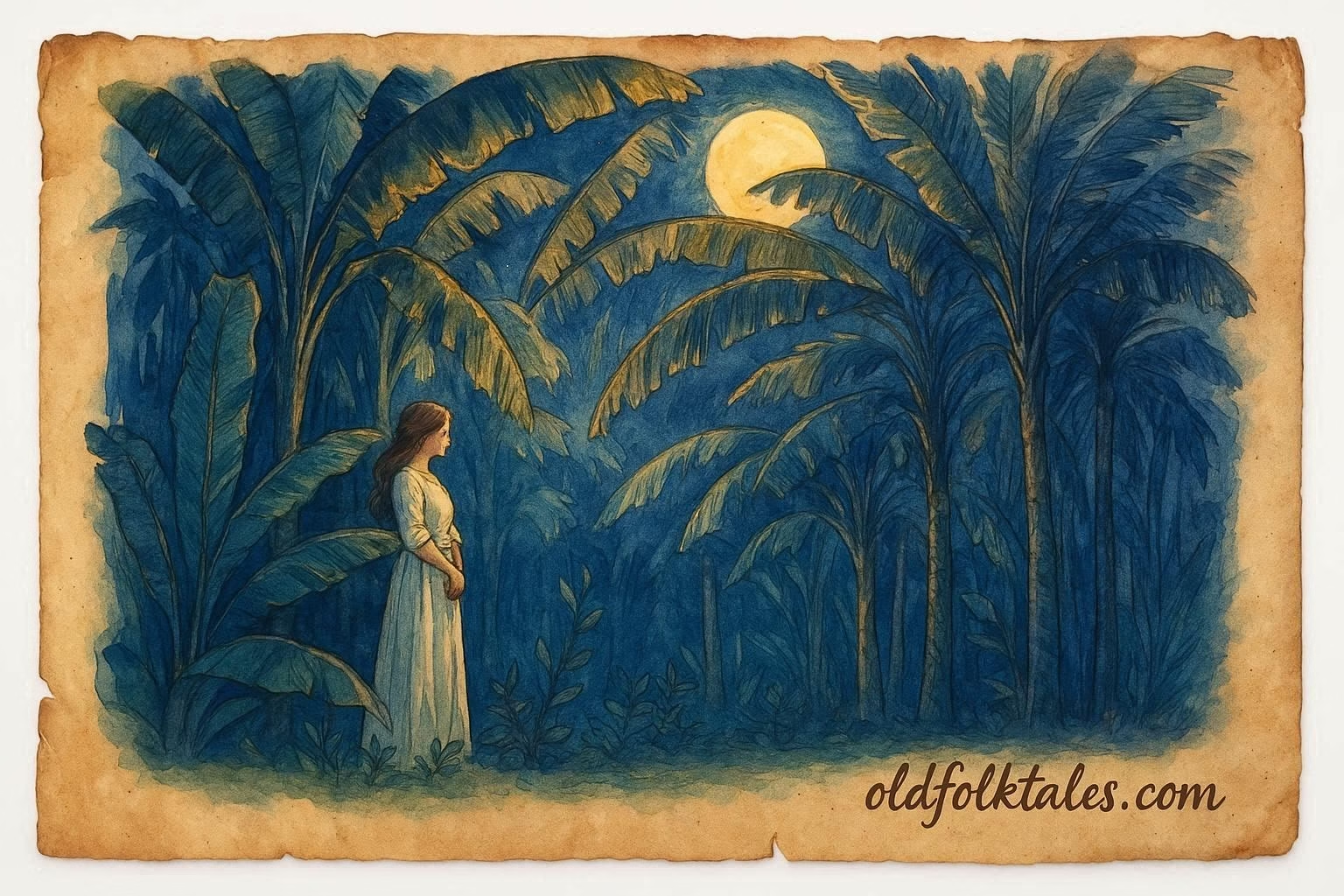
In the humid nights of Southeast Asia, beneath skies veiled with mist and the soft sway of banana leaves, there lingers a tale that chills even the bravest hearts. When the wind sighs through the trees and the scent of frangipani drifts through the air, villagers whisper the name of the Pontianak a ghostly woman spirit whose cry is said to pierce the silence between the living and the dead.
The Pontianak is born not of malice but of sorrow. In Malay and Indonesian folklore, she is the spirit of a woman who died during childbirth or who was betrayed and abandoned. Her death leaves her soul restless, and without proper prayers or burial rites, she rises again as a haunting figure that wanders the earth seeking justice and remembrance.
One such story is told of a young woman named Sari, who lived in a small riverside village surrounded by coconut palms and dense forests. Sari was known for her beauty and her kindness. She sang as she worked and often brought food to the elderly who lived alone. Her laughter, light as a breeze, filled the village with warmth. When she married a local fisherman, joy filled her home, and soon she became pregnant with their first child.
But misfortune shadowed her happiness. Her husband, while returning from the sea one night, fell ill with a fever that no healer could cure. Within a week, he was gone, leaving Sari alone and heartbroken. The villagers pitied her but were powerless to ease her grief. When her time to give birth arrived, a fierce storm swept across the land. The midwife could not reach her, and Sari labored alone through the thunder and rain. By morning, both she and her newborn child were dead.
The villagers wept and buried her beneath a grove of banana trees near the riverbank, wrapping her body in white cloth according to custom. Yet in their haste, they neglected to perform the full set of burial prayers that guide the soul to rest. It was a small omission, one made out of sorrow and exhaustion, but it left the spirit unanchored between this world and the next.
For several nights, the village dogs howled without reason. Chickens refused to roost near the grove. Children woke crying, claiming to hear a woman weeping near the river. A strange fragrance of flowers, both sweet and decaying, clung to the air. The elders knew the signs. They warned that Sari’s spirit had returned as a Pontianak a soul burdened with longing, pain, and vengeance.
One evening, a hunter named Rahman, known for his bravery, dismissed the old stories as superstition. He set out to hunt wild boar near the banana grove, carrying only his spear and a lantern. As he entered the forest, a deep stillness surrounded him. The usual sounds of frogs and night birds vanished. Even the air felt heavy, thick with the scent of frangipani.
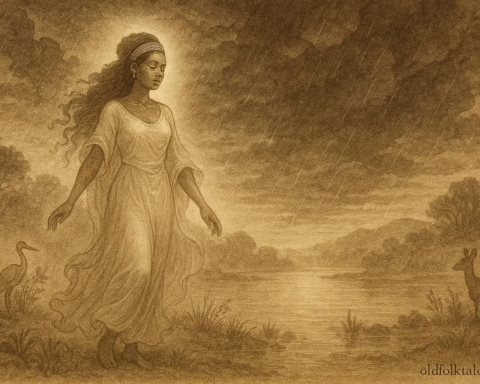
From the shadows beneath the banana leaves, a figure appeared. It was a woman dressed in flowing white, her long black hair cascading down her shoulders. Her face was pale, her lips red as betel nut, and her eyes gleamed like dark pools of sorrow.
“Who are you?” Rahman asked, his voice barely steady.
The woman smiled faintly. “I am lost,” she said softly. “I cannot find my child.”
Her voice was so gentle that Rahman felt pity rather than fear. He took a cautious step forward, lowering his lantern. But as the light flickered, he saw that her feet did not touch the ground. The sweet scent turned sour. Her smile widened unnaturally, revealing sharp teeth glistening in the light. Her eyes flared red, and she released a scream so piercing it seemed to tear through the night.
Rahman stumbled backward, dropping his spear. He fled through the forest, chased by the echo of her shriek until he reached the safety of the village. He told the elders what he had seen. They nodded solemnly. “Sari’s spirit suffers,” said the oldest among them. “She cries not only for her child but for the prayers that were never said.”
The next day, the villagers gathered before the banana grove. They brought offerings of rice, flowers, and incense. A wise shaman, or bomoh, came to perform the rites that had been forgotten. He lit candles and recited verses to guide the lost soul to rest. He called upon the forces of compassion, asking that the spirit be freed from pain and vengeance.
As his chant filled the night air, the wind began to stir. The banana leaves rustled softly, and a faint cry echoed one last time before fading into silence. The scent of flowers lingered, then slowly vanished. The villagers knew the Pontianak had been calmed at last.
From that time on, they tended the grove carefully. Each month they left small offerings to honor the spirit and the memory of Sari. The village prospered again, its nights peaceful and free from haunting cries. Yet the legend lived on, a reminder of the delicate balance between the living and the dead, and of the duty the living owe to those who have gone before.
Even today, people in Malaysia and Indonesia speak of the Pontianak with both fear and respect. She is not merely a monster but a symbol of love and loss turned tragic. Her story warns against neglecting the rituals of the dead and reminds the living that injustice, even in death, demands remembrance and reconciliation.
Author’s Note
The Pontianak embodies the deep connection between emotion, morality, and the spirit world in Malay and Indonesian tradition. She represents both sorrow and justice, showing how pain can turn to vengeance when ignored. This myth teaches compassion for those who have suffered and insists that the living must honor the dead with respect and ritual care. The Pontianak’s legend, though chilling, is ultimately about healing and remembrance the transformation of pain into peace.
Knowledge Check
1. What causes a woman to become a Pontianak?
She becomes a Pontianak when she dies during childbirth or after being wronged, especially if burial rites are neglected.
2. What signs reveal the presence of the Pontianak?
A sweet yet decaying scent of frangipani, the cry of a woman, and eerie silence in the night.
3. Who was Sari, and what was her fate?
Sari was a kind village woman who died in childbirth and returned as a Pontianak because proper prayers were not performed.
4. How was the Pontianak’s spirit finally calmed?
A shaman performed sacred rituals and offerings, guiding her spirit to rest.
5. What does the Pontianak symbolize in Southeast Asian culture?
She symbolizes sorrow, injustice, and the spiritual need for respect and remembrance.
6. What moral does the story teach?
That neglect of spiritual duties and compassion can create lasting unrest, while remembrance brings peace.
Source:
Adapted from the Malay folktale “The Pontianak” in Malay Magic, collected by Walter William Skeat and Charles Otto Blagden (1900), London: Macmillan & Co.
Cultural Origin:
Malaysia and Indonesia