In the ancient lands of Aotearoa, where the sea mist rises each dawn to kiss the green mountains, stories were once told beside the glow of the wharenui fire. Among them was the tale of the Pontu, the underworld spirits who walked the night and guarded the paths of the dead.
The Māori people believed that the souls of those who passed away traveled toward Te Rerenga Wairua, the sacred cliff at the far northern tip of the land. There, the spirits descended into the sea and returned to Hawaiki, the ancestral homeland beyond the horizon. Along the way, certain valleys and forest trails were known to be the resting places of these wandering spirits, and no living person dared disturb them.
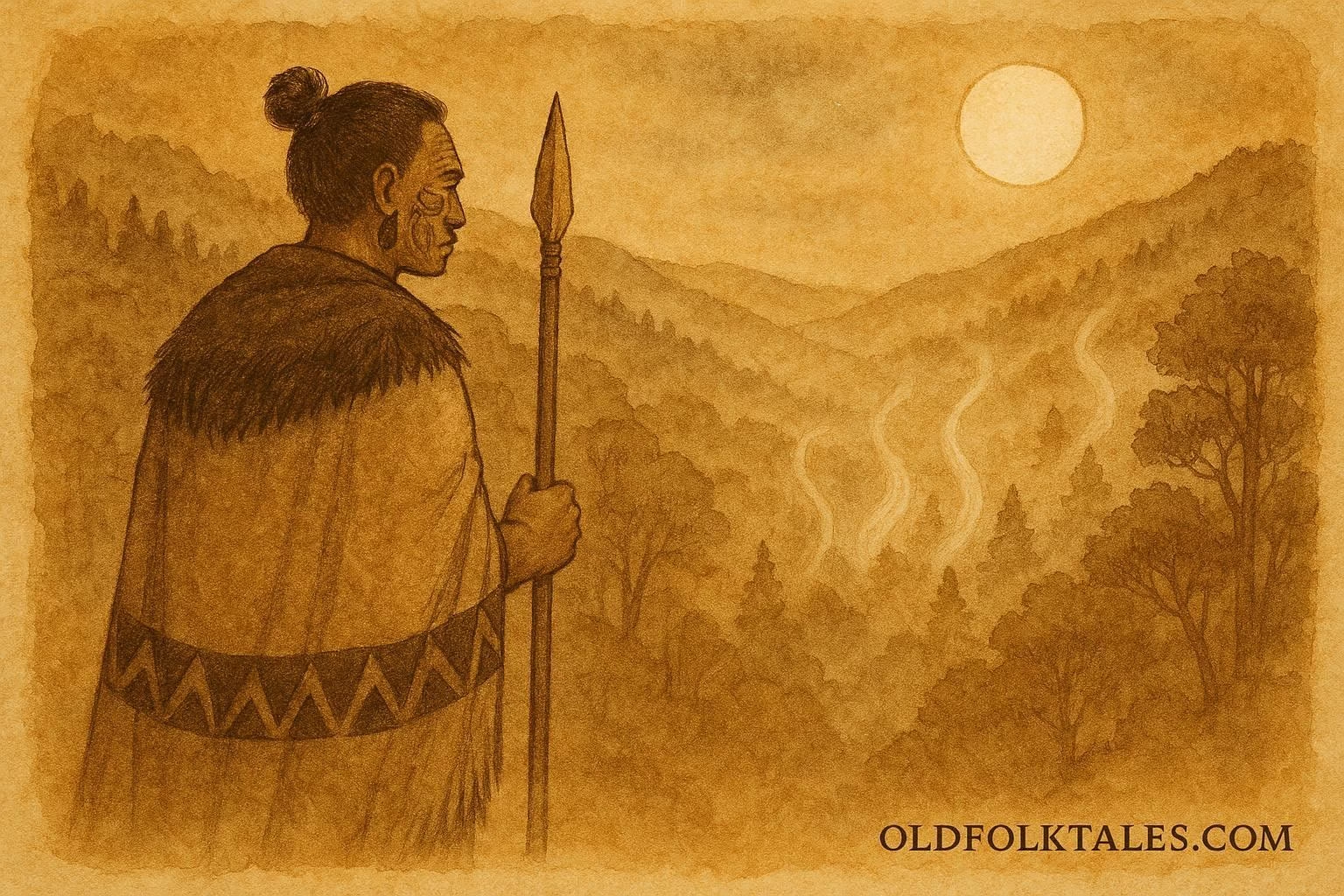
But one hunter, named Hemi, was proud of his courage. He lived in a small pā near the river mouth, where the bush was thick with birds and the nights echoed with the calling of ruru owls. When the tribe prepared for a great feast, Hemi offered to hunt alone and bring back food for the elders. His companions warned him not to travel through the valley of Puketapu, for it was whispered that the Pontu passed there each night. Hemi laughed softly. “I will walk in the daylight and return before the sun sinks. No spirit can touch a man whose heart is brave.”
Encounter dragons, spirits, and beasts that roamed the myths of every civilization
With spear and woven bag, he set off at dawn. The forest air was heavy with damp fern scent, and golden light filtered through tall rimu trees. Birds called from every branch, but as he entered the deeper valley, their songs fell silent. Only the faint sound of wind among the leaves remained.
He reached the river bend and found it strangely still. The water reflected not the sky but a soft grey shimmer, as though another world lay just beneath its surface. Hemi bent down to drink, and when he looked up, a faint figure stood on the opposite bank, a shadow in human form, its eyes deep as midnight pools.
A coldness passed through him. Remembering the warnings, he spoke in the language of greeting, “Haere mai, e hoa. I mean no harm.” But the figure did not move. Then, in the next blink, it was gone.
When he turned to leave, Hemi felt a heavy breath at his neck. His vision blurred, and darkness crept over him like mist. Somehow he found the path home, stumbling through the forest until his knees gave way at the edge of the village.
That night his body shook with fever. His eyes rolled, and strange words poured from his mouth, words his family did not recognize. The tohunga, the tribal healer, came and listened in silence. “The Pontu has entered him,” she said gravely. “He has crossed the path of the dead.”
The people prepared a circle of sacred fern leaves around Hemi. They lit a small fire and chanted the karakia of cleansing, calling upon the ancestors for mercy. The tohunga sprinkled water gathered from three sacred springs and spoke the ancient words that separate the world of the living from the night realm of the dead.
As the chants rose, Hemi’s body quieted. His breathing slowed. In a dreamlike vision, he saw himself standing once more beside the grey river. The shadow spirit waited there. But now its face was that of an old man, an ancestor whose eyes carried sadness, not anger. “You forgot the tapu, the sacred boundary,” the spirit whispered. “Bravery without reverence brings sickness.”
Hemi bowed his head. “Forgive me, forefather. I did not mean to trespass.” The spirit lifted a hand, and the river began to shine with moonlight. “Remember that courage must walk with respect,” it said, and faded into the water.
When Hemi awoke, dawn light filled the hut. His fever had left him. The tohunga smiled, knowing the spirit had departed. Hemi rose weak but grateful. That evening he placed a carved offering of wood and shell at the edge of Puketapu Valley, singing a song of apology. From that time on, the people of his village taught their children that the pathways of the dead were not places for mortal pride.
Generations later, the story of Hemi and the Pontu was still told when the moon hung low over the sea. It reminded all who listened that strength without humility invites imbalance, and that the living and the dead share one breath beneath the same sky each deserving of respect.
Explore the shadows of world mythology, where demons test the soul and spirits watch over mankind
Author’s Note
This Māori tale reveals the delicate harmony between the worlds of the living and the dead. The Pontu are not monsters but guardians of boundaries. The hunter’s illness is not punishment but a lesson about reverence and spiritual order. Māori tradition teaches that courage must be guided by understanding and that every life, every spirit, has its sacred place in the rhythm of existence.
Knowledge Check
1. Who are the Pontu in Māori tradition?
They are underworld spirits who guide and guard the souls of the dead on their journey to the afterlife.
2. Where do spirits travel after death according to Māori belief?
They journey to Te Rerenga Wairua, the sacred northern cape from which souls depart to Hawaiki.
3. What mistake does Hemi make in the story?
He enters a valley that is tapu, a sacred pathway of spirits, showing pride instead of reverence.
4. How is Hemi healed after being possessed by the spirit?
Through ritual chants, sacred water, and offerings led by the tribal healer, the tohunga.
5. What is the moral lesson of the tale?
True bravery respects the sacred laws that maintain harmony between the living and the dead.
6. What cultural value does this story emphasize?
It highlights balance, humility, and the Māori belief in tapu, the sanctity of spiritual boundaries.