
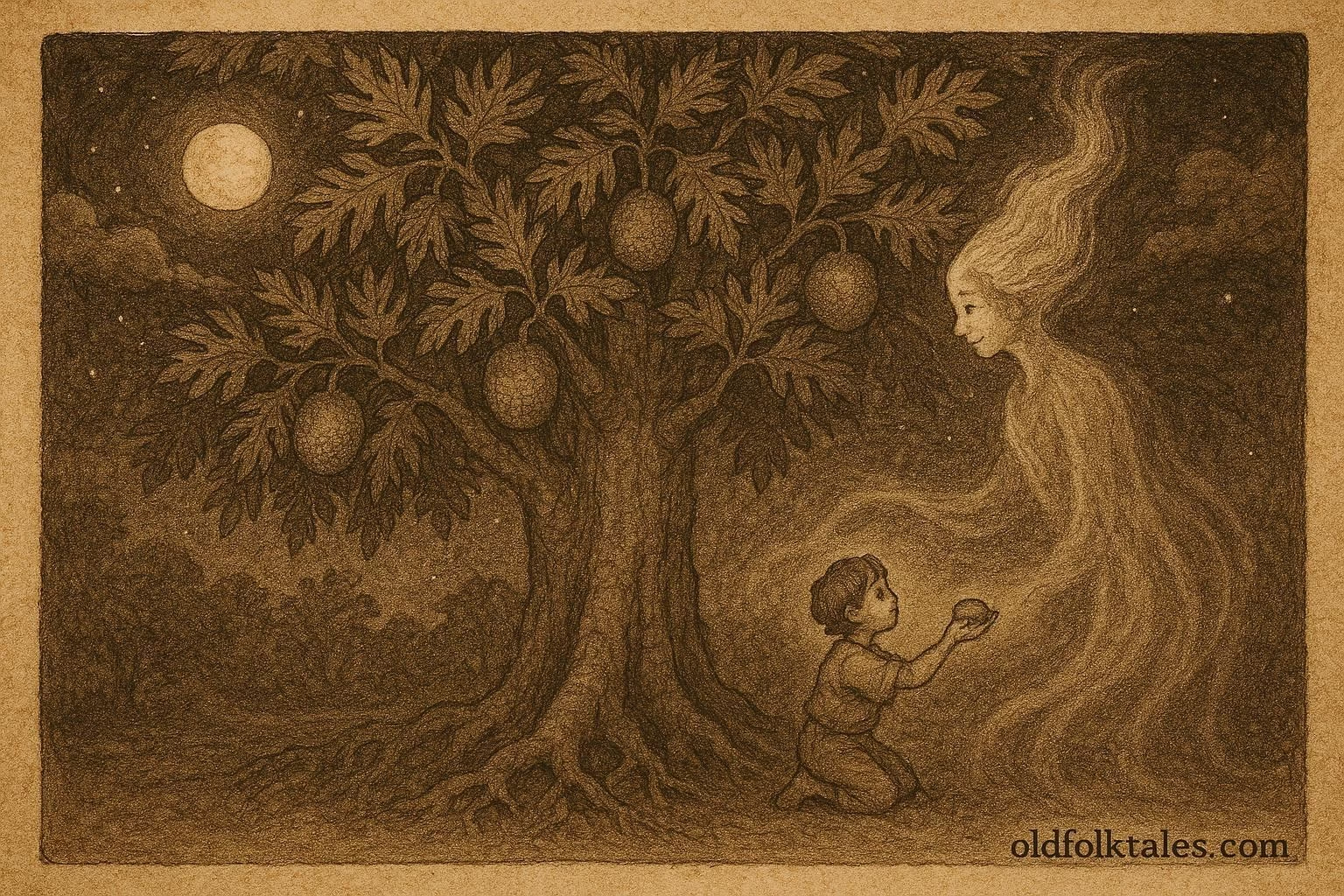
Long before the modern villages of the New Georgia Islands, there stood a massive breadfruit tree at the edge of a quiet settlement. Its branches spread wide and its fruits ripened in great clusters, yet no one dared to pluck them. The people said that beneath its shade lived a shadow spirit that watched the village with hungry patience. They told stories of cold breezes that rose from nowhere and of whispering shapes that slipped between the roots when the moon grew thin.
Parents warned their children never to walk near the tree after dusk. Elders avoided even glancing in its direction during ceremonies. Although the breadfruit tree was old and heavy with fruit, it remained untouched season after season, as though guarded by an unseen presence.
Among the villagers lived a child named Lasa, whose curiosity refused to rest. Lasa had heard the stories since early childhood, yet each tale brought more questions than fear. Why would a spirit choose to live beneath a breadfruit tree? Why had it never harmed anyone directly? And why did the elders avoid speaking of the spirit’s origin?
Discover the gods, goddesses, and divine spirits who ruled the heavens and shaped human fate
One afternoon, as the sun lowered toward the horizon, Lasa followed a group of women to the river. While they filled their pots, the conversation turned to the haunted tree. One woman spoke of a cousin who saw the spirit’s eyes gleaming red in the dark. Another claimed that the spirit fed on the fear of those who approached it. The more Lasa listened, the stronger the feeling grew that the village did not truly understand the spirit at all.
That night Lasa lay awake listening to the wind rustle the roofs of pandanus leaves. The thought came as simple and natural as breathing. If the spirit fed on fear, what would happen if someone approached it without fear? What if someone offered kindness instead of trembling avoidance?
Lasa rose from the mat and tiptoed to the family hearth. A single piece of roast taro, left from the evening meal, lay on a woven leaf tray. Lasa wrapped it carefully and stepped outside. The moon shone brightly, casting silver patterns through the coconut palms. The village slept quietly, unaware of the small figure walking toward the forbidden tree.
As Lasa neared the breadfruit grove, the air grew still. Even the insects stopped singing. The tree loomed ahead, its trunk dark and wide, its branches stretching like the arms of a sleeping giant. Something stirred beneath the roots. A shape shifted in the dimness. Lasa felt a sudden chill along the skin but did not retreat.
A whisper floated through the air. It sounded like leaves brushing together, yet the night was windless. The shadow spirit emerged slowly, its form thin and wavering like smoke. It drifted along the ground and rose until it hovered before the child. Two faint lights glimmered where eyes should be.
Lasa took a single step forward and held out the wrapped taro. The spirit flickered, as though confused by the gesture. The lights brightened. The whispering sound shifted into something almost like speech. Lasa felt no fear, only a deep sadness that the spirit seemed so solitary.
The spirit drifted closer, then circled Lasa, its form trembling like a flame. Suddenly the lights vanished, and the shadow collapsed to the ground. It spread across the roots like spilled ink and then rose again, but this time it took on a clearer shape. The outline of a person appeared within the darkness, and a quiet voice echoed in Lasa’s mind.
Long ago, the voice said, I was a guardian of this land. My people tended the tree, and I watched over them. When the village changed and the memory of the old ways faded, my name was forgotten. Fear replaced remembrance. I remained here, waiting for someone who could listen.
Lasa trembled, not from fear but from awe. The shadow spirit continued.
I do not hunger for flesh. I do not seek to harm. I feed on fear because it is the only emotion left for me. Your offering shows that the bond between spirit and people can live again.
The spirit leaned close and the darkness around it softened. Take this to your elders. Tell them I will no longer hide in the shadows if they remember the old rites of respect.
With that, the spirit touched the breadfruit trunk. A faint glow spread through the bark and up into the branches. The fruits brightened, as though awakening for the first time in generations.
Lasa bowed and hurried home. At first the elders did not believe the story, but when they visited the tree at dawn they saw no frightening shape waiting beneath it. The air felt peaceful. The fruits hung ripe and heavy, ready for harvest.
The elders prepared offerings of gratitude. They placed woven shell ornaments near the roots and spoke the names of guardians who once watched over the land. From that day forward, the breadfruit tree became a place of remembrance rather than fear.
Lasa’s bravery restored the forgotten bond, reminding the village that spirits often become terrifying only when people forget who they once were.
Author’s Note
This story highlights Melanesian beliefs that spirits inhabit trees, groves, and natural landmarks. Many early ethnographic accounts show that these spirits were not inherently dangerous but became feared when cultural memory faded. This retelling focuses on reconciliation and the restoration of traditional relationships with the land.
Knowledge Check
-
Why did the villagers fear the breadfruit tree?
They believed a shadow spirit lived beneath it and fed on the fear of those who approached. -
What motivated Lasa to visit the tree at night?
Her curiosity and her belief that kindness instead of fear might change the spirit. -
How did the shadow spirit react to Lasa’s gift of taro?
It was confused at first, then softened, revealed its origin, and accepted the offering. -
What did the spirit reveal about its origin?
It said it was once a guardian of the land whose memory was forgotten when the village abandoned old rites. -
How did the elders respond after learning Lasa’s story?
They visited the tree, offered gifts of remembrance, and restored respectful traditions. -
What central message about spirits does this story communicate?
That spirits often become frightening when forgotten, and harmony can return through courage and respect.






