In the beginning of days, before the first drum sounded or the first story was told, there was no distance between heaven and earth. They were not separate realms divided by vast emptiness, but husband and wife, lovers pressed so close together that their bodies touched at all times. Nyame, the Sky God, lay upon Asase Yaa, the Earth Mother, in an embrace so intimate that humanity lived in the narrow space between their forms, stooping and crawling, never able to stand upright or raise their heads toward the heavens.
This was the first age, when the divine was not distant but immediate, when every breath humans took mingled with the breath of gods. Nyame’s chest pressed against the tallest trees, and Asase Yaa’s body formed the ground beneath every footstep. The people knew no loneliness, for the Sky Father was always present, always watching, always near enough to touch. His voice rumbled like thunder in their ears, and his tears fell as rain upon their shoulders.
Click to read all Myths & Legends – timeless stories of creation, fate, and the divine across every culture and continent
But with such closeness came burden. The people could not build their homes tall, for there was no room. They could not dance with arms raised, for they would strike Nyame’s belly. They could not grow their crops high, for the stalks would press against the sky itself. And most troublesome of all, when they cooked their meals and tended their fires, the smoke rose upward as smoke always does and drifted into Nyame’s face, stinging his eyes and dirtying his celestial countenance.
Day after day, the smoke climbed. Morning fires for cooking, evening fires for warmth, ceremony fires for celebration all sent their gray clouds upward into Nyame’s divine face. The soot settled upon his luminous skin, the ash caught in his throat, and still the people continued, for they had to eat, had to stay warm, had to live.
An old woman named Aberewa was the one who finally drove Nyame away, though she meant no disrespect. She was pounding fusin the sacred yam in her great wooden mortar, as the women of her village had done since time began. The pestle was long and heavy, and Aberewa was enthusiastic in her work, raising it high with each stroke to break the yam into proper smoothness for her family’s meal.
Up and down the pestle flew, up and down, and with each upward thrust, it struck Nyame in his side. Once, twice, three times the Sky God endured the blows patiently, for he loved humanity and understood their need to prepare their food. But Aberewa’s strength was great, and her pestle was relentless. Again and again it jabbed into Nyame’s ribs, and finally, combined with the endless smoke that had been gathering for generations, the Sky God’s patience broke.
“Enough!” his voice rolled across the world like thunder before rain. “I have loved you as a father loves his children, pressed close to give you comfort and protection. But you think nothing of my nearness. You strike me with your tools. You choke me with your smoke and ash. You have chosen the smoke of your fires and the convenience of your cooking over the blessing of my presence.”
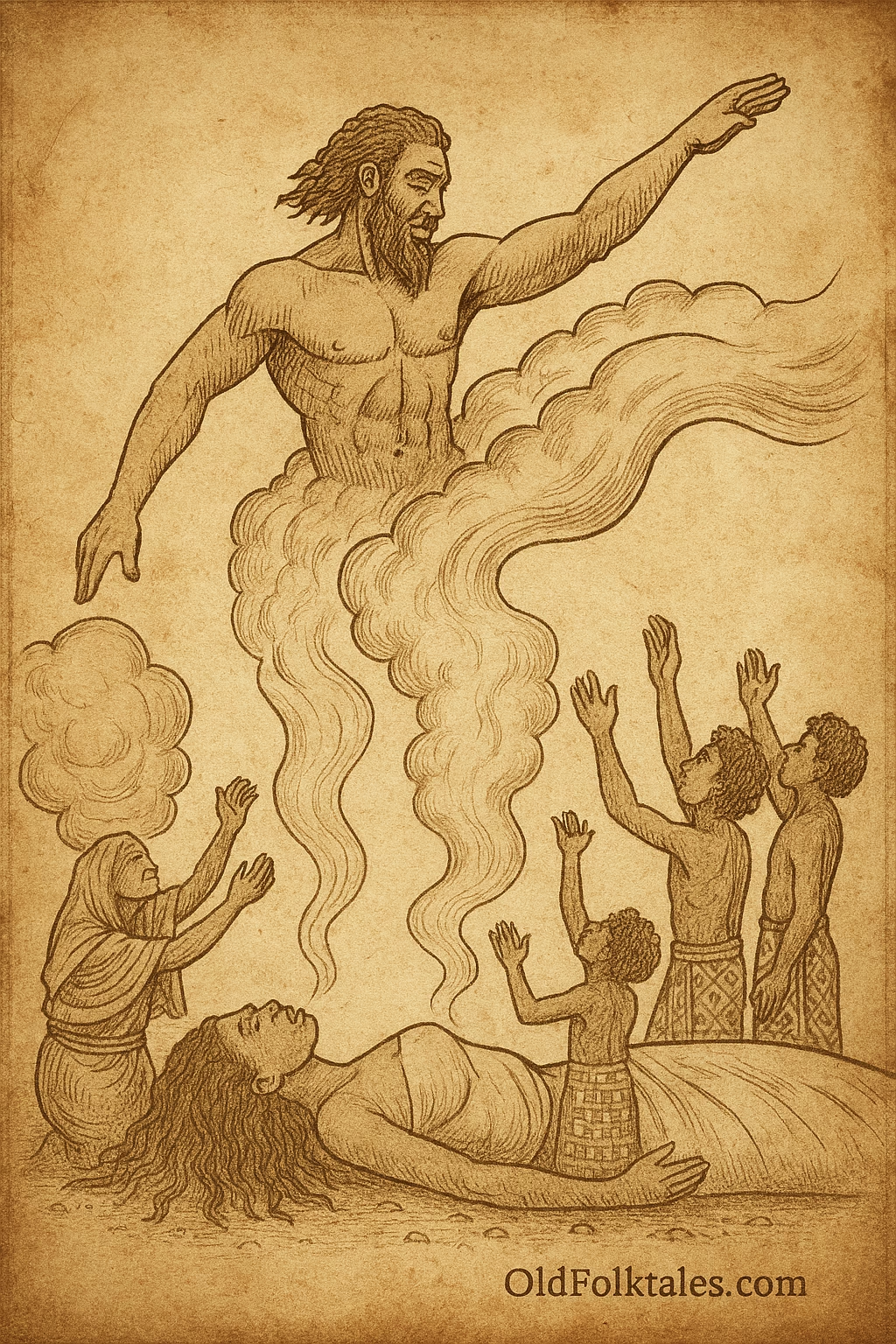
The people fell to their knees, suddenly understanding what they had taken for granted. They cried out, begging forgiveness, reaching upward with their hands. The children wept, and the elders tore their clothes, for they realized they had grown careless with the sacred.
But Nyame had made his decision. Slowly, like a great cloth being lifted, he began to rise. Higher and higher he drifted, pulling away from his bride Asase Yaa for the first time since creation. The Earth Mother cried out for her husband, reaching upward, but she could not follow her nature was to remain below, solid and fixed, while his was to be vast and high.
As Nyame ascended, space opened between heaven and earth. For the first time, humans could stand upright. For the first time, they could raise their arms above their heads. For the first time, they could see the full dome of the sky stretching away into blue distance. And for the first time, they felt the terrible ache of separation from the divine.
“Nyame!” they called. “Come back! We will make no more smoke! We will cook no more fires! Return to us!”
But the Sky God continued rising until he reached the place where he dwells now, far above the highest mountains, beyond the reach of any mortal hand. When he finally stopped and looked down at the people below so small now, so distant his voice came to them changed, no longer the intimate whisper of a close companion but the rolling pronouncement of a distant king.
“You chose smoke and fire over my nearness,” Nyame declared. “Now I will dwell here, in the high places, where your smoke cannot reach me and your pestles cannot strike me. But I have not abandoned you entirely, children of Asase Yaa. When you need rain, pray to me. When you need blessing, call my name. I will send rain when you pray with sincere hearts, but I will never again dwell beside you as I once did. The bond between us is broken by your carelessness, and what is broken cannot be made whole again.”
And so the separation was complete. Heaven and earth, once joined in sacred marriage, became separate realms. Asase Yaa remained below, solid and nurturing, giving humanity her soil to plant and her body to walk upon. Nyame remained above, vast and powerful, sending rain and thunder, blessing and judgment, but always distant, always apart.
Prayer became the bridge between the two the only way for earthbound humanity to reach the Sky God who had once been close enough to touch. When the Akan people lift their voices in prayer, they are reaching across the gulf that their ancestors created, trying to restore, if only for a moment, the intimacy that was lost when smoke and carelessness drove the divine away.
The old woman Aberewa lived the rest of her days in sorrow, knowing that her pestle had struck the final blow. But the priests would later say that it was not her fault alone it was the accumulation of all humanity’s small thoughtlessnesses, all their taking of the sacred for granted, that finally pushed Nyame skyward. She was merely the last stroke in a pattern that had been building since the first fire was lit.
To this day, when the Akan people look upward at the vast blue sky, they remember: once, heaven was near enough to touch. Once, the divine pressed close in loving embrace. And they remember too that it was humanity’s own actions thoughtless, careless, ungrateful that created the distance they now must cross with prayer.
Author’s Note
This Akan myth powerfully addresses the human experience of divine distance. Why does God feel far away? Why must we pray instead of simply speaking face to face? The story answers with uncomfortable honesty: we created the separation through accumulated carelessness. The smoke represents all the small ways we prioritize our immediate needs over sacred relationship not through malice, but through thoughtlessness. Yet even in judgment, Nyame shows mercy: he doesn’t abandon humanity entirely but establishes prayer as the bridge. This myth teaches that intimacy with the divine requires mindfulness, gratitude, and reverence for what we might otherwise take for granted. The distance we feel from God may be a distance we ourselves have created.
Knowledge Check
1. What was the relationship between Nyame and Asase Yaa before the separation?
Nyame (Sky God) and Asase Yaa (Earth Mother) were husband and wife, pressed so close together that humans had to stoop and crawl in the narrow space between their bodies.
2. What two main problems did humanity cause that angered Nyame?
The people constantly sent cooking smoke upward into Nyame’s face, dirtying and choking him, and the old woman Aberewa repeatedly struck him with her pestle while pounding fusin (yam).
3. Who was Aberewa and what was she doing when the final separation occurred?
Aberewa was an old woman who was pounding fusin (yam) in her wooden mortar. Her pestle struck Nyame repeatedly in the ribs, delivering the final provocation that caused him to withdraw.
4. What did Nyame promise humanity after he withdrew to the high heavens?
Nyame promised that when people prayed to him with sincere hearts, he would send rain and blessings, though he would never again dwell close beside them as he once had.
5. What became the “bridge” between heaven and earth after the separation?
Prayer became the bridge between the divine and mortal worlds the only way for earthbound humanity to reach the Sky God who had withdrawn to the heavens.
6. What does the myth suggest about why divine intimacy was lost?
The myth suggests that divine intimacy was lost through accumulated human carelessness and thoughtlessness taking the sacred for granted while prioritizing immediate needs like cooking and daily tasks over reverence for divine presence.
Cultural Context: Akan (Ghana) mythology, Ashanti spiritual traditions, West African cosmology
Source Reference: Meyerowitz, Eva L.R. The Sacred State of the Akan (1951); Rattray, R.S. Ashanti (1923)