
In the Santa Cruz Islands, part of the vast Solomon Islands archipelago, there existed a form of currency more precious than gold, more valued than any metal or stone. This was the red feather money, known as tevau, crafted from the crimson plumage of rare forest birds and used only in the most sacred and important ceremonies. To possess red feather money was to hold power and prestige, to command respect and influence in matters of marriage, peace agreements, and spiritual obligations.
The islands themselves rose from the turquoise waters of the Pacific like emeralds crowned with jade. Dense tropical forests covered the volcanic slopes, their canopies so thick that even at midday, the forest floor remained dim and mysterious. Ancient trees with buttressed roots spread their branches toward the sky, creating a living cathedral where shafts of filtered sunlight illuminated clouds of mist that drifted between the trunks. The air was heavy with moisture and alive with the calls of countless birds, the rustling of unseen creatures, and the whisper of spirits that dwelled in the deep shadows.
Click to read all Myths & Legends – timeless stories of creation, fate, and the divine across every culture and continent
In one of the coastal villages lived a man named Ravu, ambitious and restless, always looking for ways to increase his wealth and status. He had watched as elders and chiefs displayed their red feather money during ceremonies, the brilliant crimson coils catching the light like living fire. Each piece represented not just wealth but connection to the ancestors, to the spirits, and to the sacred traditions that bound the community together.
Ravu’s desire to possess such wealth grew until it consumed his thoughts. He knew that the red feathered birds lived deep in the forest’s heart, in places rarely visited by ordinary men. These birds, with plumage the color of sunset and blood, were not merely creatures of flesh and feather. They were protected by forest spirits, ancient guardians who maintained the balance between the human world and the realm of the unseen.
One morning, as the sun broke through the morning mist and painted the forest canopy gold, Ravu prepared himself for the journey. He gathered his tools, a woven basket, and offerings he believed would please the spirits. His wife warned him to be careful, to remember the old ways and show proper respect, but Ravu’s mind was already deep in the forest, imagining the wealth he would soon possess.
The path into the forest was well worn at first, used by hunters and those gathering medicinal plants. But as Ravu ventured deeper, the trail grew faint, eventually disappearing entirely beneath a carpet of fallen leaves and twisted roots. The trees grew closer together here, their bark covered in luminescent moss and climbing vines. The sounds of the village faded away, replaced by the symphony of the deep forest: the drip of water from high leaves, the distant cry of exotic birds, and underneath it all, a profound silence that seemed to watch and wait.
Ravu pushed forward until he heard what he had been seeking: the distinctive call of the red feathered birds. His heart raced as he crept toward the sound, moving as quietly as his excitement would allow. Through a gap in the foliage, he saw them: three magnificent birds perched on branches, their crimson feathers so vibrant they seemed to glow with inner fire. Each feather was worth a fortune; together, they represented more wealth than most men accumulated in a lifetime.
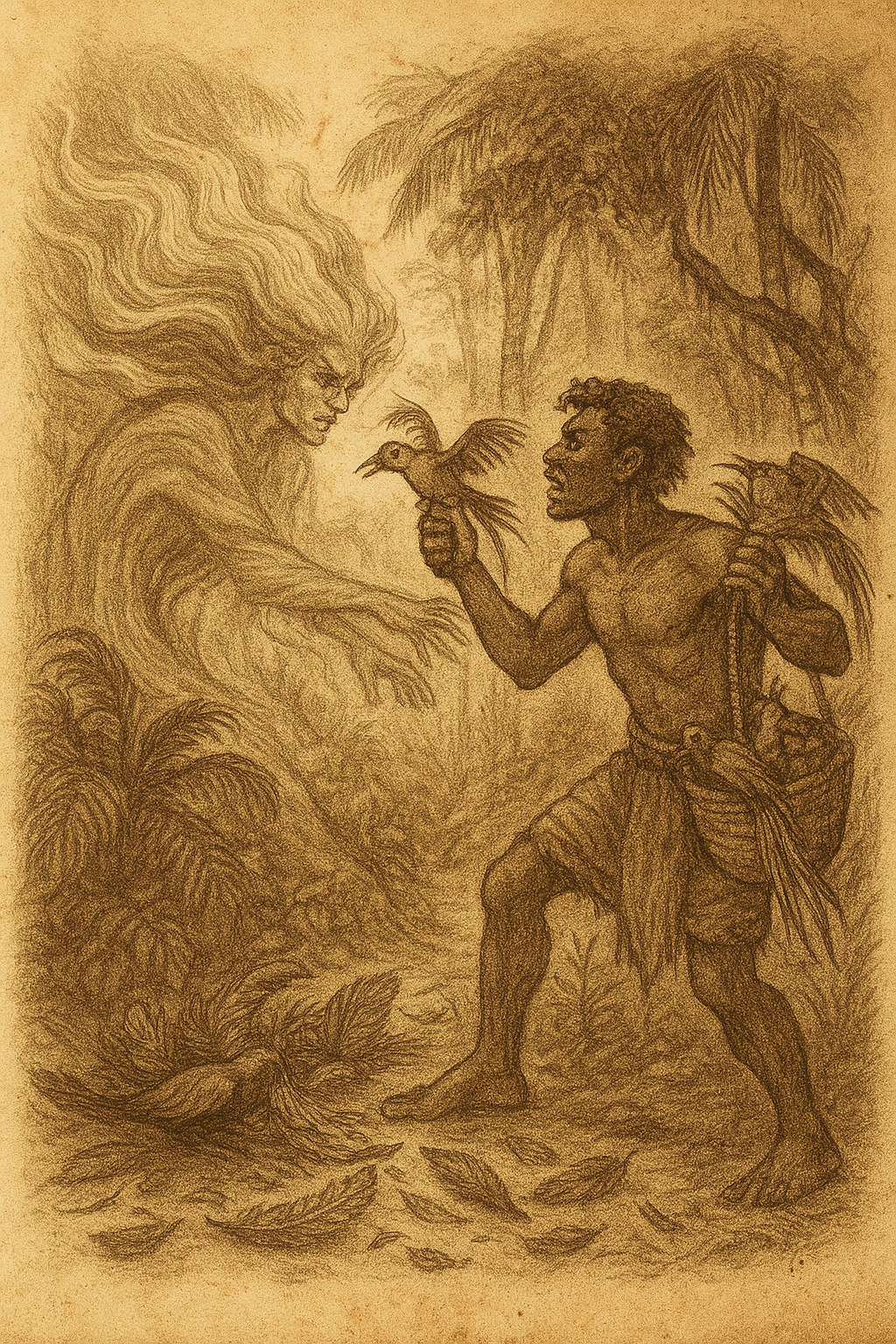
As Ravu reached toward the nearest bird, the air around him grew suddenly cold. The forest sounds ceased abruptly, as if every creature held its breath. A figure materialized before him, neither fully solid nor entirely transparent, a being that seemed woven from mist, shadow, and filtered sunlight. This was a forest spirit, one of the ancient guardians who protected the sacred birds and maintained the delicate balance of the natural world.
The spirit’s voice, when it spoke, sounded like wind through bamboo, like water over stones, like the creaking of ancient trees. “You may take feathers, but never harm the birds. And always offer a gift in return.”
The words were clear, the rules simple, the warning unmistakable. Ravu nodded, overwhelmed by the spirit’s presence, and for a moment, fear tempered his greed. The spirit faded back into the forest’s texture, leaving Ravu alone with the birds and his basket.
At first, Ravu followed the spirit’s instructions. He waited patiently for naturally shed feathers, gathering them reverently from the forest floor and branches where the birds preened. He left small offerings: woven bands, shells, and food. But as his basket slowly filled, impatience gnawed at him. The process was too slow. At this rate, he would need weeks to gather enough feathers for even a single coil of currency.
Greed, which had been merely simmering in his heart, began to boil. Why should he wait for the birds to drop their feathers naturally when they sat right before him, covered in the wealth he desired? Why should he follow rules when such riches were within arm’s reach?
Ravu’s hands moved before his conscience could stop them. He reached out and plucked feathers directly from a bird’s tail, ignoring its startled squawk. The bird fluttered away, but Ravu’s blood was up now. He plucked more feathers from another bird, and then, in his frenzy, he did the unthinkable: he set a trap and captured one of the sacred birds entirely, planning to strip it of all its precious plumage.
The moment his hands closed around the trapped bird, the forest responded.
The temperature dropped so rapidly that Ravu’s breath became visible mist. The light filtering through the canopy shifted, turning strange and green, as if he were suddenly underwater. The trees seemed to lean closer, their branches reaching toward him like grasping fingers. Most terrifying of all, the paths he had followed disappeared. Where clear trails had been moments before, now only impenetrable undergrowth blocked every direction.
Ravu tried to retrace his steps, but the forest had become a maze. Trees he was certain he’d never seen before stood where familiar landmarks should have been. The terrain itself seemed to shift and rearrange, hills appearing where valleys had been, streams flowing in impossible directions. Hours passed as he stumbled through the transformed forest, his basket of stolen feathers growing heavier with each step, the trapped bird’s frightened calls echoing his own rising panic.
Day faded to twilight, and twilight deepened to darkness. Ravu collapsed against a tree trunk, exhausted and lost, his earlier greed now replaced by bone deep fear. He had no food, no water, no shelter, and no idea which direction might lead to safety. The forest that had seemed merely mysterious before now felt actively hostile, as if every tree and vine conspired to keep him wandering forever.
Days blurred together. Ravu ate what little he could forage, drank from muddy pools, and walked in circles that never brought him closer to home. His basket of stolen feathers, once his treasure, became a burden he could barely carry. The captured bird’s cries haunted him day and night, a constant reminder of his transgression.
On what might have been the third or fourth day (Ravu had lost count), the forest spirit appeared again. This time, there was no gentle warning in its form. The spirit towered over him, its presence crackling with anger like lightning building in storm clouds. The very air around it shimmered with power, and Ravu felt the weight of judgment pressing down upon him like a physical force.
The spirit’s voice boomed through the forest, making leaves tremble and branches shake. “You were given clear instruction. You were shown respect and offered guidance. Yet you chose greed over honor, theft over gratitude, harm over harmony.”
Ravu fell to his knees, the stolen feathers spilling from his basket, the captured bird fluttering weakly in its cage. Tears of shame and terror streamed down his face as he realized the magnitude of his mistake. He had violated sacred trust, broken an ancient covenant between humans and the forest, and treated with contempt the very spirits who allowed humans to exist in this place at all.
“I’m sorry,” he whispered, his voice breaking. “I was wrong. I was foolish and greedy. Please, show me mercy.”
The spirit regarded him with eyes that held the wisdom of centuries. “Release the bird. Return every stolen feather. Only then will the forest open a clear path home.”
With trembling hands, Ravu opened the cage. The bird, though weakened, immediately flew up into the canopy, its crimson feathers flashing once in the filtered light before it disappeared. Ravu gathered every feather he had taken without permission, even those that had been given freely, and placed them at the base of the largest tree, his offering of restitution and regret.
As the last feather left his hands, the forest began to change again. The hostile atmosphere lifted like mist before the sun. The twisted paths straightened, becoming clear and recognizable. The trees that had seemed to block every direction now opened into a corridor pointing unmistakably toward home. Light broke through the canopy, illuminating the way forward with golden clarity.
Ravu walked that path with a heavy heart and empty hands, but with understanding he had not possessed before. When he finally emerged from the forest and saw his village, his wife ran to embrace him, crying with relief. The elders, seeing his condition and empty basket, knew without asking what had happened. The forest had taught him, as it had taught others before him, that some things cannot be taken by force or greed.
Ravu never returned to the deep forest to seek red feathers. Instead, he devoted himself to learning the proper ways, the sacred protocols for gathering and crafting red feather money. He learned that such currency was not merely wealth but responsibility, not just possession but stewardship. Each piece of red feather money represented not individual greed but community obligation, not personal power but sacred trust.
From that time forward, Ravu became a teacher, sharing his story with young people who dreamed of quick wealth and easy fortune. He taught them that the forest spirits still watched, still guarded the sacred birds, and still demanded respect from those who sought to partake of their gifts. He explained that red feather money held its value not because of its rarity alone, but because of the respect, ritual, and proper relationship with the natural world that its creation required.
To this day, in the Solomon Islands, red feather currency is treated with profound ritual respect. The creation of tevau follows strict protocols passed down through generations. Those who gather feathers do so with ceremony and gratitude, never harming the birds, always offering gifts in return, and maintaining the sacred relationship between humans, nature, and the spirit world that Ravu nearly destroyed through his greed.
The forests still hold their mysteries and their guardians. The red feathered birds still sing in the deep canopy, their crimson plumage flashing like living jewels. And the spirits still watch, ensuring that those who come seeking wealth understand that true value lies not in possession but in respect, not in taking but in honoring the ancient covenants that allow humans and nature to coexist in balance.
The Moral Lesson
The legend of Ravu and the spirit of the red feather money teaches us that greed and impatience lead to loss and suffering, while respect and proper conduct bring lasting prosperity. When we violate sacred boundaries or take what is not freely given, we destroy the relationships that sustain us and invite consequences far worse than temporary deprivation. The story reminds us that true wealth comes not from aggressive accumulation but from understanding and honoring the proper ways of obtaining what we need.
Knowledge Check
Q1: What was red feather money and why was it so valuable in the Santa Cruz Islands?
A: Red feather money, known as tevau, was crafted from the crimson plumage of rare forest birds and was more precious than gold or any metal. It was used only in the most sacred and important ceremonies such as marriages, peace agreements, and spiritual obligations. To possess red feather money meant holding power, prestige, and respect, as it represented not just wealth but connection to ancestors, spirits, and sacred traditions that bound the community together.
Q2: Who was Ravu and what motivated him to enter the deep forest?
A: Ravu was an ambitious man from a coastal village who was consumed by desire to increase his wealth and status. He was motivated by watching elders and chiefs display their red feather money during ceremonies and coveting the prestige it represented. His ambition drove him to venture deep into the forest where the sacred red feathered birds lived, seeking to gather enough feathers to craft his own ceremonial currency.
Q3: What instructions did the forest spirit give to Ravu, and what did they mean?
A: The forest spirit told Ravu: “You may take feathers, but never harm the birds. And always offer a gift in return.” This meant he could only gather naturally shed feathers found on the forest floor or branches, never plucking them directly from the birds. He was required to leave offerings (woven bands, shells, food) as payment and respect for what he took, maintaining proper reciprocal relationship with the natural world and its guardians.
Q4: How did Ravu violate the spirit’s instructions and what drove him to do so?
A: Initially, Ravu followed the rules by gathering shed feathers and leaving offerings. However, impatience and greed overcame him when he realized the process was too slow. He began plucking feathers directly from the birds despite their distress, and ultimately committed the worst transgression by trapping one of the sacred birds entirely, planning to strip it of all its plumage. His greed overpowered his conscience and fear of consequences.
Q5: How did the forest and the spirit punish Ravu for his greed?
A: The moment Ravu captured the bird, the forest transformed into a hostile maze. All paths disappeared, trees shifted positions, terrain rearranged itself, and he became hopelessly lost for days without food or proper water. The forest that seemed merely mysterious became actively hostile, conspiring to keep him wandering. When the spirit appeared again, it demanded he release the bird and return every stolen feather before the forest would reveal a clear path home.
Q6: What is the cultural significance of this legend for Solomon Islands communities today?
A: This legend explains why red feather currency (tevau) is still treated with profound ritual respect in the Solomon Islands. The story establishes and reinforces the strict protocols for gathering feathers: never harming birds, always offering gifts in return, and maintaining sacred relationship with nature and spirits. It teaches that the value of red feather money comes not from rarity alone but from the respect, ritual, and proper relationship with the natural world that its creation requires, preserving both cultural tradition and environmental stewardship.
Source: Adapted from Solomon Islands Museum collection “Feather Money Legends”
Cultural Origin: Santa Cruz Islands, Solomon Islands, Southwest Pacific






