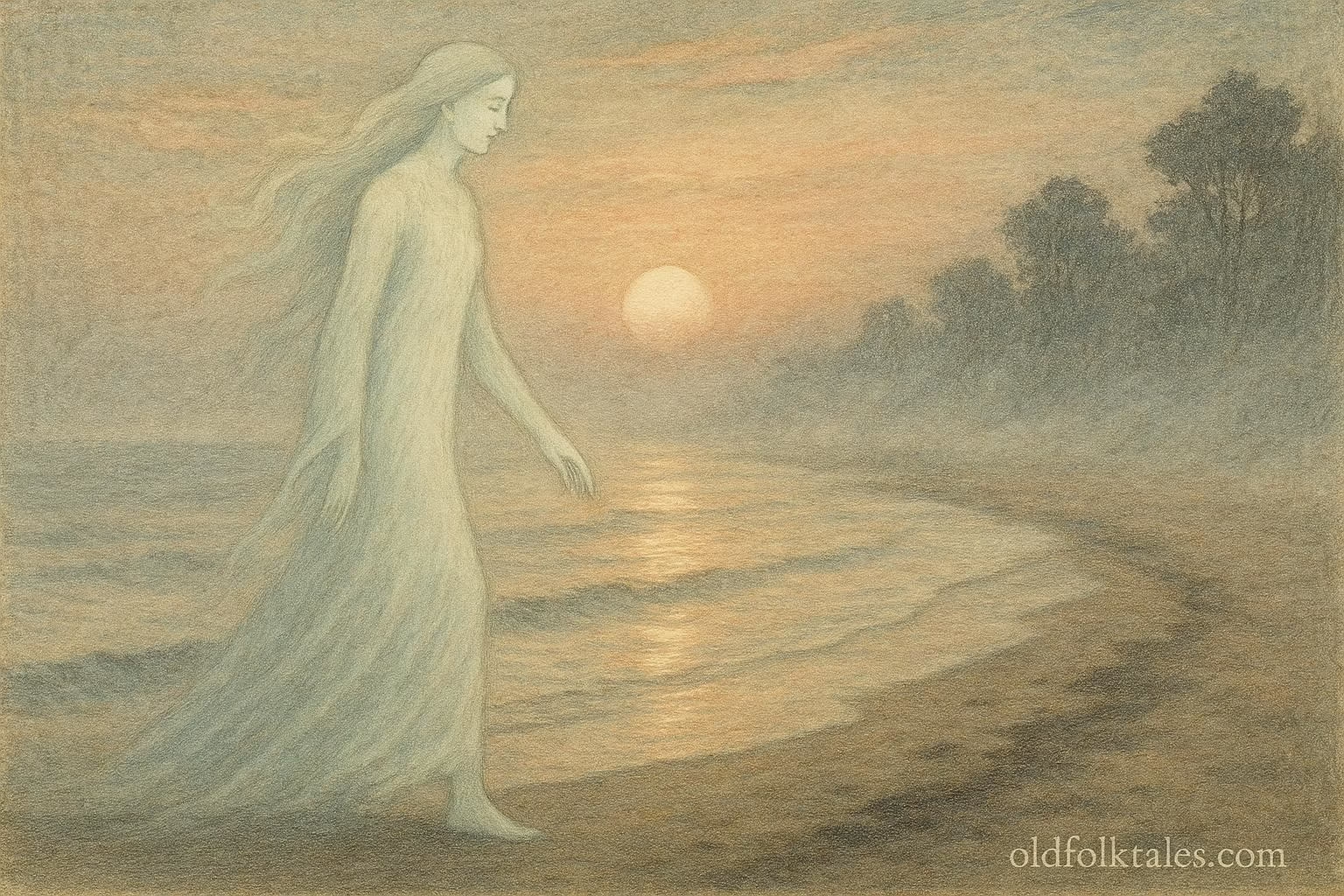
On one of the eastern islands of the Solomons, people spoke quietly about a pale spirit that walked the shore at dawn. Elders said the spirit was older than the first canoe that crossed the waters and older than the first fishing village that ever rose along the coast. It carried the scent of salt and morning mist and walked with steps so light that even the sand did not shift beneath its feet.
The villagers believed the spirit protected the boundary between land and sea. Each morning as the horizon brightened, the spirit appeared and waited for those who passed along the shore to offer a small gift. A shell, a leaf, a pinch of food, or even a spoken greeting of respect was enough. These offerings kept the coast calm and kept storms from gathering too close to the island. For generations the ritual continued without interruption and the sea remained gentle.
A young fisherman named Tanu lived in a small hut near the water. He had grown up hearing stories about the dawn spirit, but he treated them as distant legends. He was more concerned with catching enough fish to help his family. Still, his mother always reminded him that the world is wide and full of things the eye cannot see. She placed small offerings at the shore every morning, whispering thanks to the guardian of the coast.
Explore the mysterious creatures of legend, from guardians of the sacred to bringers of chaos
Tanu never joined her. He believed that storms came and went on their own, and that spirits belonged only in the stories told around the fire. He would wake before sunrise, gather his nets, and hurry along the sand without acknowledging the morning presence that others spoke about. The elders noticed his lack of respect, but they did not scold him. They knew each generation must learn in its own time.
One morning the sky appeared clear when Tanu left for his usual fishing trip. The tide was calm and the wind soft. As he walked along the shore, he felt a strange coldness surround him even though the air was warm. For a moment he stopped, sensing something nearby, but he shrugged it off and continued on. Behind him the mist shifted and a faint shape rose from it. The pale spirit moved along the shore, watching him with quiet expectation, but Tanu gave no offering.
That same week the weather began to change. At first it was only strong winds blowing from the east. Then dark clouds formed in the afternoons. The sea, usually steady and welcoming, churned with a restless rhythm. The elders grew uneasy. They gathered near the meeting ground and spoke of the dawn spirit and the forgotten rituals. They feared the offerings had stopped.
Tanu listened but did not take their concerns seriously. He believed storms were natural. The next morning he set out to fish again. As he walked along the shore he noticed the mist was thicker than usual and the light of dawn was dim. He felt the strange coldness again. This time he looked up and saw a pale figure standing where the water touched the sand. It had no shadow and no footprints. Its face was calm yet sorrowful.
Tanu froze. He realized the old stories were true. The spirit looked at him with eyes that held the quiet of the sea before a storm. Though it did not speak aloud, Tanu felt a message forming inside his mind. The spirit had waited for offerings that no longer came. Without them the balance between land and sea had weakened. The storms that gathered offshore were not ordinary. They were warnings.
Tanu fell to his knees. He had ignored the teachings of his family and the traditions of the village. He reached into his basket and placed a handful of small fish onto the sand. The spirit looked at the offering, but the sky overhead remained dark. The gift alone was not enough. The spirit lifted its hand slowly and pointed toward the village. Tanu understood. It was not his offering alone that mattered. The whole community had forgotten.
He ran back to the village and called everyone together. He told them everything he had seen and heard within his heart. Some villagers were frightened while others were ashamed. The elders nodded, saying they had warned that silence at dawn carries consequences. Together the villagers prepared offerings with care. They gathered shells, leaves, woven decorations, and food. They sang soft morning chants that had not been sung in years.
At the next dawn they walked together to the shore. The mist was thick and the wind low. They placed their offerings gently on the sand and waited. For a long moment nothing happened. Then the pale figure appeared, rising with the growing light. It passed slowly along the line of gifts and paused at each one. When it reached the final offering it lifted its hand. A warm breeze spread across the shore. The villagers felt calm settle in their chests.
The clouds above gradually broke apart. The dark sea brightened. The storms that had threatened the island drifted away. The dawn spirit turned toward the horizon and stepped into the water. As it moved into the distance its figure dissolved into light. The balance had been restored.
From that day forward the villagers renewed the morning ritual. Tanu became one of its strongest keepers. He told children that respect is not only a tradition but a living exchange that keeps harmony between the people and the sea. And each morning at dawn the pale spirit continued its walk, accepting offerings from those who understood the importance of giving back to the world that sustains them.
Explore the shadows of world mythology, where demons test the soul and spirits watch over mankind
Author’s Note
This story reflects Melanesian coastal beliefs where dawn spirits symbolize the delicate balance between humans and the sea. Reciprocity ensures stability, while neglect invites disruption.
Knowledge Check
-
Why did villagers offer gifts to the dawn spirit?
To maintain harmony between land and sea and keep storms away. -
Why did Tanu ignore the ritual at first?
He believed the stories of spirits were old legends and not real. -
What were the first signs that the offerings had stopped?
Strong winds, dark clouds, and a restless sea. -
How did the spirit communicate its message to Tanu?
Not through speech but through a quiet message felt within his mind. -
Why was Tanu’s single offering not enough?
The entire village had neglected the ritual and needed to restore it together. -
What happened after the community renewed the offerings?
The storms dissolved and harmony returned to the coast.