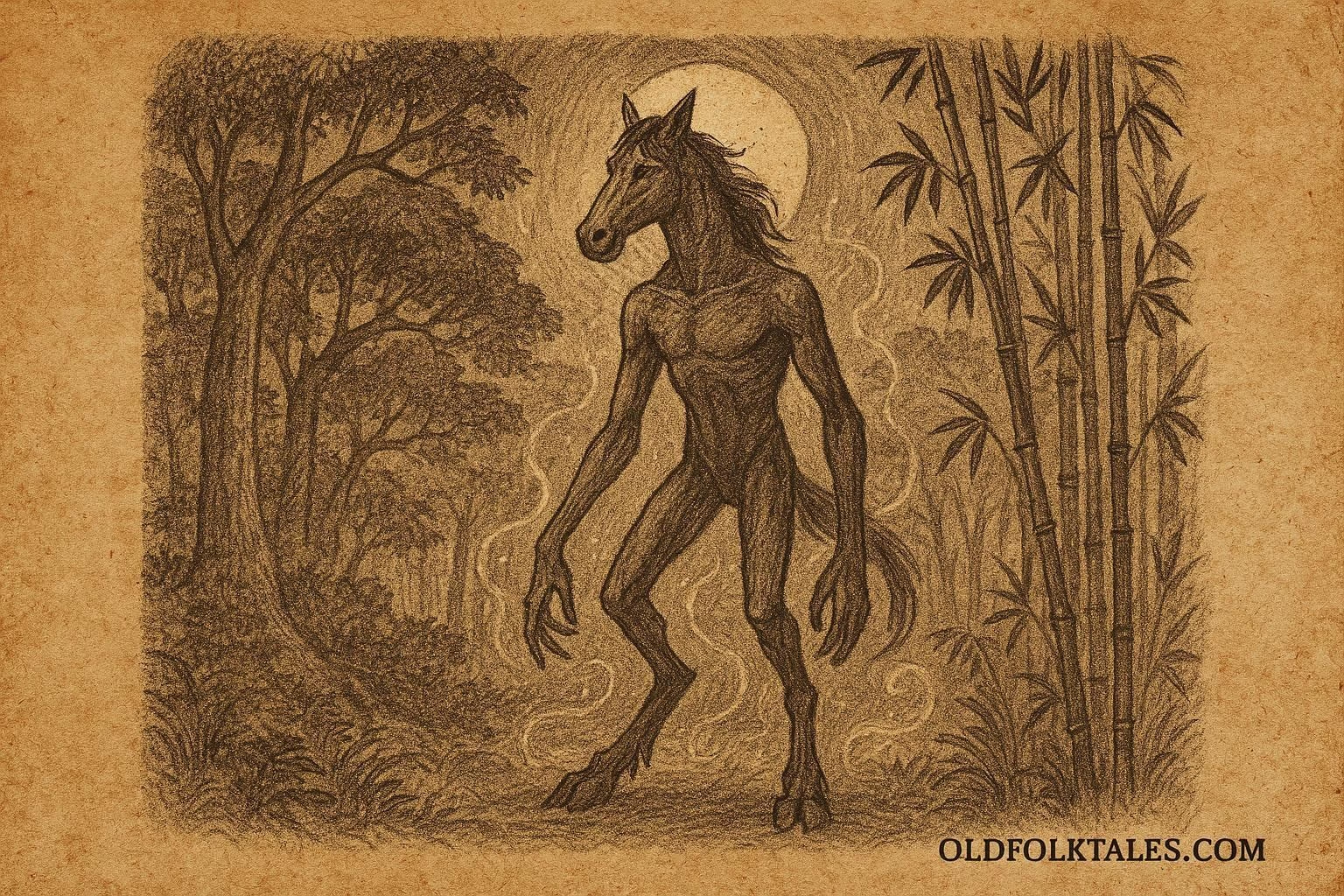
In the thick and humid forests of the Philippine islands, where the scent of wild ginger and damp soil drifted through the air, travelers spoke of an ancient spirit who walked silently among the bamboo groves. This spirit was known as the Tikbalang, a towering being with the head of a horse, the eyes of smoldering embers, and the long limbs of a wandering forest sentinel. Many feared him, many respected him, but no one ever forgot the stories whispered about his presence among the winding Philippine pathways.
In the small mountain settlement of Pahintulut, the elders often warned the young people not to venture into the deep forest at dusk. It was said that the Tikbalang disliked arrogance and punished anyone who walked with swagger or foolish pride. But he was also known to guide those who approached the forest with humility and reverence. It all depended on how one carried oneself beneath the towering crowns of the trees.
Among those who listened and sometimes did not listen was a young man named Luwalhati. He was brave, quick with laughter, and known for his confidence. Some admired him, while others felt he was far too bold for his own good. Luwalhati liked hunting deep in the forest where others rarely traveled, and though he respected the stories told by the elders, he never believed he would fall prey to any spirit.
Encounter dragons, spirits, and beasts that roamed the myths of every civilization
One afternoon, after a long day in the rice terraces, Luwalhati’s companions teased him, saying he had grown too cautious. They said he no longer dared to leap over the fallen logs in the deeper part of the woods. Feeling his pride rise within him, Luwalhati declared that he would enter the forest alone, after sunset, and return before the moon reached its peak. His friends protested, but their words bounced off his confidence like water on stone.
With a torch in hand and a hunting knife at his waist, Luwalhati stepped into the forest. The call of cicadas and the rustle of creatures growing restless for night filled the air. Though he tried to walk with steady steps, the shadows stretched like long ghosts, twisting across the forest floor. He ignored the flicker of unease in his chest and went deeper still.
Soon the path beneath his feet thinned into loose soil and roots. He saw a familiar tree on his right, so he pressed forward. After another long walk, he saw the same twisted tree again. He frowned. Perhaps he had taken an unsteady turn without realizing it. He walked again, this time paying attention, counting his steps. Yet once again, the same tree awaited him.
It was then he heard the soft, rhythmic clop of hooves on damp earth.
Luwalhati’s torch flickered. The sound drew closer, steady and deliberate, like something that knew exactly where it wished to go. He turned, placing his feet wide to remain balanced, and lifted his torch high.
From the shadowed undergrowth emerged the Tikbalang.
Its horse shaped head glowed faintly in the moonlight. Long black hair cascaded down its neck, and its tall limbs bent in unnatural angles as it stepped into the clearing. Its eyes burned like ember filled coals. Yet the creature did not charge or cry. It simply stared at him, tilting its head as though observing something inside Luwalhati rather than upon him.
Luwalhati felt his legs weaken. He remembered the stories. The Tikbalang misled the arrogant, humiliated the reckless, and tested those who stood before him without respect. Filled with regret, he slowly lowered his torch and bowed his head.
The forest grew silent.
He spoke gently, his voice trembling. He apologized for entering without permission, for boasting among his friends, and for thinking he could wander freely without honoring the spirits of the land. He placed his knife at his feet and stepped back, offering it as a sign of submission.
The Tikbalang took one long step forward. Its ears twitched. It lowered its head until its long muzzle was close enough that Luwalhati could feel its breath. Then, without warning, the spirit lifted one massive hoof and tapped the ground lightly. The earth trembled beneath him.
Suddenly, the torches of distant villagers appeared between the trees. Luwalhati looked up. The path he had lost now lay clear before him, illuminated by the moonlight. He turned back to thank the spirit, but the Tikbalang had vanished, leaving only the faint scent of wild grass and the echo of hooves fading deeper into the forest.
When he returned to the village, the elders nodded in knowing silence. Luwalhati never boasted again. From that night onward, he became the first to offer food to the forest spirits during harvest and the first to warn children about humility. And though he never again saw the Tikbalang, he felt its presence each time the wind rustled through the bamboo, reminding him that respect was the path that brought one safely home.
Explore the shadows of world mythology, where demons test the soul and spirits watch over mankind
Author’s Note
The Tikbalang remains one of the most iconic figures in Philippine folklore, teaching humility, caution, and reverence for nature. This story preserves the spirit of those lessons and honors the deep cultural memory surrounding forest guardians in the Philippines.
Knowledge Check
-
What form does the Tikbalang take in Philippine folklore?
The Tikbalang appears as a tall spirit with the head of a horse and the limbs of a man. -
Why did Luwalhati enter the forest at dusk?
He entered to prove his bravery after being teased by his companions. -
What did the Tikbalang do to Luwalhati in the forest?
It led him in circles until he showed humility and respect. -
How did Luwalhati show respect to the forest spirit?
He bowed his head, apologized, and placed his knife on the ground as a sign of submission. -
What change occurred in Luwalhati after the encounter?
He became humble and respectful toward the land and its spirits. -
What lesson does the Tikbalang teach?
It teaches humility, caution, and respect for ancestral lands and nature.