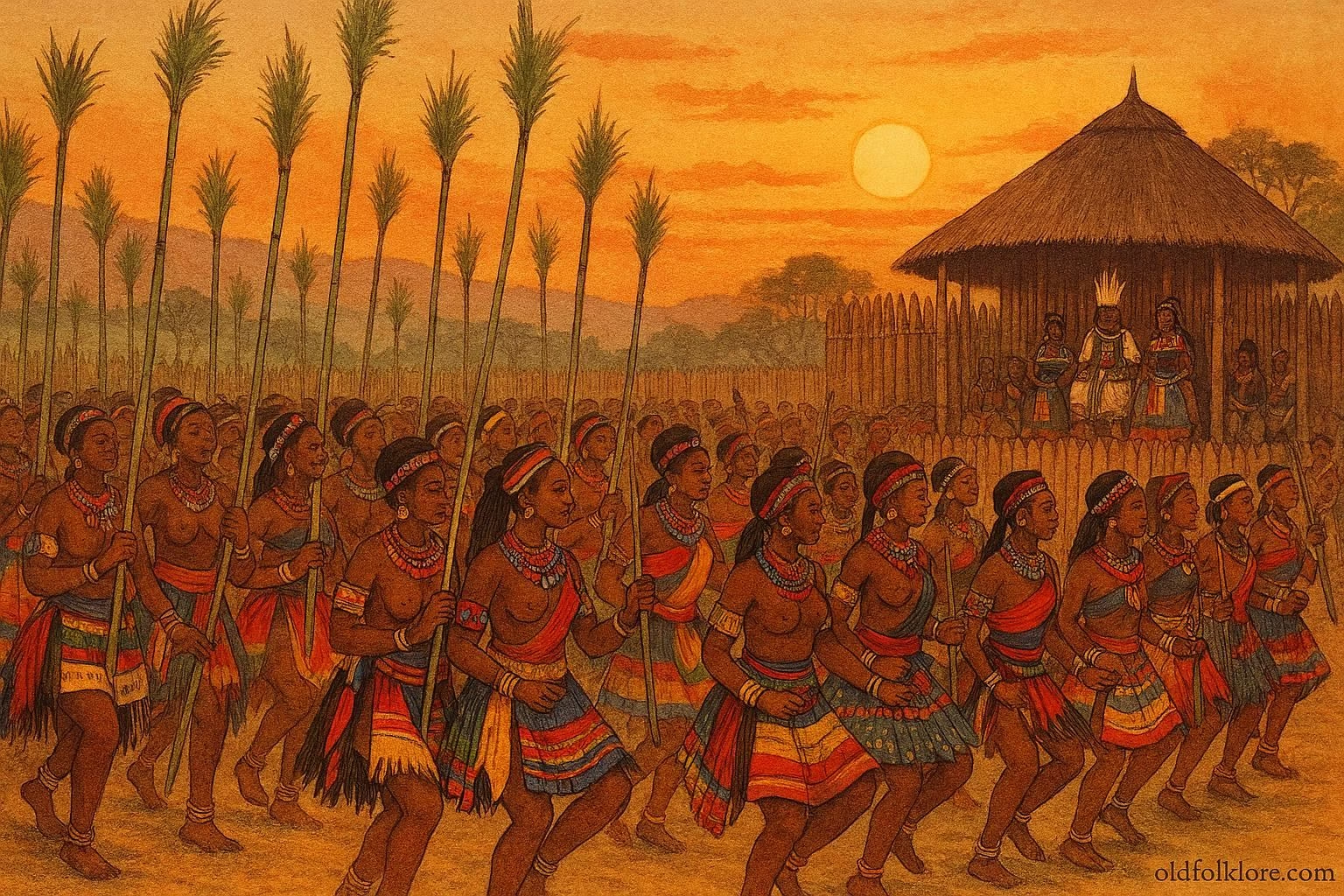
Each year, thousands of unmarried maidens travel from across Eswatini and KwaZulu-Natal to participate in this rite of passage. Dressed in traditional attire, colourful beads, skirts, and sashes, they gather in song and dance under the guidance of royal women. The young participants first cut tall reeds from sacred riverbeds, carrying them in procession to the Queen Mother’s residence or royal kraal. The reeds are presented as offerings of respect and devotion, often used to reinforce the royal enclosure, a symbolic act of protection and renewal.
The festival spans several days of music, communal feasting, and dance. Yet, its essence lies not in display but in meaning: the reaffirmation of female virtue, fertility, and the sacred duty of cultural continuity. The Queen Mother (Indlovukazi) and the King preside over the ceremonies, serving as custodians of ancestral law. The King’s presence represents the enduring unity between the monarch and the people, while the maidens’ dance embodies vitality and spiritual purity, an echo of divine order within Zulu cosmology.
Mythic Connection
Within Zulu and Swazi cosmological thought, the cycle of life is a sacred rhythm governed by the ancestors (amadlozi). The Reed Dance serves as a symbolic renewal of this rhythm, a celebration of balance between the living, the dead, and the divine. Reeds themselves carry mythic importance. In oral tradition, reeds are said to have been the medium through which humanity emerged, linking the ritual to creation myths where life sprouted from marshes and rivers, places of fertility and transformation.
The ritual also reinforces the feminine as sacred. The purity of maidens symbolizes the moral and spiritual cleanliness of the community. To preserve chastity is to preserve the moral fibre of society; to dance in honour of the ancestors is to renew the covenant between people and gods. In Eswatini, the ceremony is further connected to the nation’s origin stories, where the Queen Mother represents the female principle of creation and continuity, a living embodiment of the ancestral spirit that nourishes the land.
Historically, Umkhosi woMhlanga was tied to royal purification rites marking seasonal or dynastic transitions. Its performance was believed to bless the harvest and ensure fertility for the land and people alike. Through rhythm, movement, and sacred offering, the dance became both prayer and proclamation, that the ancestors still walk among their descendants, guiding them toward harmony and endurance.
Cultural Continuity and Modern Relevance
In modern Eswatini and South Africa, the Reed Dance endures not merely as a cultural performance but as a declaration of identity and resilience. Governments and cultural institutions frame it as both heritage preservation and moral education. In Eswatini, the ritual remains a national event led by the royal family, blending state ceremony with sacred tradition.
Critics sometimes challenge its relevance in a rapidly modernizing world, yet many participants describe it as empowering, a reaffirmation of pride in womanhood, modesty, and belonging. The ritual also teaches discipline and solidarity among the youth, reinforcing collective rather than individual values.
Beyond its visible grandeur, Umkhosi woMhlanga expresses a deeper spiritual truth: that purity, renewal, and unity are not abstract ideals but living practices. When the maidens dance in the open fields, their movements mirror the cycles of rain, growth, and continuity, a living harmony between humans, ancestors, and the earth.
Author’s Note
The Umkhosi woMhlanga stands as one of Africa’s most enduring and graceful expressions of cultural vitality. Through the simple reed, it connects earth and ancestry, womanhood and divinity, present and past. The dance is both an offering and an inheritance, a way for a people to speak to their gods through rhythm, order, and reverence. In this sacred choreography, the community rediscovers its soul.
Knowledge Check
1. What is the cultural origin of the Umkhosi woMhlanga?
It originates from the Zulu and Swazi peoples of southern Africa, practiced in both Eswatini and South Africa.
2. What do the reeds symbolize in the ceremony?
Reeds symbolize purity, renewal, and the continuity of the community’s ancestral and spiritual life.
3. Who oversees the ritual?
The Queen Mother and the King oversee the ritual, representing moral authority and ancestral unity.
4. How does the ritual connect to Zulu mythology?
It echoes creation myths where life emerged from reeds, linking participants to the divine and ancestral realm.
5. What moral or social values does the dance teach?
It promotes chastity, respect, discipline, and unity, central virtues in Zulu and Swazi culture.
6. How is the Reed Dance relevant in modern times?
It continues as a symbol of cultural pride, women’s identity, and national unity, bridging tradition and modernity.