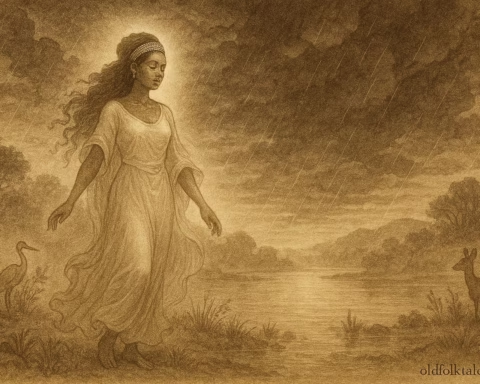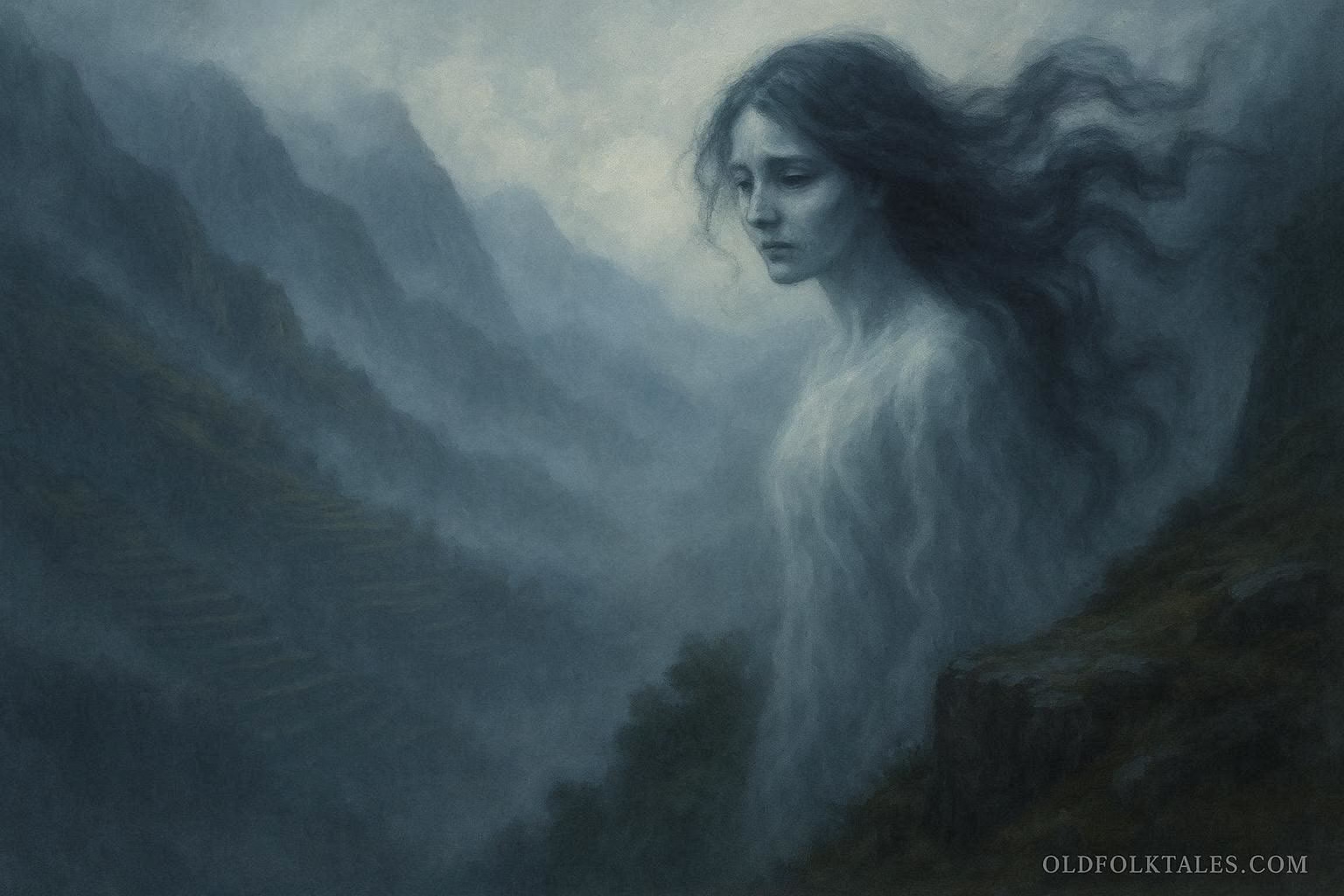
High in the Andean mountains where the air thins and the path narrows into trembling edges of stone, people speak softly of the Weeping Woman. She is said to appear at the moments when mist is heaviest and when the world becomes both quiet and uncertain, as though the mountains themselves are breathing through veils of cloud. To the Quechua peoples of Peru, she is neither entirely benevolent nor entirely dangerous. Instead she is a spirit shaped by sorrow, wandering the heights with a voice that carries the weight of every lost child the mountains have known.
Long ago in a village that clung to the slopes above a deep gorge, a young mother named Illari lost her child to a sudden rockslide. One moment the child played between the adobe homes and the terraced fields, and the next moment the earth shifted with a quiet groan. The villagers rushed to rescue the child but found only silence beneath the dust. Illari refused to leave the mountainside for many days. She cried until the wind carried her voice far beyond the village. When her strength finally failed, she vanished among the cliffs, and people whispered that the mountains had taken her into their stone heart.
Not long after her disappearance, shepherds reported hearing a woman crying when night settled over the slopes. Travelers claimed that a figure wrapped in white mist approached them when they wandered too close to ravines. Her voice sounded gentle yet filled with longing, as though she wished to warn them and mourn them all at once. The elders believed Illari had become a guardian spirit yet one shaped by grief. They gave her a name that the mountains seemed to echo. They called her the Weeping Woman.
Journey through the world’s most powerful legends, where gods, mortals, and destiny intertwine
In the seasons that followed, the spirit appeared whenever a child cried alone on the path. Some said she would place a soft hand on the shoulder of any wanderer drifting toward danger and guide them gently away. But there were also stories of those who heard her sorrowful song and grew confused, stepping toward the sound without thought. The mist played tricks on the eyes and the cliffs offered no mercy. To encounter the Weeping Woman required calm heart and steady mind or her sorrow might swallow the living as easily as it swallowed her own child.
One day a young traveler named Kantu made his way through the high pass carrying herbs for his grandmother in a distant village. He had heard the stories but believed himself too focused to be swayed by any wandering spirit. The mountain path was steep and narrow, but the morning sky remained bright until the clouds suddenly shifted. The mist slipped down like a curtain and every shape blurred into white.
Kantu paused. He heard the soft sound of a woman weeping somewhere ahead. He felt a gentle pull in his chest as though the sound was calling him by name. The memory of the village tales rose in his mind, and he whispered a prayer to the Apus, the ancient mountain spirits. But curiosity and compassion tugged at him. What if a real woman needed help? What if a child was truly crying?
He stepped forward one cautious pace at a time. The path narrowed and the air grew colder. The weeping became clearer. Then he saw her. A woman clothed in mist stood on the edge of the cliff, her long hair drifting like dark river water. Her face was hidden behind a veil of cloud, but the trembling of her shoulders told him her sorrow was deep. Kantu felt an ache in his heart as though the grief belonged to him.
She lifted her head. Her voice whispered his name. He stepped toward her without realizing it. The stones beneath his feet crumbled slightly. He froze. Something in her voice changed. A tone of warning entered her cry. The mist around her shifted and he saw a sharp drop just beyond where she stood. She raised her hand and pointed behind him. Slowly he stepped backward, away from the cliff, feeling the ground steady beneath him again.
The Weeping Woman lowered her hand and her sorrowful voice softened. The mist wrapped around her like a shroud and she faded back into the mountains. Kantu stood trembling but unharmed. He whispered a blessing for her and for her lost child. When he reached his grandmother’s home, he told her what had happened. His grandmother nodded with understanding and said that sorrow can guide as much as it can mislead. Those who listen with respect may find protection even in the voice of grief.
From that day onward, Kantu traveled the mountain roads with greater care. He shared his story with others, reminding them that the Weeping Woman was not a creature of malice but one of memory. She acted according to the hearts of those who heard her. Compassion opened the path of safety, while fear or recklessness led travelers astray.
Villagers still speak of Illari when the mist gathers thick and the wind carries distant cries. They leave offerings of coca leaves and small woven dolls by the rocky paths to honor her and to comfort her wandering spirit. The mountains hold sorrow as they hold stone, and the Weeping Woman remains a reminder that grief can protect as much as it can endanger when approached with respect, calmness, and awareness.
Explore the shadows of world mythology, where demons test the soul and spirits watch over mankind
Author’s Note
This story reflects the complex emotional landscape of the Andes where spirits guide, test, and watch over the living. The Weeping Woman reminds us that sorrow can echo in many forms and that compassion must walk hand in hand with caution in places where the world becomes thin between earth and spirit.
Knowledge Check
-
Who is believed to be the Weeping Woman? She is thought to be Illari, a mother transformed by grief after losing her child.
-
Where does the spirit appear? She appears in the mists of the high Andean mountains.
-
How can she protect travelers? She warns them of cliffs or guides them away from danger.
-
How might she endanger travelers? Her sorrowful voice can confuse or lure careless travelers toward ravines.
-
What helped Kantu avoid danger? His calm heart and awareness helped him resist being drawn too close to the cliff.
-
Why do villagers leave offerings by the paths? To honor Illari and comfort her wandering spirit.